Designing the Site: Layout & Navigation: Wireframing

Why is it necessary to first build the skeleton of your website using wireframing? One reason is that we expect all websites to conform to a certain standard. Maybe, the menu bar is always on the top left, and the search magnifying glass is always on the top right.
If you disrupt this, you also disrupt how the user navigates your site. You don’t want to deviate from how everyone uses a website because it becomes frustrating for the customer. By conforming to existing standards on your site, you make it easier for your customers to navigate your site and buy your products.
Wireframing is a process that we use at the beginning when designing a website. A wireframe is a stripped-down version of your website design in which you focus less on what the site looks like and more on what the user experience will be. You can use it to sketch out ideas quickly and share them to make sure that everyone agrees. If you need to make changes, you can easily update the wireframes because they are low fidelity and don’t contain minor details.
You can use wireframes during the design phase to share ideas instantaneously with project stakeholders. If you want to share your site design with friends and get feedback before going into details, wireframes are a great idea. Wireframes help you move expeditiously, confirm that the user experience is pleasing, and generate actionable ideas. They affirm that you’re designing the right thing before investing a ton of time in a detailed design.

Clarify Your Approach to UX Design, Analysis, and Hypothesis

A good UX designer is highly skilled in observation. And this is something that you should start implementing in your practice. Open your eyes. Open your perception about your environment, and start questioning not only the physical but also the digital space.

What do you notice in the apps that you interact with, in the websites that you scroll through, or even in social platforms? Start identifying examples of good UX versus bad UX. It’s important that you start educating your eye in identifying what good and bad UX are.

For this exercise, I suggest you to start taking notes throughout an entire week, or a weekend, or three days. I would suggest that you at least give it a week observing all these environments. And take notes every day. Don’t think about it too much. Just follow your intuition.

Remember, this is all about creating an intuitive journey. So if you want to create that journey, you should be implementing intuition in your vocabulary and in your practice. As such, I encourage you to write down not only the exercises and reflections that we will suggest to you throughout the program, but also your own personal experiences throughout this entire journey.

And for that, I propose to you the following exercise: We talked about soft skills and hard skills. And we talked about how you may have already honed those soft skills. I would love for you to look back into your life, into your personal life and your personal experiences. You can also include your professional experiences, or, if you haven’t started in a job, feel free to share your experiences as a student in whichever stage you are right now.

Go back and scroll and scan through all those experiences, and see if you can identify skills that could actually inform your practice as a UX designer. Do you tend to be tidy in your room? How do you organize your folders? How do you communicate with friends and professionals? And how do you write emails? How do you reach out to your peers in your field? Are you communicating your ideas clearly enough?

As you continue your online UX design education, this is a great opportunity for self-reflection, not only to identify which skills will be important for these UX careers, but also to reassess your values and how those can be implemented in moving forward in the field.

Comparing UX and Experience Design: The Part to the Whole

In your journey through online UX design education, you may have heard of “experience design” or “experiential design.” Many people mistake experience design for UX (user experience design) or UI design. I would like to explain the differences.

User experience relates mostly to the interaction between the user and an interface. The interface, or UI, can be anything and is not just limited to the digital environment. The aim of a user experience designer is to make experiences, conversations, and interactions present, efficient, and seamless.

In comparison, experience design and experiential design relate to a 360-degree point of view. Take the following scenario as an example.

Say you are walking into an event. Before going to the bar, you may need to download, install, or open an app on your phone. The app will enable you to generate a code that will give you access to the bar.

Alternatively, there may be a QR code that you need to scan to get a gift from these events. Both user experience and experience design are emerging fields, with each of them informing one another. User experience relates to the design of the QR code and what happens on screen.

Experience design, however, involves the entire process of experiences. Usually, experience design is multi-sensory; the five senses, or at least most of them, will be stimulated. In UX, meanwhile, designers focus on the senses of sight, hearing, and touch.

To bring your awareness to the concept, let’s discuss the role of the senses in greater depth. Sight comes into play because (obviously) we are looking at our screens. We work with what we hear from the sound of the screens. There may be music or sound effects or pushes with audio and tactile prompts.

“The tactile” refers not only to how we touch our screens or keyboards. It also refers to, for example, how our phone vibrates when someone calls us, or how an app sends you push notifications to get your attention.

We now move on to the experience design realm. There is an entire world that is created, where each element is meant to stimulate all of your senses. Going back to the event we described earlier, the experience includes how you arrive at the event. How are you greeted? What is the music, and how does it pair with the light design? Perhaps the experience is tailored to create a path of circulation or a journey.

If there is food or beverages around, what dishes are served? How do you drink the beverages? Do you interact with the host or event speakers? How are you seated? What is the color of the chairs, walls, and other elements in the event space? What else happens within that space? Experience design is meant to be 360 degrees — “omnichannel”, so to speak.

UX design and experience design are independent, but they can also coexist with one another. Yes, it is possible to merge both of them; but knowing the difference between the two will enhance your design processes and portfolios.

Connecting with Your Customers: Telling the Brand Story: Brand Story: Introducing New Customers

Your brand becomes a part of your store in various ways. If you understand this and your core customer base, you may ask yourself these questions:

* Who are you serving?
* What will connect with them?
* How can you make your brand more appealing?

If you know this, it will help you understand how to set up and run your store. For example, if your brand focuses on being fun and goofy, you may have a younger audience as your target demographic.

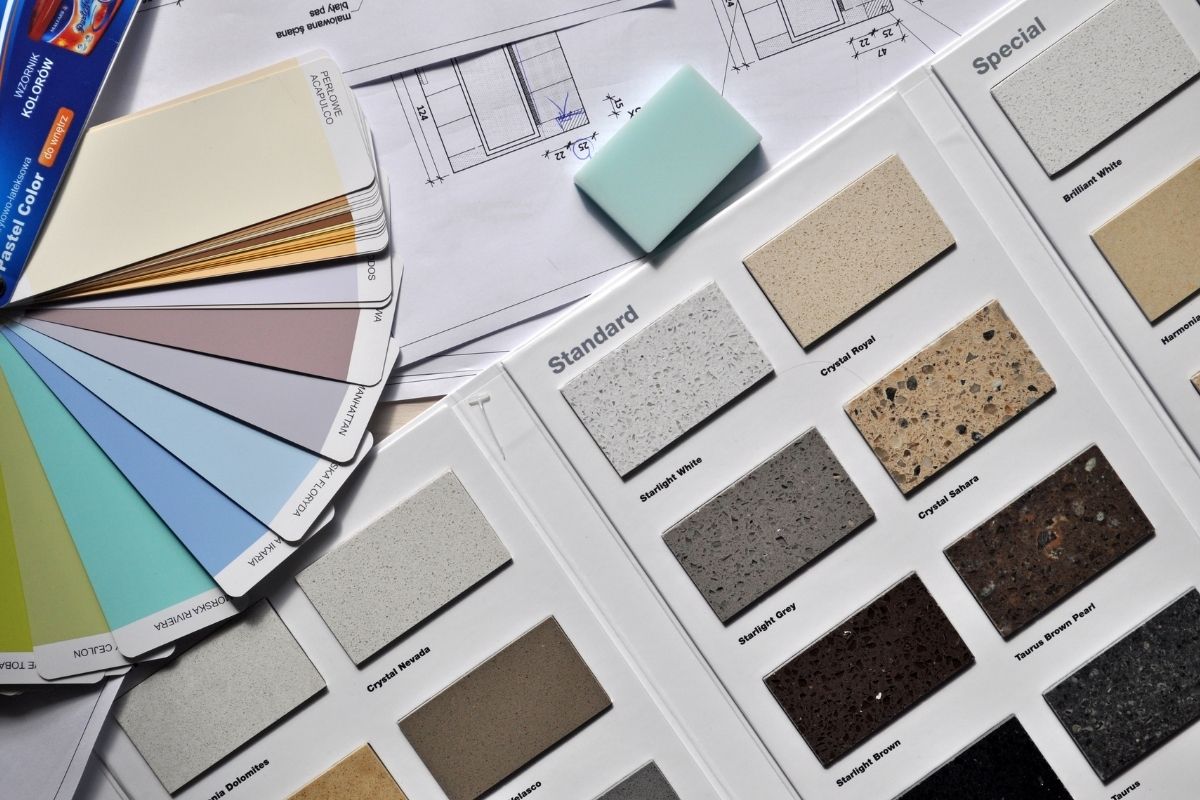
You should make sure your website’s color palette matches the brand. For example, if your brand focuses on being fun and funny, then grays and monotone colors won’t reflect that same voice.

This involves identifying your customers and matching what they want. You may want to avoid boring and dry product descriptions if you choose brighter colors.

You can use these descriptions to inject some humor and branding into your business. It comes into play in various parts of your e-commerce store. Look at every opportunity you have and make sure your store reflects the bigger brand.

Telling your story can help you create a more personable narrative to help new customers see the person behind the brand and understand it to build connections.

You don’t want your company to be a faceless brand. You should build a connection with your customers since it will help them connect with you, become loyal customers, and buy from you.

Connecting with Your Customers: Telling the Brand Story: The Brand Deefines the Customer Experience

How do you effectively brand your product online? Ecommerce is a craft. You have less than 10 seconds to capture the attention of a potential consumer. It’s about relating directly to crafting the perfect story. The story is a general narrative applicable to many people and a multitude of life experiences.
When I worked at Barney’s, we were tuned in. Every new brand had a story behind it, including the collection. However, it left an enigma that raised questions: What is the story of the brand’s history? Why was the brand created? How was the brand’s name created? Why did the brand choose the colors they did?
Factors such as those are considered when marketing your brand. The question remains: How do you effectively gain an online audience to hear your story in such a short time? It’s critical to ensure that the images displayed on your e-commerce website or a retail partnership website accurately represent your brand.
Accurately representing your brand is one of the most important factors you have in e-commerce advertising. Your target audience must feel that you understand them, that you’re speaking to them, not at them. If I’m trying to reach 18-year-olds, and I’m using this kind of formal, prim, and proper business tone, it’s not likely going to be effective on that target audience.
If I’m speaking or marketing to seniors using emojis, vulgar language, modern images, and people, fur coats, funky styles, it’s not going to resonate with them. They require marketing that is familiar to them, understanding and providing that comfort is a much better approach. One of the first things you must always do is begin with entry-level ideas— who am I going to market to? What’s different about my brand? Most importantly, how am I going to communicate that?

Considerations for the Research Phase of Product Development

What often comes next is really doing the due diligence, doing the research. “OK, we know there’s a problem,” explains Alicia Tam Wei, “but we need to learn more about what’s behind this problem. What’s causing it? How does it affect people?” It’s important to discover what it entails. There are several different ways to approach this in product design. One thing to do is a user journey, which is putting yourself in the shoes of a person who is using this thing and trying to figure out everything along the path of how they would use it.

If she were doing a user journey for a mute button, for example, she tells us she would say, “Ok, I’m Alicia. I’m going to sit at my computer. I’m opening my laptop and opening Zoom or any video conferencing product. From here, I have my laptop’s built-in microphone. I also have maybe an external microphone or speaker system. I also have in my environment some background noise. Maybe there’s an air conditioner, a heater or an air filter. Maybe there’s an air purifier or background noise from my home or my office.” Product design education teaches you that all this that has to go into consideration.

She continues with the other things you must think about. “OK, why am I using it?” she asks. “How am I using it? So why do I even need a mute button at all?” You would then go into all the possible uses for this mute button. When would it be needed? What are the circumstances and scenarios in which a person might need this?

You start to build a map, so to speak, of how a person is using the item. Along with this map, you realize there’s a scenario in which it fails, in which it could be better and in which there’s an opportunity for improvement.

She tells us that each time you find something that’s annoying or problematic, something that doesn’t make sense or just doesn’t work the way you wish it would, it’s an opportunity as a designer to go back in and say, “Ok, now there’s a problem. And I’ve got more background knowledge of the nuances behind that problem.”

She sums up this way: “I can actually then think about ‘How would I solve that problem?’ I sometimes believe people think that design is all about solutions. But so much more of it is actually about the background of figuring out what the problem is and then researching how people use the product.” These are lessons taught in online product design education.

Considering Complex Problems with Product Design

When you’re working on solving a problem as a product designer or developer, it can sometimes generate other, unforeseen problems. These are called “complex problems,” or “wicked problems.” For example, when a company like Walmart decides to become organic with its produce while being one of the largest stores across the United States—and this happened in 2007 and 2008—they’re assuming that there is actually that much organic food being produced to supply such a large retail supplier. However, that may or may not be the actual case.

When given the questions of scale and the complexity of the problem that you’ve identified and want to address, you may run into real-world conditions that push back and make the problem more complex than it initially appeared to be. For example, the seaweed straws by Sea Briganti immediately ran into a question of scale. If you’re going to reduce the number of drinking straws consumed each day in the world, that means that you’ll have to produce as many seaweed drinking straws as there are plastic ones being produced.

If you’re scaling up and producing a competitive quantity of an alternative material, such as seaweed, then that means you’ll have to harvest a lot of seaweed and produce a lot of drinking straws on a different scale. That means that instead of having centralized factories producing huge amounts of plastic, which then end up in the ocean and cause all of the problems that we’re aware of, you have to ask yourself where you’ll get all of that seaweed. So you may have to decentralize that work and work in tandem with people around the world to produce the required seaweed in various locations.

Ultimately, the problems that you choose to address may give you options, as well as alternative solutions, proposals, or opportunities for iterative thinking that considers many different scales and choices. For these reasons, it’s really important to consider the ripple effects of addressing the problems that you choose to solve as well as what other complications may come up later on in the process.

These concepts are very important to understand in the world of product design and product development. To learn more, consider giving product design education a try, and remember that online product design education is also an option.

Customer Service: How You Help Them: Exchanges and returns

No one wants to pay for returns. That is just a basic customer service attribute that you should have. Ease of exchanges and ease of returns.

A lot of e-tailers, especially who don’t necessarily have physical stores where you can maybe go and return something, partner with other companies that have outposts where you can return something.

For instance, revolve.com doesn’t have a physical store, so they partner with Paper Source. You can go to a Paper Source, and it’s called Happy Returns. I was very happy to return something when I found that out because the first thing I look at before I buy something online is how am I going to return this? If, I have to ship it internationally, find my box, drop it off, etc., I’m not doing it. I’m not buying it. I don’t care how much I like it. I need to be able to easily return something for free. I think that’s absolutely the bare minimum and one of the things you have to have in order to have good customer service online.

I had a suitcase, and they have a lifetime guarantee. I took it on a Delta flight, and they ruined my suitcase. I checked it in and they cracked it. I reached out to Away, they got back to me within less than 24 hours, and said ‘No problem. We will send you a new suitcase. Wait to get that box’ because I was wondering ‘How am I going to return a suitcase? Where am I going in a box for a luggage?’ They said, ‘Wait to get the box. Use the box that we ship you to send back the other one, and we’ll pick it up free from you from in front of your house.’ It was amazing. I’ll never buy another suitcase brand again because of that.

Customer Services: What You Offer Them: Abandoned carts

Let’s take a closer look as to why abandoned cart series are an integral part of winning back sales and increasing conversions for ecommerce companies.
56 to 60% of all abandoned carts come directly from shipping costs. Realistically for abandoned carts, you’re only going to recover 20% of these back if you’re aggressive.

What is your shipping strategy? How is that affecting your abandoned cart? If you’re seeing your conversion rates are low, keep in mind conversion rates are 2-2.2% across e-commerce. So, if your abandoned carts are 3, 4, or 5%, suddenly, that’s a lot of your sales.

That’s a lot of what’s affecting conversion. That’s a lot of money being left on the table. Even the best brands that are aggressive and have great automated abandoned cart recovery programs, you’re only going to see 17%-18% of those abandoned carts collected.

It’s always going to be a challenge. However, it’s something that you can front-load the work.

For example, you can automate an email marketing series. Where five minutes or 5 hours after you abandon the cart, you get an email saying, “Hey, it looks like you forgot to checkout.”

The next day, you get another reminder, “Looks like you forgot to check out! We know life’s busy. Come on back, here’s a link to your cart.”

That third day, send them another one, “Hey, you know things happen, I can’t hold this forever. Come back in 24 hours and here’s 10% off.”

But really, there’s a cliff after that. After about 72 hours, they’re gone. They’ve moved on. They’re on with their life.

You have to have a strategy in place right away. It needs to kind of fire in rapid succession in those first 48-72 hours, if you want any chance of recovering these.

Customer Services: What You Offer Them: BOPIS

Buy online, pick up in-store, commonly known as BOPIS in the e-commerce industry, is a crucial digital sales offering. It gives a consumer the option to purchase goods online and choose a unique alternative shipping option. Instead of the seller shipping the purchased item directly to the shopper’s house, they’ll send it to one of their physical storefronts nearby. After the item arrives, the consumer receives a notification that they can pick it up.

Experts say that BOPIS is a powerful tool in the modern sales arsenal. It’s useful for creating an omnichannel that merges online commerce with traditional in-store shopping. This is in line with how most of today’s consumers prefer to do their buying. Even better, offering BOPIS options could help retailers build loyalty among consumer segments still getting into online shopping. Although some of these consumers were once apprehensive about e-commerce, the pandemic forced them to adapt to the trend for lack of alternatives.

Some retailers, such as those in the luxury space, have devoted heightened focus and effort to improving their convenience offerings. The idea is to make typical shopping journeys seamless and easy for consumers.

BOPIS can contribute to these goals. Imagine that a consumer knows they’d prefer not to have a particular item shipped to their home. For instance, they might not be around when an expensive package would arrive. Or, the consumer might want to visit the storefront for another reason, such as if they need to return a different item.

With BOPIS, a shopper could solve all of these problems at once by buying an item online and handling their other errands when they go pick it up. This is also a viable choice for those who like shopping at stores that are on their route to work or school. Wherever a consumer’s motivation lies, BOPIS can ease their shopping process.