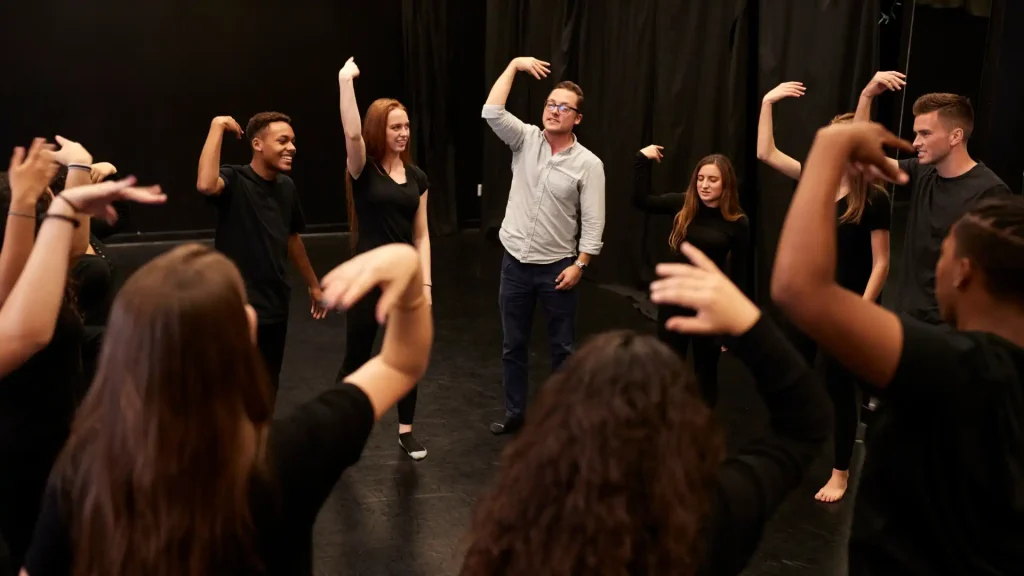
Acting improv exercises are a valuable tool for performers to develop their improvisational skills, enhance creativity, and build confidence on stage. Whether you’re a seasoned actor looking to sharpen your abilities or a beginner eager to explore the world of improvisation, incorporating these exercises into your training regimen can benefit your craft significantly.
Word Association
In this exercise, two actors stand on stage, and one actor starts by saying a word. The other actor responds with the first word that comes to mind, and the dialogue continues back and forth. This exercise helps improve listening skills, spontaneity, and the ability to think quickly on your feet.
Character Switch
Pairs of actors start a scene, and at a certain point, they switch characters without breaking the flow of the scene. This exercise challenges performers to adapt quickly, explore different character traits, and maintain consistency in their performance.
Emotional Rollercoaster
In this exercise, actors are given a scenario and asked to cycle through a range of emotions within a short period. This exercise helps actors practice emotional transitions, expressiveness, and depth in their performances.
Props Challenge
Actors are presented with random props and must incorporate them seamlessly into a scene. This exercise encourages creativity, adaptability, and the ability to work with unexpected elements in a performance.
Genre Roulette
Actors perform a scene, and at various intervals, the genre of the scene changes. This exercise challenges performers to adapt their acting style, tone, and characterization to fit different genres, enhancing versatility and flexibility in their performances.
Silent Scene
In this exercise, actors perform a scene without using any dialogue, relying solely on physical expression and gestures to convey meaning. This exercise hones nonverbal communication skills, body language, and the ability to convey emotions without words.
Time Warp
Actors perform a scene, and at the facilitator’s cue, they switch between past, present, and future versions of their characters. This exercise encourages actors to explore character development, backstory, and the impact of time on relationships and dynamics.
One-Word Story
Actors take turns adding one word at a time to create a cohesive story. This exercise fosters collaboration, creativity, and improvisational storytelling skills, challenging performers to think on their feet and build a narrative together.
Mirror Image
Two actors mirror each other’s movements and actions in a scene, creating a synchronized performance. This exercise promotes coordination, rapport between actors, and the ability to work in tandem to create compelling visuals on stage.
Character Monologue
Each actor embodies a different character and delivers a monologue based on a given prompt. This exercise allows performers to delve deep into character exploration, develop distinct voices and mannerisms, and practice storytelling from different perspectives.
Conclusion
Acting improv exercises sharpen an actor’s instincts, flexibility, and presence on stage. By practicing spontaneity and teamwork, performers become more expressive, confident, and prepared for any situation in performance.
Key Takeaways:
- Improv builds confidence, creativity, and fast decision-making.
- Strong performance relies on listening and reacting in the moment.
- Exercises improve emotional range and adaptability.
- Actors learn to handle unexpected changes and props naturally.
- Nonverbal work strengthens physical storytelling.
- Collaboration enhances scene flow and story building.
To further elevate your craft and delve deeper into the performing arts industry, consider enrolling in the Yellowbrick online course and certificate program for valuable insights and practical training. Elevate your performance journey with NYU Performing Arts Industry Essentials.