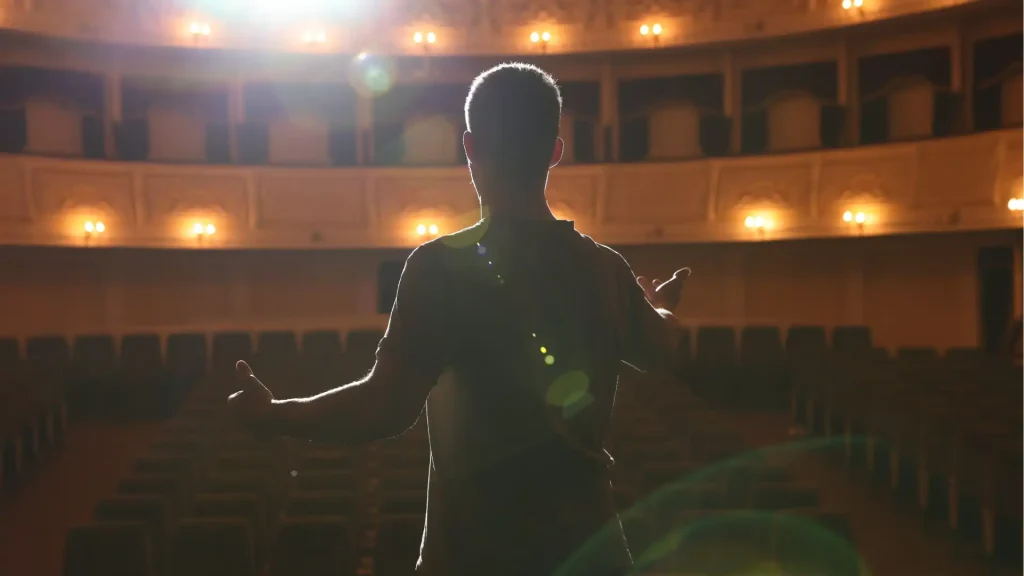
Stage movement is one of the most essential yet often underestimated aspects of acting. While dialogue communicates ideas, movement communicates intention, emotion, and relationship. How an actor stands, walks, sits, reacts, or occupies space shapes the audience’s understanding of a character just as much as the words being spoken. Mastering stage movement allows actors to perform with clarity, confidence, and authenticity.
This comprehensive overview explores what stage movement is, why it matters, and how actors can develop strong physical presence on stage.
What Is Stage Movement?
Stage movement refers to the deliberate and expressive use of the body in performance. It includes posture, gestures, spatial awareness, blocking, tempo, rhythm, and physical storytelling. Unlike everyday movement, stage movement is purposeful and designed to communicate meaning to an audience.
Actors use movement to:
- Reveal character personality and status
- Support emotional storytelling
- Create visual balance on stage
- Maintain audience focus
- Enhance realism and believability
Every step, pause, turn, and gesture contributes to the story.
Why Stage Movement Matters in Acting
Movement is the bridge between inner emotion and outward expression. Even in silence, an actor’s body speaks.
Key benefits of strong stage movement include:
- Clear storytelling through physical actions
- Better audience engagement
- Stronger character authenticity
- Increased stage confidence
- Professional-looking performances
Without effective movement, performances can feel stiff, confusing, or emotionally flat.
Core Elements of Stage Movement
Stage movement is more than simply walking and standing on cue—it’s a vital storytelling tool that shapes how an audience understands a character and a scene. Every step, pause, and gesture communicates intention, emotion, and relationship. By mastering the core elements of stage movement, actors learn how to use their bodies with clarity, confidence, and purpose, transforming physical action into meaningful performance.
1. Body Awareness
Actors must understand how their bodies function in space. This includes balance, alignment, posture, and coordination. Awareness prevents unnecessary tension and promotes natural, expressive motion.
Good body awareness helps actors:
- Control nerves
- Move with purpose
- Avoid distracting habits
- Maintain physical stamina
2. Spatial Awareness
Spatial awareness is knowing where you are on stage in relation to others, props, and the audience. Actors must use space to create visual storytelling.
Important aspects include:
- Facing the audience naturally
- Keeping open body positions
- Maintaining sightlines
- Creating strong stage pictures
Using space well makes scenes easier to read and more visually compelling.
3. Blocking
Blocking is the planned movement of actors during a scene. It determines where actors enter, exit, stand, sit, and interact.
Effective blocking:
- Supports the story
- Highlights emotional beats
- Avoids overcrowding
- Maintains balance and focus
Actors must memorize blocking while keeping movement organic and emotionally motivated.
4. Tempo and Rhythm
Movement has speed and timing just like dialogue. Some moments require slow, controlled motion, while others need sharp, energetic action.
Actors use tempo and rhythm to:
- Build tension
- Show urgency
- Create contrast
- Support pacing
Understanding rhythm keeps performances alive and prevents monotony.
5. Gesture and Expression
Gestures communicate thought and feeling. On stage, gestures should be clear but not exaggerated.
Effective gestures:
- Come from intention
- Match emotional truth
- Avoid repetition
- Enhance meaning rather than distract
The best movement feels motivated, not decorative.
Character and Physicality
Every character moves differently. An actor’s physical choices should reflect the character’s:
- Age
- Social status
- Occupation
- Emotional state
- Confidence level
- Physical condition
For example, a powerful leader may move slowly and take up space, while a nervous character may shift weight, shrink posture, or move quickly. Building physicality makes characters believable and distinct.
Common Stage Movement Mistakes
Actors often struggle with movement when they focus only on lines. Common mistakes include:
- Pacing without purpose
- Turning back to the audience
- Blocking other actors
- Overusing gestures
- Standing stiffly
- Ignoring emotional motivation
Awareness and practice help replace these habits with intentional, expressive movement.
Training Stage Movement Skills
Stage movement improves through consistent practice. Useful training methods include:
- Physical warm-ups for flexibility and alignment
- Mirror work to observe habits
- Improvisation to explore natural responses
- Neutral body exercises to remove tension
- Character walks to build physical styles
- Blocking rehearsals to connect emotion and movement
Training builds confidence and helps actors trust their physical instincts.
Stage Movement and Emotional Truth
Movement should always be connected to emotion. Actions without intention look mechanical, while emotionally driven movement feels real.
Before moving, actors should ask:
- What does my character want?
- Why am I moving now?
- What emotion is motivating this action?
When movement is rooted in truth, the audience believes the performance.
Conclusion
Stage movement is far more than simply walking and standing. It is a powerful storytelling tool that transforms internal emotion into visible action. By developing body awareness, spatial understanding, blocking discipline, and emotional motivation, actors gain control over their physical presence on stage.
For actors at any level, mastering stage movement leads to stronger performances, clearer communication, and deeper audience connection. When the body speaks with intention, the story comes alive.
Key Takeaways:
- Mastering stage movement is essential for actors to convey emotions, enhance storytelling, and captivate audiences.
- Various roles, such as choreographer, movement director, and stunt performer, rely on expertise in stage movement for successful performances.
- Physicality and gesture play a crucial role in bringing characters to life and enriching the overall performance.
- Opportunities in physical theatre, circus performance, and puppeteering showcase the diverse applications of stage movement in the industry.
- Movement coaches and physical therapists support performers in enhancing their physical awareness and maintaining peak performance levels.
Consider further enriching your skills and gaining valuable insights by exploring the NYU Performing Arts Industry Essentials online course and certificate program offered by Yellowbrick. Unlock your potential, refine your talents, and embark on a rewarding journey in the captivating world of stage movement and the performing arts.