Lessons: Factory Prep

[Please embed: https://pixabay.com/photos/rolls-of-fabric-factory-material-1767504/]

“When we’re referring to the production process, it means that you create specifications and tech packs,” explains Angela Gao. “They send it to the factories, and then they’ll follow the instructions to produce the samples in bulk.”

The tech pack, Angela explains, provides precision. “In a standard tech pack, on the left-hand side, you have something that’s called specs, or specification. And on the right, you have an image of the garment.”

The specs include the style numbers, brand, label, and fabrications you want to use. They also include points of measurement.

These specs will help you produce a sample size. Let’s say, for example, that your specs are for a medium. You can set an Excel formula to fill in the measurements for an extra small, extra large, and more. “Usually in this industry, a small size is two inches smaller than a medium size, and so on,” Angela explains.

Angela also points out that your specs should have a standard deviation. “That’s because even though we’re using machinery to stitch these garments, there are still human errors,” Angela says.

The factory can have a deviation of half and inch, a quarter of an inch, or an eighth of an inch in specific areas. However, Angela adds that you probably shouldn’t include standard deviations in a high-end collection, as these garments are made to measure.

After you’ve sent the tech packs and received your samples, the next step is preparing the garments for sale. That process involves a line sheet.

“You could think of a line sheet as a mini Excel spreadsheet,” says Angela. “You can have images of your garment at the top and detailed information, such as pricing, on the bottom. At the top, you can also have your company name, the season, and delivery dates.”

Depending on how many pieces you have in the collection, you might have as many as 10 to 20 pages of line sheets. From there, you can take the line sheet and prepare yourself for trade shows.

Lessons: Integrated Marketing

Marketing is an organic process in many ways. It exists at all points of the process of fashion. It’s in the ways you understand both your audience and your customer base in the process of designing. Marketing is also the way your customer base knows about you, ultimately, once your work is out there in the world.

If integrated marketing doesn’t happen, then you’re talking to yourself. There’s really no way knowing whether your work and your fashion designs are going to resonate because people simply don’t know about your brand. You need a fashion education and an understanding of the different market channels, how they work, how traditional marketing techniques work, as well as how emerging social media works in today’s changing market.

Social media marketing is now dominating the fashion industry. Online fashion education can help you understand how social media works, the attitudes of various generations and demographics to marketing. It will also help you determine whether certain forms of marketing may turn off potential customers, whether they want be involved in the formation of marketing, and the storytelling that wraps into marketing.

Through integrated marketing of traditional and newly emerging methods, you can also gain great intelligence about this very community you’re wanting your fashion design and your brand to be a part of. Your brand is both working off of that community and also contributing to it. This is what people expect and want from marketing now – to have a two-way dialogue and participate in its development.

Today, consumers want to know the brand intimately and the way in which it’s marketed to better understand the brand. They want to know the brand does care about the lifestyle and aesthetic they’re portraying. This is vital. If the marketing doesn’t embody and represent these values with its customer base, people move on quickly.

Lessons: Introduction to Collections

 “Design is at the heart of everything that drives the fashion industry. Without design, we don’t have a profession. We don’t have an industry. It’s fundamental. It’s core to everything that happens,” Explains Tim Marshall.

But there are many people that work in the fashion industry who are not designers. They participate in all sorts of different ways through marketing, styling, editing, and so on. You may want to be participating in the fashion industry from one of these other positions. Wherever you are, you absolutely have to understand design because it’s absolutely fundamental to everything that happens in the industry. If you don’t have that understanding of design, you’re going to struggle to be convincing to the community you’re a part of.

Design itself is a process by which the things, the artifacts, the clothing, the objects in the world are created. Where they come from, how they’re generated, what their point of view is, what their attitude is. It’s encapsulated in the actual design process. The design process is what brings together all of the elements of what is it made from? What does it look like? How is it manufactured? What price point is that aiming at? What customer or client will it be appealing to?

“To be a designer takes a unique blend. It’s something that we like to profess at Parsons is this unique blend of having a great deal of confidence about your identity, your visual style, your visual language, and your design process alongside a certain humility because a humility is not just about you as a designer,” Marshall says. “You have to understand your customers or your potential customers. You have to understand their lifestyles, their values, their attitudes, and what they’re aspiring to.”

That also takes a certain kind of displacement of yourself. You have to understand more about society. The way people are living, the way their lives are evolving, and their very complex ways to make sure your designs actually connect and resonate with that audience and customer base. Without that, it’s simply your own self-expression, which doesn’t necessarily find an audience. That may be interesting for you, but it will not be successful.

If you’re in any other part of the industry, you’re not going to be a designer, but you have to understand that point about design. Whatever role you’re playing in the industry, you have to also make sure that design essence, that fundamental point of view that the designer is expressing, is then connecting through to the customers and clients in every other dimension. Through its communication, through its marketing, through its styling, and so on and so forth, and the economics and marketing aspects of it as well. It all has to come together and integrate into a whole package of different elements that then makes it a highly successful brand or highly successful design.

Lessons: Introduction to Fashion Media

Understanding fashion media and how media represents the work that you do as a fashion designer, or how you participate in the styling and marketing of fashion, is really at the heart of the whole industry. People only know about your work through media. They don’t understand your brand from direct experience. They only understand it through a magazine, blog, video, or on a runway. Generally speaking, the vast majority of people will be experiencing your brand through some form of media.

Understanding how your fashion business or design work is being represented in this two-dimensional form – whether it’s on a screen or page, can help you determine what works for your particular brand. The attitude and demographic of the publication should be the right fit visually and language-wise for your brand for it to make the most impact. Getting the right visual language for your design, your brand, and putting it into the right media context that represents your audience, customer base, and approach is crucial to your success.

This can mean many different things depending on where you’re starting as a designer and the design attitude is of the brand. It may be a lot of images are basically very indexable. Many fashion education websites that are merchandising clothes directly will be very descriptive. In other contexts, in more cutting-edge magazines, they might be representing the fashion where the clothes aren’t the main focus. The point is the whole attitude, mindset, demographic, or community with similar values to your brand. The clothing fits into that, but it’s not necessarily the only driving force.

Online fashion education can help you pinpoint which media outlets are a fit for your overall brand audience and aesthetic. Understanding the media context and how it works with your brand is vital to sharing your work with your desired audience.

Lessons: Introduction to the Production Cycle

Because production is a vital part of the industry, it’s essential to understand the production process and all it entails. The clothes we wear and essentially everything we own is produced somewhere else. All products are sourced, manufactured and distributed.

To work in the clothing industry, you must have a reasonable grasp of what is really involved in the production process-supply chain, the environmental issues, labor issues, quality issues, etc.

It’s important to know and truly understand the customer, including their demands and expectations. You’ll also need to know your price point and how that translates into the various fabric and textile options you offer your customer. You’ll need to know where you’re sourcing materials from and how the products will be manufactured.

Having a good relationship with your manufacturers is critical. There’s a certain degree of trust involved. You’re relying on the manufacturer to execute and deliver your design from across the world. There’s naturally going to be some concerns at first. Will the design be what you requested? Will it work? Will the fabrics used meet the quality and durability standards you demand?

If you don’t get this right, customers won’t come back. If they’re disappointed by the quality, or they’re disappointed by the way the fabric feels, or they think the brand doesn’t embody their values in terms of environmental issues or labor issues, you’re going to have a hard time establishing an on-going relationship with the customers, which is key.

Consumers are holding brands and their designers accountable for understanding environmental issues and sustainability. In the fashion industry, you’re expected to understand the environmental consequences of choosing one fabric over another, the effects of the manufacturing and dyeing process, whether it contributes to water pollution, and more.

You’ll need to know the labor involved in manufacturing, as labor issues can impact the brand identity and the way customers perceive your brand. Customers must feel comfortable with the production process and the values the brand embodies in terms of labor, because as stated before– satisfied, repeat customers are a must for success in this industry.

These are all things that will ultimately impact your brand. In the age of the internet, transparency is everything. There’s little room for error. Thanks to social media, word spreads fast. Customers are quick to “cancel” brands if they’re not producing quality products that align with their values, pose a threat to the environment or misuse laborers. Being ignorant of it, pleading ignorance after the fact, or saying it wasn’t your fault, doesn’t cut it nowadays. Designers and everyone involved in the design industry should ensure they have a really good understanding of all the aforementioned production issues in order to make wise choices.

You have to understand what your choices represent and take responsibility for those choices. On one end, you have to know your customer. You need to know what they can afford, what they want, what they expect and hopefully exceed their expectations. On the other end, at the back end, production sets your price points and also connects to marketing, thus production embodies your brand and your brand’s values.

Ecommerce: Apps and Sites: Activity: Customer Journey

We talk a lot about making customer journey maps. When creating these journey maps, we think about what channels we are operating in—marketing or distribution channels.

So we say, “Let’s design a retail experience travel map.” Then we’ll create another for an entire sale experience where the customer starts in a department store. We might even make a journey map for someone who buys on Instagram. Perhaps we make a journey map that doesn’t necessarily end in a sale. Yet, it could begin with a repair or someone who comes in for a cleaning or an event.

Consider the channels, personas, and touchpoints as you create your journey map. Underneath each of those small touchpoints, write down some of the characteristics you think you’ll be able to capture and identify about that consumer that might be useful for you to market and sell to them.

Make use of any archetype of your choice. When shopping online, consider walking through the consumer journey. A Google search is an excellent place to start. People come across the webpage and visit it. They’re looking through the filters. Consider all of the possible filters that someone would desire. I’d like you to go over each of those processes with me online. Walk through the gaps and consider where you will spend the majority of your time and where you will waste it.

Consider whether they ever make it to the point of purchase. If so, how was your experience? Then give me an overall timeframe because the most crucial factor will be how long it takes our consumer. Are they taking the time to read your blog? Do they pause to read the reviews? Include all of the facts you’ve gathered so far.

Now imagine us moving through a person interacting with an ad on social media, clicking the ad, and seeing where they go, where they land, how they buy, what their feelings are, and what’s going on in their heads.

This is how we choose where we spend our money and what we should prioritize. This exercise will undoubtedly assist you in better understanding your customer journey to choose the most effective route.

From Idea to Business: Building From Product To Collection

Building from a single product to a collection can be a challenge. We’ve seen brands, in particular, that start small. They have one or two silhouettes with a variety of different colorways. They found that one shoe that sticks.

If you look at some of the brands like Yeezy and Allbirds, they’ve come to the table with one or two styles. There is not a plethora of different types of shoes that they’ve come to the table and greeted their consumers with. They have a ton of different colorways. They have also expanded a little bit beyond their original offerings, but at the same time, they’ve had one or two shoes that have carried the day.

All it takes is that one shoe that connects; that Chuck Taylor, that Sperry boat shoe, or one of the Yeezys.

So, trying to create a successful collection, hits at every step of the way, and drives a lot of sales, is often not the model that our companies have. What you can define your company with is maybe one or two types of shoes.

Then, beyond that, you can build out a kind of secondary or supportive offerings that may help drive sales, interest, or meet certain needs of your consumer you’re trying to meet.

However, it’s often that one shoe that drives us and the company to success. We’re able to grow from there.

So, I would focus on one or two things that you do well: One design technique and/or one style; a colorway (or two), or a function that you think is much needed in the footwear marketplace. Then, put all your effort into those areas.

Success will breed the opportunity to expand your line in certain ways, but that just takes time.

From Idea to Business: Business Models

Intro

Watch the full video to learn about:

Turning innovation or research into a profitable business model might not be the first goal. The first goal might be solving the problem. Moving away from Milton Friedman’s idea about companies’ sole purpose being money, to E. Freeman’s theory to focus on the stakeholder, because the stakeholder has a need and an expectation from your brand.

One of my favorite ad campaigns ran before Black Friday. Patagonia released a slogan, “You don’t need this jacket.” They think about the planet, the environment, and start to solve a problem that exists in the consumers’ world, but not necessarily in the product world. Releasing a statement to tell consumers to not buy their product resulted in the bottom line of profit. What it allowed them to do is focus on the things they needed instead of material items or to be different.

This goes back to the better piece. You’re going to experiment and innovate your product. Not everything will work. That’s part of accepting good instead of accepting defeat from trying to achieve perfection.
In the past, we used business models called the fashion life cycle. It was profitable and maintainable because businesses found the decline and the obsolescence and repeated the process. That isn’t feasible in today’s industry.

Today, we need to understand the consumer’s problem, solve the problem with both a strategic and business plan. To build a new business or even think of new ideas is about asking the right questions and gathering the right information, to connect to the right people and services. People don’t have to mean actual humans; it can be AI. It could be a part of our future we need to learn to adapt to.

We speak of technology that will help us to understand how to build new ideas to establish new businesses. You know, back in the day, we would say, I got a million-dollar idea or a billion-dollar idea, today, we have to say, I have a great idea and I’ve sourced it out, and I’ve done my homework. I know there is a consumer audience out there that this idea, this brand, this technology, this service, this product, whatever it might be, will work.

From Idea to Business: Funding Your Business

Many people spend vast amounts of their personal money and don’t realize how much they will need to pay because it’s tough to figure out when to step out of that process. While many businesses worldwide are started this way, there needs to be an understanding of how far you can go with that. It is also wise to line up another source of funding for your business, both for peace of mind and to allow your business and your personal life to have some separation.

Other people are much more savvy about finding funding very early through networking. So, find people, investors, and other founders willing to take on a young brand or project. Do thorough research. Network a lot. Figure out how that works, what the risks are, what the opportunities are, and then make sure that you understand how much of both your own money and external investors’ money you’re going to need to spend in order to get to the level of success that you aspire to.

That’s where having a business mind, a business mentor, and a business partner is critical from day one. Because you don’t want to be in a position where you’re either spending all of your savings to make your dream come true, or you hit success, and you don’t have the financial means to achieve it. In other words, that you can’t meet the demand. So it is highly critical that financing comes into the picture from the get-go and that you are able to scale your financing according to the brand’s success and goals.

How Shoes are Made: Finding Your Inspiration

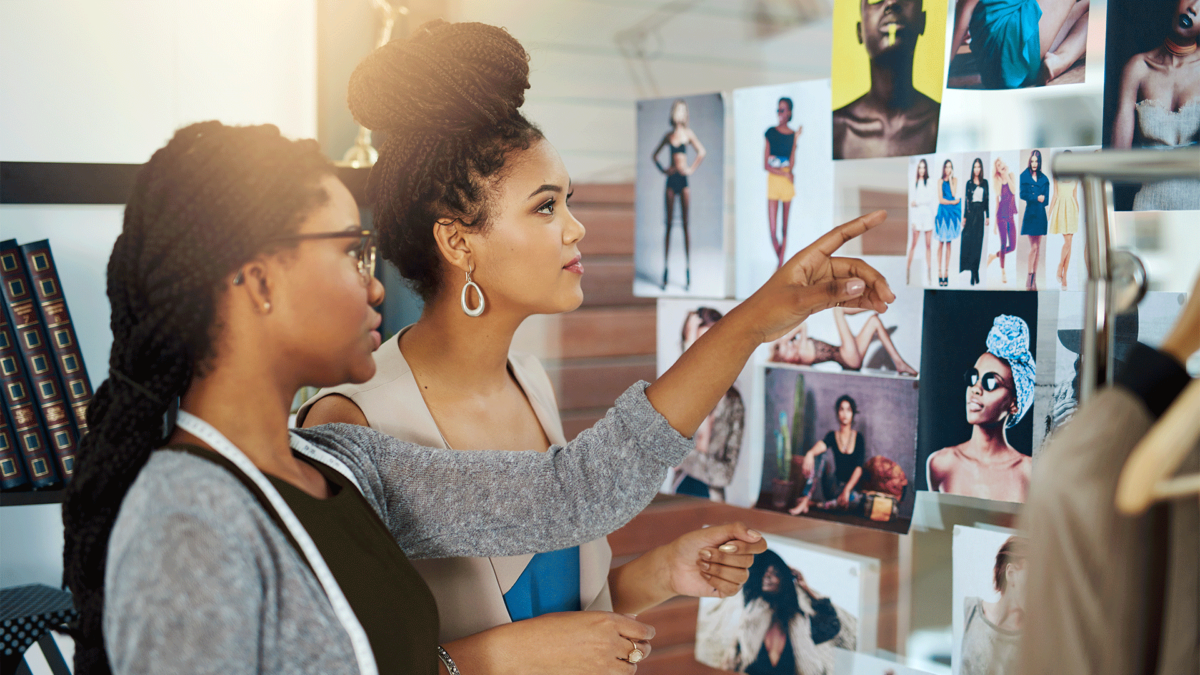
Fashion and footwear collections typically begin with moods, and this is why we call it the “mood board.” A mood board is made by finding inspirational images that fit your mood or theme, cutting out pictures from magazines, newspapers, and physically putting them on a cork board or pinning images on Pinterest. The mood board creates the vision of the collection, whether it’s dramatic and dark or resembles a softer aesthetic.

It will depend on the season as well as who you’re targeting in the footwear business. Who’s the target audience? Creating your footwear collection requires both creativity but also practical online footwear education on seasonal trends, forecasting, and catering to your goal customer and retail stores.

You’ll want to know what’s happening in retail stores simultaneously. Visit stores, such as Saks Fifth Avenue and Bergdorf Goodman, to observe and see which colors and details resonate for your own collection. What fabrics and embellishments strike a chord? You may see something at the back counter, or a small detail on a bag, or even the woman walking on the escalator captures your mood. Inspiration can be found at every turn.

The footwear education and design process is important for everyone to know, not just the designers. The process to get there needs to be, and is, touched by all different people throughout the shoe company. It includes the research of color, material, trends, design ideation, and the editing process to get to the best design.

Making shoes requires an extensive product development period where you’re not only working to resource your materials, prototype, and sample, but you’re getting the fit right. All of this needs to be done in a timely manner. This all happens before any pre-production or production and many people touch and influence the design process from marketing to customer, designer, and executives.