Spotlight on Mia Spicuzza Guzlas
Mia Spicuzza Guzlas has spent years teaching dance and building choreography into her students’ training. But after completing Dance Choreography Essentials, she found herself asking bigger questions about her own creative process, questions that led to one of the most personal pieces she’s ever made: The Other Side of Fine.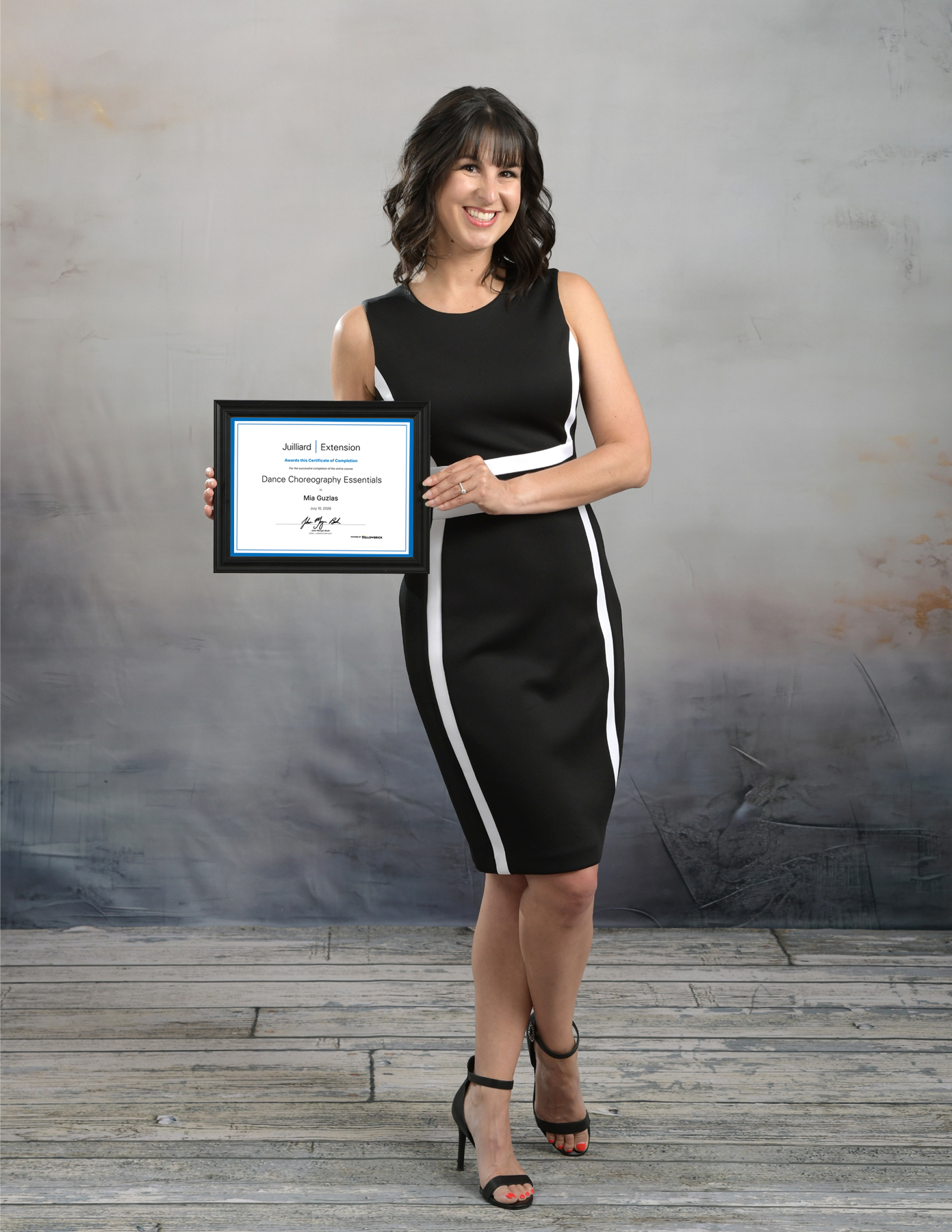
What led you to Dance Choreography Essentials, especially after teaching dance for so many years?
I’ve been teaching dance for many years, and choreography has always been a big part of what I do. But I reached a point where I wanted to challenge myself creatively and look at choreography differently. I didn’t just want to ask, ‘Does this look good?’ I wanted to think more about why I was making certain choices and what I wanted the audience to feel. Dance Choreography Essentials gave me an opportunity to step outside of my comfort zone, learn new ways of creating, and honestly fall in love with choreography all over again.
Tell us about The Other Side of Fine. What was the experience of creating and performing this piece like?
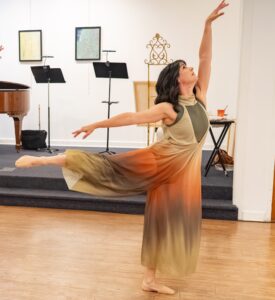
The Other Side of Fine came from the idea of how easily we say, “I’m fine,” even when so much more is happening underneath. The piece uses two dancers to represent one person. One dancer represents the version the world sees, the person smiling and saying “I’m fine,” and the other represents what is happening inside their mind. Creating it became much more personal and emotional than I originally expected. I also incorporated a live violist and a live painter, and we performed the piece in an art gallery rather than on a traditional stage. Seeing all of those elements come together was pretty incredible. Performing it was even more emotional. Afterward, people told me they cried, had chills, or saw themselves in the story. That was the moment I realized the piece had become more than choreography.
Was there a particular lesson from the course that really shaped how you approached this piece?
The site-specific work had a huge impact on me. It made me think beyond a traditional stage and consider how the space itself could become part of the choreography. That ultimately led me to perform The Other Side of Fine in an art gallery and incorporate live visual art and music.
But the biggest shift for me was learning to create with intention. Instead of simply asking whether movement looked good, I started asking, “Why am I putting this movement here? What does it mean? What do I want the audience to feel?” That completely changed how I approached this piece.
What’s been the most rewarding part of seeing this piece come together?
Without a doubt, the audience response. As a choreographer, you can have an idea in your head and hope people understand what you’re trying to communicate, but you never really know until you present it to an audience. Hearing people say that they had tears, chills, or that the piece connected with something they had personally experienced meant so much to me. It made me realize that dance doesn’t always have to explain everything. Sometimes you can simply make someone feel something, and that is incredibly powerful.
What’s next for you creatively?
I’m already working on my next piece! I want to continue exploring ways to combine dance with other forms of art and create experiences that feel a little unexpected. My next concept involves famous paintings coming to life through movement, with each painting telling the story beyond the image we already know. Completing Dance Choreography Essentials and creating The Other Side of Fine really opened a new creative door for me. I feel like I’m just getting started, and I’m excited to see where that takes me next.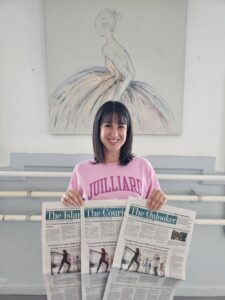
Follow Mia’s work at Southern Edge Dance on Facebook and @mia_guzlas on Instagram.
Choreography rewards exactly the kind of intentional, exploratory process Mia describes here. For a closer look at the course that helped her reimagine her creative voice, check out Dance Choreography Essentials from The Juilliard School’s Extension Division and Yellowbrick.