Your Customer: Consumer Cohorts

One of the most popular fashion parlor games is figuring out who the consumer is. In the past, brands would construct a profile.

Suppose I were interviewing a CEO or a designer as a journalist. I’d say this: “Who are you trying to sell to? Who is your target audience for this?” And they’d say things like, “We imagine our customer to be Sally, a 20-something-year-old woman who has recently relocated to the city and is working her second job in advertising or the creative arts. She also wants to wear something appropriate for the office, go on that date, and then meet up with her friends afterward.”

They would invent this person in their head.

They would spend all this money on targeting. And find it. Then try to design something for that person. Finally, they’d hope that there was a large enough portion of their target audience to communicate with.

From Gen X to millennials to Gen Z, we’ve been following these diverse generations. People are continually trying to figure out who’s out there. The responses we receive when we ask that question and look at the consumer base, I believe, are so often just too simple.

It’s always been too simple.

If a brand had a vision of its ideal consumer 20 years ago, that person might’ve been out there. But how many of them were out there? We have no idea because people are now trying to speak with 10,000 people at the same time. You won’t be able to accomplish that either.

I’ve always disliked the idea of Baby Boomers, Generation X, and Millennials. I don’t believe in generations. It’s sort of like a big thing that people talk about, in my opinion. You have a way of making sense of things.

Millennials are people who are between the ages of 25 and 38. That’s a really broad age range. There are many life cycles between those two points—from someone starting their first job to someone having their third child.

Because it’s such a significant change, and I’m personally skeptical, can you draw all of the conclusions that everyone does? The world is a confusing place. There are people from various walks of life. They’re on the go and doing all these things. Brands are attempting to find some way to think about it and who they can sell to.

Alternative Distribution and the Future of Film & Television: Digital Media Analytics

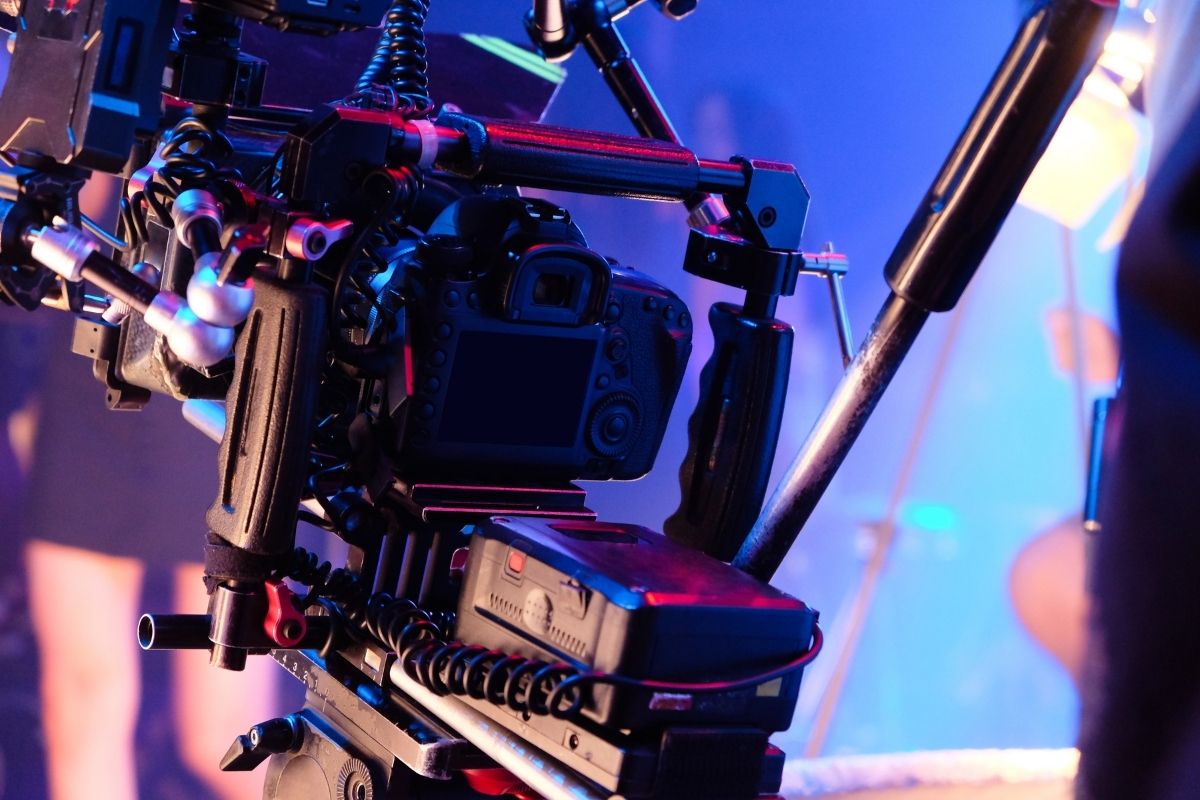
KIMBERLY ALEAH: As a content creator, data is one of the most powerful tools that you have at your disposal. Ultimately, when you make something, you want to make sure that you’re getting it out in front of as many different eyes as possible. What I do when making a piece of content from a creative standpoint, is always start with the fact that we need a hook. We need something that’s going to add something different to the larger cultural conversation. This is because when you’re on the internet, there’s unfortunately a lot of other stuff to compete with.

Once I have that hook that we’ve used from pre production, production, editing, all the way through the development process, we have to figure out where we’re going to put it. This is when data comes into play, because data allows you to profile your audiences. That can look like a number of things.

For one, you want to find out when people are consuming content. Are people consuming content on Monday, Wednesdays, and Fridays at noon? Are people consuming content on Tuesdays and Thursdays at 6:00 PM?

Another thing you want to ask yourself is – what is my target audience? Am I going for school age children? In which case, maybe I want to publish stuff before the school day starts at 8:00 or after the school day is over at 3:00? Is my audience younger professionals? In that case I might want to wait until they get off from work. Is my audience more based in New York than LA? What does that day look like for them?

Just asking all the different questions about who an audience is, what type of content they want to consume, when they want to consume it, and then lastly, on what device, is important to effectively reaching them.

Are they consuming content on a smartphone? Are they consuming the content on a desktop computer?

Across different age demographics, you’ll find that for the 13 to 18 window, a lot of that is vertical video. When you’re a creator, it might incline you to consider shaping your piece so that it plays a little bit more aesthetically for a phone.

It’s just thinking about all the different questions of who the audience is, what time they consume their content, where they are consuming their content, and lastly the ideal duration. Duration is one of the most powerful aspects of data because it lets you know that not only is an audience engaging with content, but they’re sticking with it. They’re watching for more than three to five minutes. They’re watching the full 12 to 15 minutes.

This is where you find your strongest audiences, because you’ve made something that they find interesting. If you’re already starting with something on your phone, and you’re doing it with a group of diverse individuals, and throwing it into this larger ecosystem, it’s not only going to inspire other people to share your work, but it’s also going to inspire you to create new things that you didn’t think of originally.

And so for me, I love smartphones, which are very on brand for millennials. It really is one of those things that you have as a tool in your pocket to tell stories instantaneously. When we talk about these larger social movements that are happening, there’s a reason that a lot of the stimulus, a lot of the incidents that start those movements were recorded on phones.

They’re so much more accessible. They just let everyone have an immediate voice that doesn’t have to be mitigated by a traditional development room, a traditional studio process. A lot of the bureaucracy gets skipped, and a lot of the content making gets put first.
Alternative Distribution and the Future of Film & Television: Theaters: Our Once and Future Temples

What does the future of cinema hold? I have often been beaten up over the last 10 years. Therefore, I’ll be very shy to say what I ought to say. You know my guess. I can tell you what I hope it will be, because we’re witnessing a television take over, streaming services take over the theater business unless you’re a big tent-pole movie.
We need to think about what we want for the theater industry in the future. The streaming television industry is booming because they produce great and digestible content, a user-friendly format, great funding, and plenty of resources. These factors negatively impact the film and television industry, which makes it difficult for traditional theaters to sustain their industry in the future.
I believe in the theater. I believe in human nature working as a society. However, we must employ the mentality of a ritualistic temple to maintain human nature in society. I refer to it as a temple because many of us don’t attend a physical church or a temple anymore.
We need to go to the movie theater. I’m not hallucinating. We, as a group, go to a place, preferably a dark house. We’ll speak freely, a heart-to-heart communication so that we enter an abstract world, forgetting reality. But you get down to the truth. I think that’s something. When you walk out, life is different. You are inspired.
It’s more than entertainment—it’s spiritual as well. I don’t see how you can get the same effect sitting at home watching television, going to the bathroom, and resume watching. It’s different. I think of the ritualistic event presented in a black box, where you’re sitting as a group, as a congregation. I think from day one in the cave; the cavemen spoke of how to hunt lions over a campfire. People become absorbed into storytelling and togetherness.
I still believe in the theater. However, I think it needs an upgrade. It’s hard to compete with television. If you want people to schlep into a big place, but have safety issues, then at some point it will cease to be. I don’t know how much theater can survive. Everybody’s going through a difficult time.
My thoughts are immersive, so we can experience with a group of people. You’re inside a movie instead of watching it from outside. The movie has its own language, 2D film, whatever, but it’s something bigger than life, with fine quality. Like when I was young, and I’d see a Hollywood make a movie.
No matter what they do, we go see it. You have a choice in this. Those days are probably harder to get back. It’ll be taken away by television, and unfortunately, sometimes iPhones. But in theater, you must make something good, very special. And some of them will be immersive.

Cinematic History: An Art, a Technology, Culture: Capturing Movement

“When talking about film history, you have to begin to think about what cinema is at its core. Cinema or motion pictures is an image that moves,” Alrick Brown explains.”
“As soon as man could see, he started interpreting stories, looking at the stars, differentiating shapes of objects, naming constellations. As soon as a kid could, they probably were drawing images with sticks and dirt.”
Early cave dwellers used image paintings in caves to communicate. Later, the Egyptians used hieroglyphics to tell their stories and preserve histories.
Those symbols and images were a prelude to film’s beginnings.
Over a century ago, the Lumiere brothers and Thomas Edison’s company, experimented and found ways to make images move, creating motion pictures.
Gomez-Rejon’s film tells how film history and Edison, others are joined by history
“I made a film recently called The Current War: The Director’s Cut. I wanted to show how filmmaking and electricity were invented at the same time,” comments Alfonso Gomez-Rejon.
It started in the 1870s with beautiful studies in film motion by Eadweard Muybridge. They were done, I think, with twelve cameras. That evolved into William Dixon and Edison working together on the kinetograph and kinetoscope.
Next came, the Black Maria, Edison’s film production, considered to be the first film company. Remember, at this time in history film was still a novelty. But then we see it progress. The Lumiere brothers (Auguste and Louis Lumière) have the first kind of commercial film screening.
Georges Méliès starts doing narrative storytelling, but it’s still very theatrical with a fixed camera.
“Everything evolves again with Edwin S. Porter’s, The Great Train Robbery. This film, with its illusion of uninterrupted time caused by innovative (for the time) camera cuts and pans, is like the beginning of modern film language, or film vocabulary,” states Gomez-Rejon.
It’s fascinating to see their work and how it’s been interpreted by film industry types throughout the ages. Certainly, these films spoke to me.
###

Cinematic History: An Art, a Technology, Culture: Fundamental History of Film

[Please embed: https://pixabay.com/photos/movie-film-roll-filmstrip-analog-3057394/]

“Fundamentals” means understanding the basics. For filmmakers, that means understanding where film has come from. Film is only a little more than 100 years old, but it includes literature, photography, drama, theater, dance, and music, all rolled into one art form. It’s a very powerful tool.

If you want to be successful in this field, it’s important to know what’s come before. When you stand on the shoulders of those giants, you yourself can become a giant in the field. Knowing the history of film will teach you what works and what doesn’t work, and that will make you a better filmmaker.

For instance, if you want to pitch a story, you might reference a film. Sometimes, these references can help you communicate an idea to somebody else.

Sometimes it’s hard because you don’t want to sound derivative, because hopefully you’re moving the medium by doing some original work or interpreting. It depends on what kind of filmmaker you are.

Still, you can connect to previous films to develop your style. Someone who expresses themselves with a camera should learn from previous films, just like an author would want to know literature to see how other voices interpreted certain feelings. When you make these connections, you can find a kindred spirit in a ghost of the past.

It’s sad that people in this industry don’t love history as much as they should, because we are artists. There’s always a struggle between art and commerce, but it is important to know everyone that came before.

There’s always something beautiful to learn from film history. Consider the originators of the montage, colors in film, Avant Garde film, documentaries, and music. They’re all telling a story. By looking back, you can move forward and stay current. You’ll hear new voices, learn from them, and be humbled by them.

Cinematic History: An Art, a Technology, Culture: Groundbreaking Films

“Being a student of film since I was 12 or 13-years-old, I just loved films,” says Sam Pollard. “Learning film history was very inspirational and informative in the shaping of my career. I would say anyone who wants to understand the evolution of film history, should first look at two groundbreaking cinema filmmakers.”
One early director’s contribution to filmmaking
“First, is D.W. Griffith. Though politically I have issues with some of his films, specifically Birth of a Nation, Griffith revolutionized narrative storytelling.”
Griffith, with his camera operator, Billy Bitzer, figured out that film was about more than having master shots. It was also about medium shots and using closeups to enhance a scene’s dramatic actions. It was about the interaction between characters.
He also created cross-cutting, parallel editing. These techniques let filmgoers see story, characters and action occurring in one place, before cutting to a storyline happening in another time and place—parallel action.
Eisenstein changed film editing forever
Another seminal filmmaker in the evolution of film is the work of Russian filmmaker, Sergei Eisenstein.
“Eisenstein’s film, Battleship Potemkin, specifically its Odessa Steps scene, was groundbreaking. It had revolutionary editing: from a political perspective, a social perspective, and from a cinematic editorial perspective,” Pollard remarks.
“This film is a must watch for anybody who wants to understand film editing and filmmaking—to watch the Odessa Steps scene repeatedly. I still am inspired and informed by that sequence. “
Another filmmaker who was very revolutionary for being very experimental but also engaging was Vertov’s Man with a Movie Camera.
Dziga Vertov was Russian, like Eisenstein. If you have the opportunity to watch Man with a Movie Camera, you’ll see he takes you sort of behind the scenes, so you see him, the filmmaker, making a film.
This was revolutionary not only back in the 1920s, but still today in 2020.
Very important filmmakers: Eisenstein, Vertov, Griffith.
Great American filmmakers after the silent era
“When we got to the world of sound, where audio became important, some filmmakers really stood out. But first, before talking about these films, one of the other silent filmmakers who stands out, and whose films I just rewatched, is Charlie Chaplin,” says Pollard.
“Chaplin’s sense of cinema, how he created emotion and character. It wasn’t with a lot of frills but just so dramatic and great. If you go back and watch Modern Times and City Lights, the guy was a revolutionary filmmaker.
But again, when you got to the 1930s, after the silent era was over, you had filmmakers like Alfred Hitchcock, John Ford, and George Stevens. These American filmmakers.
Influential filmmakers from around the world
“Later, though by the time I got into the film industry, I understood that it wasn’t only American filmmakers who were important but there were European filmmakers, too,” says Pollard.
Filmmakers like Ingmar Bergman, Robert Bresson, and Jean Cocteau.
“There were also African filmmakers, like Ousmane Sembène from Senegal. Yasujirō Ozu and Akira Kurosawa from Japan. Satyajit Ray from India.”
All of these international filmmakers were very revolutionary, with a real understanding of how to create personal, emotional cinema.
###

Range Planning and Sourcing Production: Where in the World is my Production Facility?

There are 330-340 million consumers in the US who buy footwear. Businesses need to take a lot of careful consideration when designing and developing their footwear so they produce products that consumers want to buy.

In America, we import about two and a half billion pairs of shoes every single year. Looking at this per capita, this equates to around 7.2 or 7.3 pairs of shoes for every single man, woman, and child in this country every single year.

American consumers import and purchase more footwear per capita than any country in the world. We don’t have the resources in our own country to meet the needs of the American population so we import a lot of materials from other countries.

Of the two and a half billion pairs of shoes, we may produce around 30 million pairs a year here in the US. Production takes a lot of capital-intensive investments, as well as high skilled labor to ensure that the footwear is of the highest quality.

Often, companies have to figure out more innovative ways to source their products and distribute this product through the supply chain. And this supply chain involves the movement of materials through several other countries before they arrive in America.

For example, they may be shipped to Vietnam from China, then exported out of Vietnam across the Pacific to the port of Long Beach or the port of LA. The products are then distributed to a distribution center in Southern California or somewhere in the Midwest, such as Louisville or Memphis. Finally, it is distributed out to a retailer or consumer, which can be in any state of the country.

So, as a business, it’s important to focus on sustainable practice when sourcing the materials for your footwear. This is important for both a consumer awareness perspective and an environmentally friendly perspective.

Retail Overview: History of Retail Stores

When it comes to retail, it’s really important to understand its history.
The birth of the modern fashion idea started with Charles Frederick Worth in the late 1800s. The idea of retail started to develop, especially at the turn of the century, by folks like Selfridges and Macy’s.
Here’s why: All the way up until that point, you always went to a tailor or a dressmaker to have something made specific to you. Macy’s and Selfridges had to figure out how to get people into a store to buy mass-produced clothes.
Why on earth would you want to go buy something mass-produced, when even if you were not that wealthy, you could have your mother create something that fits you perfectly?
So, at the very beginning, Macy’s and Selfridges had to figure out how to get people into the store. It had to be about more than the product. It had to be about the service and the experience. Hence, customer experience.
If you’ve ever watched any of the films about Macy’s or Selfridges or read any of the books, you’d know they were the ones that created things like the perfume counters on the bottom floor. Why? Because when you spray smells, people react to them. Consequently, they’re gonna stay longer. It’s also going to get people to come in.
Nowadays, that might look like a DJ or an influencer coming in to talk/meet fans. Back then, it was Charles Lindbergh who showed up at the Selfridges in London after his transatlantic flight.
In short, retail isn’t just about a transaction. It’s so much more than that. Hence, there are a lot of moving pieces in retail.

Retail Overview: Trade shows

Historically, trade shows were an enormous vehicle for moving your brand. Smaller brands who were looking to get their brand out there in a larger way or bigger brands who were looking to increase visibility would get a booth at a trade show. They would put their booths together as if it were a store, and buyers would walk the floor. They’d come and check out the brands to see what they had. It was really a huge vehicle, and a lot of people used it all the time. They were typically done in New York and Las Vegas. There were some on the West Coast for apparel as well. You would have a store in South Carolina, like a family-owned shop that’s been in your family and you’re looking for new product, fly to Vegas, walk around, and place all your buys. That’s not going to go away because people will still need a place to shop the market and will still need to see what new things are out there. But, it’s going to change.

Within everything, we have to evolve, so trade shows are evolving. ComplexCon’s something that’s evolving. Everyone wants to experience something, and if you can bring it to the consumer, and you can have that conversation. It’s all about driving conversation because the same brands that are doing the pop-ups, the same brands that you may find at a trade show, you’ll also find at ComplexCon or Sneakercon or any of those things. It’s all to drive conversation. These things won’t cancel out the other, but they will continue to evolve.

Sourcing Materials: Diversifying Sources

Sourcing is one of the biggest components when you talk about manufacturing and production for your fashion business. Sourcing will basically dictate your costs. The key to keeping costs down is to do research and source worldwide for the best rates. For Elle B. Zhou’s founder, Elle B. Mambetov, this means having her brand’s dinnerware made in Poland, while her fashion collection is produced in London, and digital printing is done in both the United Kingdom and U.S.

Fabrics are sourced from other locations, based on cost comparisons. For new garment tags, Mambetov priced them out in several different countries before deciding. Sometimes, pricing is going to be better to have items made in the U.S. rather than China. Why? Once you factor in Chinese New Year, that’s going to cause a time delay. Then there is the extra cost for shipping overseas. Once you add the shipping cost, you may actually get it faster in the U.S. for basically the same price.

Time and shipping costs are things you want to factor in when you’re sourcing a product. Learn from online fashion education, conduct research on manufacturers, and look everywhere before making your final decision rather than default to sourcing in China. You also need to think about the quality.

Mambetov knows when she’s sourcing garment lining she will find impeccable quality in London without having to oversee the process in person. To take away the guesswork, she sources from reputable companies she has bought from in the past that have produced high quality product.

When sourcing new fabrics, always make sure to ask manufacturers for swatches. They should send you these swatches at no cost. You are offering them business, so they will send these for free in hopes of winning your business with quality fabrics and materials.