Sneaker Industry Price Increase

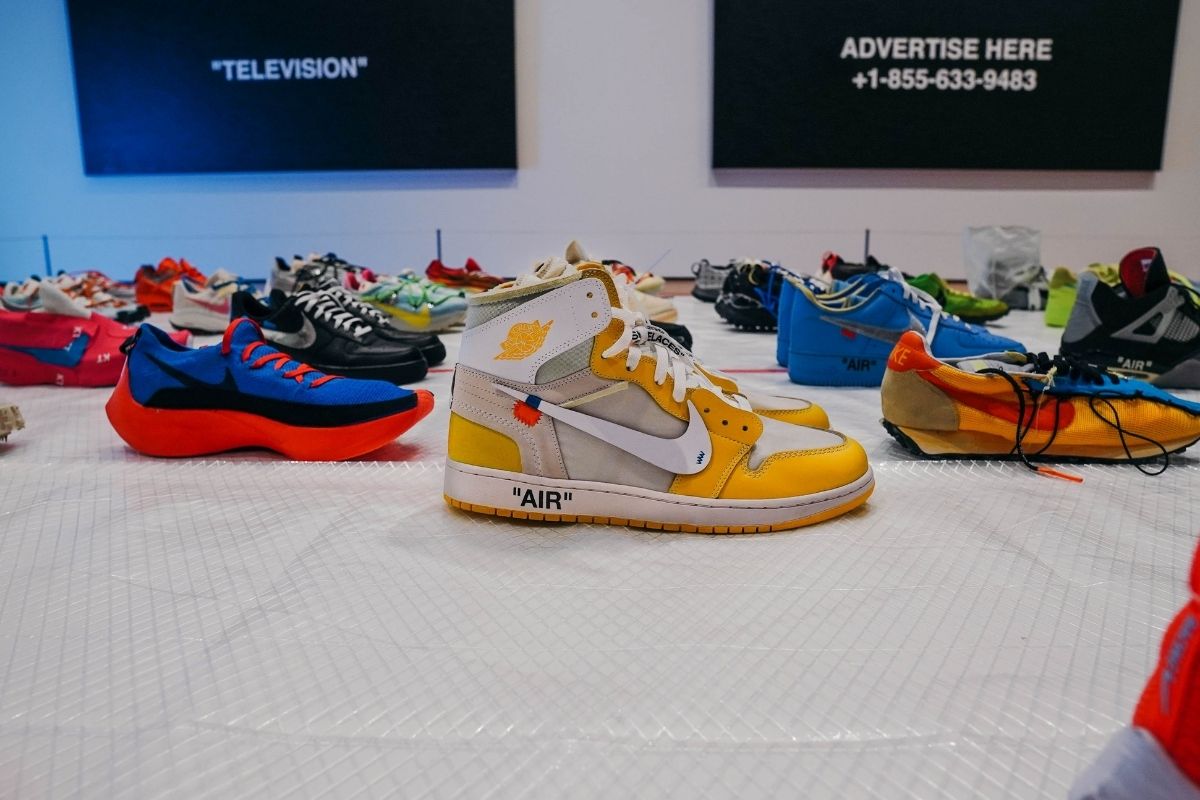
Like everything else in the world, the price of sneakers has consistently gone up over the years. This is due to inflation, but even more so, due to market demands. For example, when the original Air Jordan 1 came out, it cost $65. Nowadays, you are paying around $160 for the same sneaker. That’s almost a $100 price increase that happened over the past 30-plus years for that one shoe.

Sneakers Are Used as a Status Symbol

The price of sneakers used to be viewed as more of a status symbol. The New Balance 990 was the first sneaker on the market to cost over $100, so if you saw people wearing them, you knew they had money. Many drug dealers, specifically in the Philadelphia and Washington DC areas, wanted those sneakers to display their status.

The same thing happened with the Nike Air Foamposite One. They became a status symbol because of their price. They were about $180 when they first came out in the 90s, and they quickly became the known shoe of hustlers. Status is how sneakers and the sneaker culture were given life and why sneakers are more expensive now than ever. Today, there are New Balance sneakers that cost close to $400 and certain Air Jordans that are over $300 a pair.

The price increase of sneakers is also causing the resale market on shoes to go up. It’s not just about the initial price of the sneakers, it’s also about the demand. A pair of Yeezys that retail for $220 can resell for over $1,000. Most people that I know aren’t going to go out and buy a pair of $1,000 shoes, so the cost is almost fictional at this point.

Most ordinary people aren’t paying the $1,000 price tag on resale shoes, but celebrities and rappers are. They buy them outright with cash, or they make trades. They are taking four or five pairs of shoes that they own and trading them all in for one new pair. This is what’s driving the economy on sneakers up. Of course, people are looking to cash in and make as much money as possible on the secondary market, so I don’t see this ending any time soon.

Sneaker Education on the Stages of the Sneaker Economy

There are different stages of the sneaker economy. First, there is wholesale, which is the sneakers’ manufactured price and the cost retail establishments pay to procure the sneakers. Next, there is retail. Retailers are where consumers would buy the sneakers. The retailers can charge whatever cost they want; however, there is a suggested price created by the manufacturer called the MSRP (manufacturer’s suggested retail price.) This price is just a suggestion and does not have to be used by the retailer. Finally, you have the resale economy. In this day and age, sneakers are the most popular on the resale market. This is where a new kind of retailer comes into play, called consignment shops. Consignment shops can include physical stores and also sites like eBay and Amazon.

Resale Market of Sneakers

Consignment shops thrive purely on the resale market because the value is based on popularity and demand versus supply. For example, let’s say a popular sneaker hits retail stores, and only 2,000 were made, but more than 2,000 consumers want them. When these sneakers enter the resale market, they become more valuable due to their rarity and exclusivity. As a result, the value from their box price is going to skyrocket.

If you are going to resell your sneakers, then be prepared to pay out some of the profit because everyone wants a cut. If you are reselling shoes with a consignment shop, they will take 20% of what you make on them. If you are reselling them online using an e-commerce site, which allows you to sell anything, then be prepared to pay sellers fees and such.

Now you have companies that are starting to index the resale value of sneakers that are historically released over time. It’s almost as if we are treating future models of sneakers like current commodities. When you have companies tracking the resale value of sneakers in real-time, it speaks to how the resale sneaker market has come to be worth over one billion dollars.

This sneaker resale market is crazy because, to be quite honest, many of these sneakers are widely available. Some consumers just assume that specific sneakers are going to be hard to get, and it’s this way of thinking that drives the value of the sneakers up. It’s similar to the speculation that goes along with the stock market.

Social Media and the Sneaker Industry

When it comes to sneaker media, hashtags are important, but they’re decreasing in their overall importance as time goes on. The reason I say that is because hashtags used to be a way for you to discover content through the hashtag, but a lot of these social platforms have refocused their own search efforts and made their own search functions on the platform a lot easier to use. As a result, hashtags are less important nowadays, although they are still useful and important in the sense that you do want to follow hashtags that you’re really interested in.

For instance, “what did you wear today”, or WDYWT, has always been a legendary hashtag, even before hashtags were popular, back on sneakers forums like Nike Talk or ISS. These WDYWT posts were always huge because they literally showed you what people were wearing on that day, so that hashtag is always a good one to follow.

Otherwise, things like Sneaker Head, Nike, Adidas, etc. are important to follow if they align with what you’re looking for. Beyond the hashtags, I would suggest just curating and cultivating your timeline so that you have the people and the content that you want to see visible immediately when you open the app, rather than having to dig through hashtags. Even though you can follow hashtags on Instagram, that’s just like following a person, so you want to make sure that you’re curating and cultivating your timeline to have the content that you’re looking for in the first place.

One of the things that people overlook in the whole media landscape is SEO, or search engine optimization. Basically, while I want to create content that the reader can understand easily, I also need to create content that a search engine can understand easily and bring more people to my site. This is kind of a good indicator of how varied your skillset needs to be in this game.

You can’t just be a writer. You can’t just be a photographer. You need to know a little bit about everything. You need to know where to put the keywords. You need to know about what people are actually searching for. You need to know how to write about the shoe. You need to know about the shoes that are coming out and the fact that they’re valuable in terms of traffic and just sitting there waiting for you to make content around them. Overall, there are a lot of things that you need to pay attention to if you want to be successful in sneaker media.

Ultimately, it kind of comes down to the numbers and realizing what your audience actually cares about. We have to think about it on a daily basis. There are certain shoes that I know I care about way more than the people who read our site or the people who follow our brands care about them. In these cases, I kind of have to look at it and ask myself, “are we talking about this shoe too much?” We have to ask ourselves if people in our demographic actually care about it or if it’s just me. This is because ultimately, it needs to be more about what the audience is interested in than what I’m interested in.

Have you considered exploring an online sneaker education? If not, it’s worth thinking about, as it allows you to gain all of the benefits of a good sneaker education without needing anything more than an internet connection and an interest in learning.

The Changing Face of Sneaker Media

Sole Collector Magazine highlighted the sneaker industry in a way nothing had before. It was a quarterly print magazine just dedicated to sneakers that started in the early 2000s. It profiled actual collectors, and you could read about other people who had the same passion as you did.

It’s a website now that highlights new sneaker releases, reviews shoes, and features interviews with people who influence sneaker culture.

Another moment that I feel moved sneaker media forward was Kicks On Court and Celeb Kicks that happened through Nice Kicks, a website all about sneakers. Those became places you could get your internet dose of what players were wearing in the NBA, and what your favorite rapper or entertainer was wearing through paparazzi photos.

Another key moment was probably the show Sneaker Shopping. There was really nothing like that that had existed before. It was the zenith of where we are now with sneaker culture. It started in 2014 and is in its tenth season now.

The show features celebrities who are identifying themselves as sneaker-heads and athletes or entertainers that are identifying themselves as sneaker-heads. You get to see what clothes and sneakers they’re into because you’re actually going on a shopping experience with them.

Another major media moment for sneakers came when Vine was the big thing. Remember the meme about shoes that went: “Officer, I got one question for you. What are those?”

Usually, internet memes come and go. They’re hot for a week and then gone, but that shoe meme felt like it lasted for months. It spawned sneaker podcasts that were named after it. People used the audio from it in their Vines and their posts on Snapchat or Instagram.

Sneaker education has changed along with the media, too. Online sneaker education has replaced a lot of in-person classes and internships.

The media highlights how similar the sneaker industry is now to the way it was 10 or 15 years ago. The media covering the sneaker industry has changed, but what people are looking for and want to be a part of is still the same.

One example is the collector profiles in Sole Collector Magazine. You would open those pages up and read about other collectors who had this same passion for Air Jordans as you did.

Now, instead of looking at a paper magazine, you’re connecting with these people through Facebook in an Air Jordan Facebook group or through the curated people that you follow on Twitter or Instagram.

There are new ways to consume media today, but I think the core tenants of it and why people consume it are still the same.

The Early Days of Blogs in the Sneaker Industry

Gary Warnett, who had his own blog, GWARIZM, passed away last year. He also wrote for sites like Complex, and Crooked Tongues, a forum that went into retail. He wrote for a bunch of brands and was probably the most notable sneaker writer of all time. In the early 2000s, sites like Hype Beast and Highs Nobiliety came up. Sneaker News and Complex really tapped into sneaker media. They started off really bare bones but they’ve become a lot more robust over the years, and now you have a lot of sites getting into sneaker coverage.

Sneaker Education in Media

GQ, the Bleacher Report, and Sports Illustrated are all covering sneakers now. Speaking of Sports Illustrated, they had a revolutionary article published, I believe, in 1990, called “Your Sneakers are Your Life.” It detailed a story in Chicago about a kid getting murdered over a pair of Air Jordans sneakers, and on the cover is a pair of Air Jordan 5s with a bookbag and a gun on them. That moment has always led sneaker journalism, especially from a very mainstream response.

A colleague of mine, Rich, started Kicks in the City, which has been around forever. Rich is a super important dude in the world of sneaker media. He did it all by himself for many years and really killed it. People don’t necessarily give Kicks in the City the credit it deserves, but it was one of the first, if not the first, sneaker blogs. For whatever reason, some other sites did a better job expanding their brand, but Rich was there first.

A little bit after, there was Kicksology. Professor K back in the day. These things all came from the forums. After that, it became commercialized a little bit to where people realized, hey, we can tell these stories and turn it into a business, rather than just a community. Now the game is overrun, and you have a million websites, a million Instagram accounts, a million Twitter accounts that serve this information.

Sneaker Media Evolution for Students in Online Sneaker Education

Back then, it was totally different. You didn’t have as many sources. You didn’t have as many shops taking photos of their sneakers and posting them online. I wasn’t working in sneaker media during that early era, but just looking back on it and seeing the kind of content people were creating, you can tell how different it is. How much they still had to learn. I mean, those things are important, but we’re really on a different level now as far as what we’re thinking about or what we can accomplish or basically how seriously the brands take us.

The History of Nike’s Presence at the Olympics

The Olympics have always been a big opportunity for not only sneaker companies and the sneaker industry, but also for fans of sneakers or sneaker fanatics. You always see a lot of new things in the Olympics. This has been true back as far as the ’30s. One example of Olympic branding opportunities was when Jesse Owens wore Dassler Brother track spikes when he won multiple golds in Nazi Germany. If you look at a lot of Adidas’ classic trainers, you could call them all-purpose trainers, you’d have stuff like the Rome and the Montreal, or the SL72. A lot of those classic trainers are named after either cities where the Olympics were held in. Companies have also used the year the Olympics occurred, in the case of the SL72. Adidas dominated that market for a long time, if for the only reason that they had sort of that grasp on the European market and on doing all-purpose trainers. Nike didn’t exist as Nike until 1972. In starting Nike, Bill Bowerman and Phil Knight got runners wearing the shoes. Steve Prefontaine was a big example. He was an Olympic runner from Oregon. He Died tragically in a car accident when he was in his early 20s. He didn’t even get a chance to run in what would have been hopefully his redemption Olympics. He’s the person on whom Nike based a lot of the ideals of their running business, where he would come out so strong and want to just run everybody into the ground. He would not be able to carry through the line, even though his records did stand for a very, very long time. I believe some of them still do. Later on, if you want to jump ahead, you would get Michael Johnson in 1996 running in gold spikes. That was a big historical event in sneaker education. The gold shoes. There was just something so prideful about that. I was in college at the time having our athlete kick butt on the world stage in our country wearing gold shoes. Nothing said “America” more than that in my mind- his swagger, his dominance, and those shoes were just kind of a perfect combination for saying, “Welcome to the United States, we’re here to kick your butt in track, and we’re going to have the world’s best athletes in the world’s best footwear.” That’s what I really remember distinctly when it comes to shoes in Olympic games. The Olympics is a very important platform for sneaker brands to show off their latest technology. Nike, in particular, always takes advantage of this stage. In 2008, they brought out their lunar cushioning foam. That went on to be an important piece of sneaker technology for the brand for years to come so remember that as you continue your online sneaker education. In 2012, at the Olympics, Nike used that platform to roll out Flyknit, which of course is now a billion-dollar franchise. Nike is the brand that most takes advantage of the Olympics, but of course, everyone wants to be part of this gigantic global sporting moment. I think the amount to which brands want to put their logos on athletes for these types of moments, like the Olympics, shows just how incredibly important it is for them. This is true whether the logo is on the athletes when they walk in or when they’re on the medal stand. There’s a famous story from the 1992 dream team. Michael Jordan didn’t want to show the Reebok logo on his Team USA jacket, so he put the jacket over his shoulder or obscured the logo. This was because he was a Nike athlete, because he is such a huge Nike guy. Nike had paid him so much money up to that point and continues to make him billions of dollars. There was no way he was going to show off a Reebok logo. So if you look at the images from that event from that medal stand, a couple of the Nike guys are very carefully obscuring the logos on their Reebok jackets. You had much of the dream team in ’92 wearing Nikes. It was Michael Jordan in his 7s with the number 9 on the back, Scottie Pippen in the Air Flight Lite, and then even Charles Barkley, David Robinson, and John Stockton all in different Nike inline models done up specifically for the ’92 Olympics. I remember seeing them in stores, and again, that was like innovation, an event marked in a specific time. Unfortunately, with an event, if you bought it right then, you were of the moment. It was perfect, but just for those moments. Six months from then, it didn’t really matter how cool the shoe was. The event was over. In those days, especially in the early ’90s, before retro really became a big thing, it was more important to be in the moment and have whatever the cool shoe was right then. If you are wearing Air Jordan 1s in 1990, that wasn’t necessarily cool. That was sort of saying you’re behind. What are you waiting for? So the Olympics would always mark something and establish it as the new thing, whether it was the Lunar Racer, or the first Hyper Dunk, or the Flyknit Trainer and the Flyknit Racer. It was an opportunity to look at Nike. Adidas did the “made in Germany” Prime Knit for the Olympics, and you know those are very, very hard to find, but the Olympics is still that showcase for new technology and new shoes.

if(window.strchfSettings === undefined) window.strchfSettings = {};window.strchfSettings.stats = {url: “https://yellowbrick-co.storychief.io/en/the-history-of-nikes-presence-at-the-olympics?id=2016820546&type=2”,title: “The History of Nike’s Presence at the Olympics”,id: “a31febc5-c31d-435b-9c43-2aa027c870b0”};(function(d, s, id) {var js, sjs = d.getElementsByTagName(s)[0];if (d.getElementById(id)) {window.strchf.update(); return;}js = d.createElement(s); js.id = id;js.src = “https://d37oebn0w9ir6a.cloudfront.net/scripts/v0/strchf.js”;js.async = true;sjs.parentNode.insertBefore(js, sjs);}(document, ‘script’, ‘storychief-jssdk’))

Sneakerhead Talk: Sneakers and Personal Identity

Sneakerhead culture has significantly grown since the 1980’s. As music and sports embraced sneakers, the industry’s influence on shaping the identity of its consumers has been visible. Whether it’s repping you’re hometown or your favorite sports team, sneakers have emerged as an visual way to express who you are. Russ Bengtson, sneaker writer and editor, spoke to Yellowbrick about how sneakerheads have found identity through sneakers.

Watch the full video to learn about:

  • How sneakers can be a reflection of one’s personality.
  • The impact NCAA sports has had on the sneaker industry.
  • Brands’ ability to capitalize off of raising prices.

Sneakerhead Locale

“There has always been a bit of a split between East Coast and West Coast when it comes to sneakers. I grew up on Long Island in New York,” says Bengtson. “There has always been a lot of overlap between the two coasts, but you had shoes like the Chuck Taylors and the Nike Cortez that really make an impact on the West Coast.”

“The East Coast — especially New York — is different because a lot of people don’t have cars. Instead, your sneakers would really be where your status would come from. Maybe in California, you would get away with other things because you had a car. Your car would be your status,” Bengtson continued. “In New York, your shoes are your status. In this area, you’re dealing with subways and crowded streets. You gain respect from making sure your shoes don’t get stepped on and making sure your shoes don’t get taken. This doesn’t happen as often as it used to, but it was something significant. Shoes were something you’d protect and place quite a bit of value on.”

Team Love

“Before we talk about people, we have to talk about basketball programs, team colors, certain athletes being on certain teams, and how those things affect sneaker culture,” says Bengtson. “You would want powder blue Uptowns (Nike Air Force 1’s) because North Carolina was crushing teams. This was before the golden era, when everybody was rocking the starter jacket and the jersey, before the Mitchell & Ness phenomenon,” he explains. “Going back to my childhood, it was about watching North Carolina and Duke, watching UCLA, wearing the powder blue and maize, or any other colorway. It was about Boston College, wearing the burgundy and mustard.”

Although individual endorsements weren’t popular during this time, it was standard practice for college teams to have endorsements deals. As a result, teams and brands were closely affiliated. “North Carolina had the weapons and all of the emerging styles under Converse. Georgetown had the Hoya Nikes — the midnight blue with the smoke gray,” recalls Bengtson. “With college basketball teams, you had the particular colors of their uniforms all the way to brand Jordan. All of a sudden, you had these college teams’ colors on everybody’s feet around the way.”

The Price of Being a Sneakerhead

“When sneakers would get popular, it wasn’t always just because of who was wearing them. In some cases, it would even be about how expensive they were,” Bengtson remembers. “You can look at something like the Adidas Forum, which didn’t have any player associated with it. Players wore it, but it wasn’t necessarily a signature model. However, people still wanted it because of how expensive it was.”

For sneakerheads, price and exclusivity adds to allure. “A lot of these brands that didn’t necessarily make a lot of noise in other spaces were able to have an impact because of the price tag and because of the status that the shoe gave you, says Bengtson. “When it really comes down to it, in a lot of places, the sneakers you wear are a lot more meaningful than just being a pair of shoes. They say a lot about what you value and what you identify with, and they have a real effect on the way other people view you.”

You can learn more about the history and future of the sneaker industry by exploring Yellowbrick’s Sneaker Essentials online course.

The Holy Grail of Sneakers

A Grail sneaker in the sneaker industry refers to that one sneaker that you would basically give up all of your other sneakers for. It is the crown jewel of your collection. Whether you have it or you don’t have it, it is that one piece that defines you as a sneaker collector and defines your collection.

Back in the day you would have to go through a lot of things to acquire your Grail. That could mean reaching out to someone overseas, searching in basements, or really wild things you probably wouldn’t have to do anymore. People would do it, though, because that one piece would define your collection and would define you as a collector. It’s the same as an art collector going after a rare or interesting piece of art. A Grail should mean something to you.

“Grail” is very loosely used nowadays in sneaker education or online sneaker education, but when it’s in its purest form, the stories mattered because that was a sneaker that you would go through great lengths to acquire. Nowadays, that’s made it a little easier because if you have enough money, you can get it.

Looking for a Media Career in the Sneaker Industry?

If you’re looking for a career in sneaker media, first and foremost, you have to know about sneakers. That might seem obvious. But there are many experienced, knowledgeable people in sneaker media nowadays. If you don’t know what you’re talking about, we will know pretty quickly, and you will not last. It’s that simple.

You need to be passionate about your sneaker education. This is not a field that you can just walk into without knowing what you’re talking about. Sneakers can be two different types of products. If you’re wearing them on the court, on the field, or for any athletic activity, they’re performance products. But if you’re not, they’re fashion products. You’ve got to look at it that way.

If you’re getting into the content business, you need to know how to write. You need to know how to speak. If you want to be on camera, you have to know how to hold yourself on camera. You have to know how to interview people. You need to know how to use a camera, edit, and set up a shoot.

It’s no different from any other content creation angle or subject. Any skill that you would get from a media curriculum at any reputable college or university will get you where you need to be. But in order to get over the hump, you have to know your sneakers, and that’s where online sneaker education comes in.

The Impact of Viral Marketing on the Sneaker Industry

There are a lot of ingredients that go into making a viral piece of content. Obviously, there are the technical aspects with how many shares, how many comments it gets, and the SEO value of the headline that you put in. Those are big factors.

Another factor is, say it’s an interview, being brave enough to ask the right question that is going to get the right answer. One example that comes to mind is the sneaker shopping episode with Bella Hadid. Through that interview, there was a real viral moment where Joe asked her what sneakers a guy must be wearing to approach her.

“If homeboy is coming through with these, it quiet. Yeah, no, it’s quiet for him. But, like, if he comes through in these, you’ve got some Air Maxes out here, you’ve got some Jordans, homeboy’s going to, like, get it,” says Hadid.

One of these viral moments that really comes to mind is DJ Khaled on “Complex Closets.” Khaled’s famous line, “Congratulations, you played yourself,” became one of his catchphrases, and that was the first time you heard it, and it was memed. It was GIFed all over the internet.

It’s a combination of all of those things – just knowing the back-end part of it and knowing the right keywords and the right tags, and you also have to know the right SEO headline. Just having the right subject, being brave enough to ask the right questions, and getting that right content is what really makes something go viral.

One of the most important things to remember for social media is that you have to give somebody something and help somebody in some way. A lot of people approach this in sneaker media and in other media basically about conversions, about how they want to use a tweet to get a click or use a tweet to sell a pair of sneakers and make a little bit of money off that. That’s good sneaker education, right there.

But you’ll find that it’s not really about that. You have to think first and foremost about how you’re helping your audience. What are you giving them? Are you giving them a piece of information? Are you giving them a cool shoe? Are you giving them a meme that they might find interesting? Are you giving them an opinion on something that they may not have heard before that may help color their decisions?

You have to actually give them something of value. You can’t just think about the numbers. We get lost in that a lot because we have to make numbers, but you have to consider what your audience wants and what you can actually give to them to create a bond. That only furthers the trust you have with the people who follow you, with the people who read the things you write or consume the videos you watch, so remember all of these as you continue your online sneaker education.

What makes a social media campaign or a regular media campaign really work is authenticity. That’s always going to be what matters. You could really be someone. You could be someone with 500,000 followers, and if all you want to do is get paid by companies to post things, people are going to catch on to that and realize that you’ll just post anything provided you get the right amount of zeros at the end of the check.

Eventually, your following is going to trail off, and people aren’t going to trust you. You need to build up an identity first if you’re a person working on your own thing and be true to that and recognize that as much as your identity as you share people are building up their own identity for you or getting a feel for what you’re into and what you’re not into.

That’s not to say that you can’t evolve or you can’t change, but if you’re kind of all over the map or if you’re only posting whatever the newest stuff is no matter what it is, eventually people are going to realize they can probably get that from somewhere else. The only thing you really have is yourself.

If you’re a brand, it’s sort of the same way. If you’re pushing something as the latest and greatest, and two months later, you’re pushing something else as the latest and greatest and have completely abandoned whatever came before it, people are going to remember that. And eventually, they’re going to start questioning whether this new great thing is really that great at all or whether they even need to pay attention to it because a month from now there’ll be something else.

So that’s the important thing–remembering that other people are going to remember this stuff too. You can’t just throw random stuff into the void and assume it’s going to go away because it’s not.

Lower Barriers to Entry in the Sneaker Industry

Sneaker media now is about a lot more than just writing about when the shoe is coming out and which stores will carry it. You have to figure out what people in the scene care about. You have to create video content that can kind of give your own spin on that shoe beyond the objective facts around how much it is and how limited it’s going to be.

Sneaker education, and particularly online sneaker education, have opened up the world of sneaker design and media to more people around the world than ever before. There are just so many more voices out there.

It’s also interesting because now, brands are kind of competing with sneaker media. When sneaker blogs first came about, brands and the sneaker industry in general hadn’t really figured out how to tell their own stories around shoes, so they had to rely on websites like Sneaker News or Complex to tell those stories for them.

Now, the brands have their own ways of telling these stories and are increasingly more interested in doing so because they can control those narratives and they can create them on their own terms. There’s a little bit of a push-and-pull now in that relationship because brands would rather tell the stories themselves in a lot of instances.

Sneaker media is something that evolved as a reaction to sneaker culture. I feel like you had people who were super interested in sneakers. You could see that in something as simple as basketball.

Not to make Michael Jordan an example of everything, but Air Jordan, to some people, was as big a deal as Michael Jordan himself. Regular media, whether it’s newspapers or even magazines, were sort of slow to pick up on that. You would maybe get a photo of a sneaker somewhere.

I believe it was in 1987 that Sports Illustrated wrote a little column next to a piece on Michael Jordan about the Air Jordan 2. That was a huge moment and something that I cut out. I think I still have it somewhere because it was a whole thing specifically on the shoe.

This is off-topic a little bit, but that was the attainable part of Michael Jordan’s sort of magic. It’s like you couldn’t literally be Michael Jordan, but you could wear the same shoes he did. To find something you could read about that shoe was really special back then.

This was even before Bobitto wrote his piece in The Source. That piece took this thing that a lot of people were interested in, and one person who knew a lot about it talked about it. That made a lot of people realize, “Hey, I’m not alone in this.” I think we all had friends we talked about sneakers with, but knowing it could be this thing was super important.

I remember when I was writing to SLAM to try and write for them. One of the reasons I wanted to is because I knew the first Air Jordan Retros were coming out in 1994 or 1995, probably because they were in a magazine. I forget who mentioned it. But I wanted to write about them somewhere, and SLAM seemed like the place I would be able to do that.

Sneaker media before that was a very service-oriented thing, whether it would be Consumer Reports talking about something or specifically running magazines. I think those magazines probably don’t get enough credit. Magazines like Runner’s World talk about running shoes, but as a tool. They’re not talking about it as if it’s cool because it has this visible airbag. It’s like, “No, we ran in this for 500 miles, and here’s what we liked about it, and here’s what we didn’t.”

Since then, obviously, it’s blown up everywhere. Bobbito did a sneaker show on ESPN. You had web-based sneaker shows even just in the Complex network, whether it’s Full Size Run or Joe La Puma doing Sneaker Shopping or DJ Clark Kent and me doing Quickstrike, which predated a lot of those things.

It was a matter of knowing an audience is out there and convincing someone to take the chance on you to serve that audience. I think that’s the most important part — the audience was there, and the interest was there. The audience just needed that product to serve them, and it grew up around them.