Assignments: Your Portfolio

Building your design portfolio requires employing a selective, targeted appeal. As design specialist Caletha Crawford explains: “Your first inclination might be to create a portfolio that has really wide appeal, because your goal is to get a job.”
When someone is just starting out, their goal may be to get any job, just to get their foot in the door. While that’s a good attitude—an attitude of being willing to do whatever it takes to get to where you want to go, Crawford advises selectivity.
“Maybe you are a rock star with draping, or you found a passion and a skill that you didn’t know you had in photography,” Crawford says. “Remember that you really want this portfolio to reflect you, and you want to showcase how you would be a great fit for your potential employer.” In order to do that, your portfolio really needs to clearly display your unique personality and talent.
In selecting what to showcase, Crawford advises going back and reviewing your own design history—whether it’s your history with this course, with other classwork, or something outside the scope of school entirely. Review all those things you’ve created, even those things that might reflect your preparation for getting you where you want to go.
The first thing that you want to do is go through all of your past creations, as well as those things that you’ve done with us in this course. You will want to begin selecting from all of those experiences for your portfolio. “Pull out your best pieces,” says Crawford, “because your portfolio should represent the best of your abilities.”
Crawford also cautions to look at each piece beyond merely whether it’s good or not. Look at them in terms of what each piece is going to accomplish. “Think about it,” says Crawford. “If you’re in an interview situation, or you’re sending your portfolio to a potential employer, they only have so much time to go through the material. Unfortunately, you can’t put in all of your amazing work.” So make sure each piece included in your portfolio serves a purpose.
For instance, if you’re a writer and you’re applying for a job at a publication, you would want to go through and look for those pieces that showcase, for example: your long form writing ability, your interviewing skills, or your ability to work really quickly under a tight deadline. Then pull one example of each for your writing portfolio. That’s typically sufficient to briefly show your range and abilities.
You might also want to think about those things that help provide you a story. Part of that story could very well be the process of how you get to your finished product. Your personal story is important.
Why? Because when you think about it, there are likely a lot of people who are applying for the same jobs as you. They may have a similar background in terms of schooling. They might have a very similar degree as that which you have. Thus the great differentiator, says Crawford, “is really going to be you, and how much the employer can see in you.” The question is: What makes you stand out?
To showcase your unique gifts, you may want to show your process. This is similar to when you were in elementary school and your math teacher would say, ‘Show your work.’ This will allow the potential hiring manager to see how you think, how you get from point A to point B, and ultimately how good of a fit you will be.
This deciding factor is critically important, because every company works differently. In some, you might be working within a huge team, doing one task over and over again. In others, you might have a wide variety of responsibilities, so they may want to gain an understanding of your problem solving skills. All of these factors are extremely valuable for your potential employer to know.
If you’re a writer, showing your work may require you showing how a particular assignment was received from your editor, and then how it was fleshed out. This lets you showcase your creativity, or your ability to go out and get the interviews that were necessary. Perhaps you added a fun sidebar to the story. Or were able to turn the article around in a short time-frame.
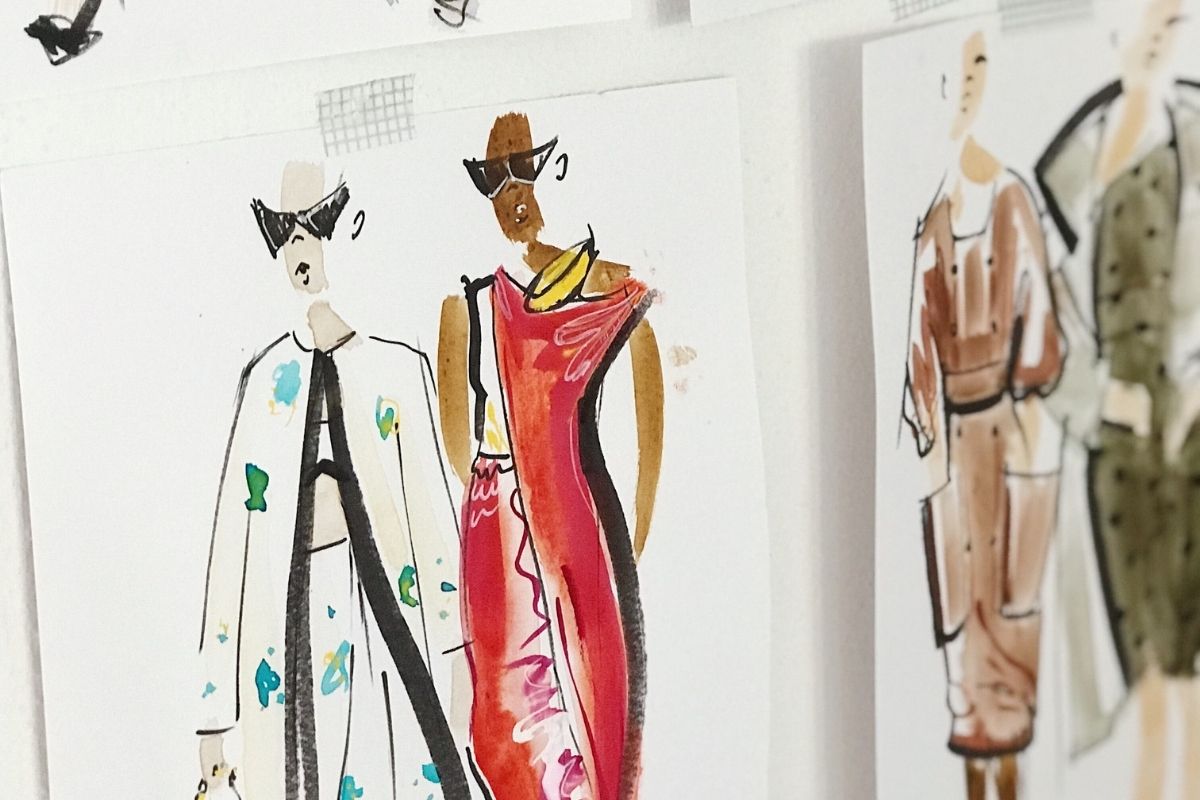
For fashion designers, this personal narrative may include showing how you took one particular photo—say, of a texture or a color—and how that then inspired you to hand dye your own fabric to create a specific effect. You will then take that same narrative all the way through to the end by styling your final photo shoot in a way that further displays whatever vibe or effect you set out to achieve.
When going through your examples of past work, this is your chance to evaluate. Here, you must decide whether you want to go through and rework some of the pieces. Perhaps there were some pieces that you did earlier in the course that need a more polished finish. Do not feel bad about that.
“It takes time to really refine and produce a portfolio-worthy piece,” says Crawford. At this point in the course, you obviously have a bit more experience. This means you will likely have a bit more confidence in everything that you’re doing, which in turn means that in reworking pieces, you’re going to be able to do it that much better.
Perfection and mastery take time. So take the time to polish off and refine your masterpieces in order to create an irresistible portfolio that truly showcases your talent. “All that time that you put in is definitely going to be worth it when you land that dream job,” assures Crawford.

Assignments: Your Production Skills

Angela Gao walks us through the importance of correctly fitting clothes with pins to get the look you are trying to achieve in fashion and the fashion business.
“Here we have a new ensemble of samples that just came back from the factory on our beautiful model Agnes,” says Angela Gao. “This is a jersey top, it’s very loose on her. This is the importance of fitting. To fit the garment is basically to make it fit your customer size, or the model, or the person who’s wearing your garment. The tools that we need are these little pins.”

You should be very careful never to pin the model that you’re depending on. There are specific rules as to where the pins should be pointing and how each seam or placement should be pinned. The reason I’m pinning at the shoulder is the shoulder seam is too low. I’m going to move it up a little bit so it’s actually on the high point of her shoulder.

Now let’s turn her around: the armhole is way too big, says Angela. We’re going to fix it by pinning the side seam a little bit closer together.

“One thing you should be careful to not force the fabric,” says Angela. “It’s a very important skill. Fabric wants to move in a certain direction in a certain way. The pinning should only adjust the size without forcing it.”

After I’ve indicated where the armhole should end, I’m going to start pinning the side seam. I still want the side seam to slant in the a-line shape, so I’m going to pin down the side seam at an angle.

You will finish this process by pinning to the bottom of the hemline. Now, the left side is a much better-fitted vest than the right side, which is still baggy and droopy.

If you’re happy with your fit, then it’s time to use a marker or tailor’s chalk. You’re going to redraw these lines, trace them, trace the pin line in the back, take pictures, and then send the sample garment back to the sample room or a factory.

After that, you would just wait for them to send you a new sample, recheck it, refit to make sure that everything is fitting properly, until to you it’s perfect. Then you can put it into production and have them sent to your customers and your buyers.

Assignments: Your Visual Style

Your ideas begin with your story. That’s one of the hardest parts of developing your themes and grooves, especially as you develop all of this into a portfolio. That’s really where you want to capture it all. But where do we begin?

Being creative is an elusive idea. You want to explore it, but you don’t want to overthink it. Start with things that you see in your everyday life. Then think about your past. It all truly comes back to what your story is about.

Let’s talk about some examples. You may be wondering if a cow skull could inspire you. You’re intrigued by its texture. It reminds you of the American southwest that you love. It also begins to build a bridge to the work of artist Georgia O’Keeffe.

That gets you thinking about O’Keefe. She was an amazing, independent woman. She began an incredible art movement filled with simplified shapes. She took objects that we perhaps wouldn’t notice and presented them on a bold scale.

You can see that it’s not always the object itself that’s going to inspire you. It’s the ideas and connections it represents.

I took an incredible trip to India. It’s a country that I feel everybody in fashion should visit to experience the textures, the colors, the fabrics, and the atmosphere. I found some wooden blocks there that took me on a journey of inspiration.

What I loved about the blocks was that they reminded me of an incredible visit I took to a mill. It was really hot and all the windows and doors were open. The simplicity of taking cotton fabric, placing it on a very long table, and having a group of people going down the row and printing this pattern was fascinating.

For years I had seen incredible Indian prints. And I always wondered how they were made. I was so excited to see how the prints were developed—the pressure and the ink that was never perfect. That’s what really got me excited.

So it isn’t just the Indian wood block itself. It’s the trip, the colors, the feeling, the mood that it represents. That’s what I want to share with you. How an idea can develop.

In fashion, we love to thrift shop. We all agree that we own too much. On a trip to LA, I found a coat in a thrift store. I loved the wonderful vintage quality of it and its distressed look. The whole feel of it was cool.

That coat reminded me of my childhood growing up in the ’70s and got me thinking of the era. That led me to actors and films that I loved and just where I was in my life at that time. I began to really look at the coat and noticed amazing buckles and heavy stitching. All of these wonderful details informed my ideas.

I also love to take pictures and capture images that I see every day. I encourage all of you to do it, too. Sometimes you may not want to, but you’ll be glad when you capture something that caught your eye and starts your mind rolling.

Working with images from a trip you took or an experience you had will remind you of every aspect of those experiences. Then you begin to think about them differently and they become part of your creative process.

So as you begin this journey, as you begin to think about developing your concepts and themes, begin with your story. Begin from your point of view. That’s what you want to convey as you develop your work. Your experiences and your story are what you want to reflect in your portfolio.

Fashion Publicist

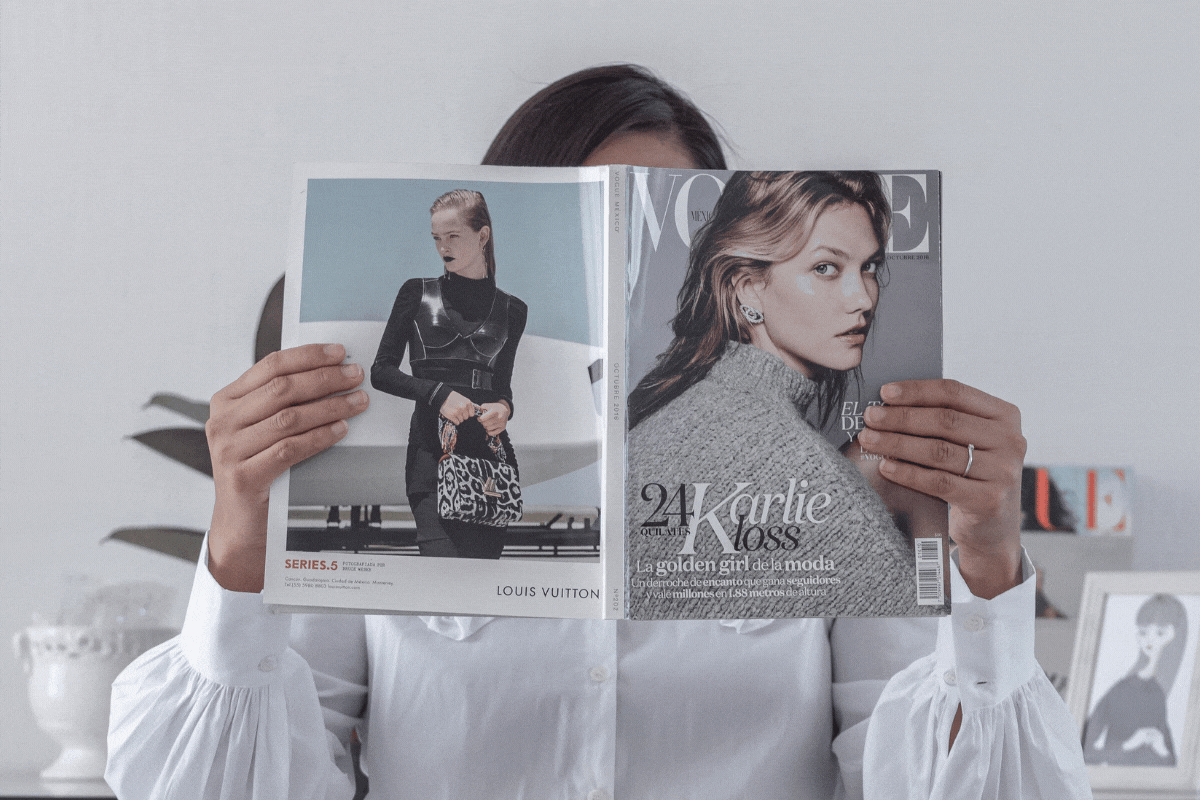
Fashion Publicists create and manage the public image of fashion houses, designers, publications, and events related to fashion such as runway shows.