Lessons: Factory Prep

[Please embed: https://pixabay.com/photos/rolls-of-fabric-factory-material-1767504/]

“When we’re referring to the production process, it means that you create specifications and tech packs,” explains Angela Gao. “They send it to the factories, and then they’ll follow the instructions to produce the samples in bulk.”

The tech pack, Angela explains, provides precision. “In a standard tech pack, on the left-hand side, you have something that’s called specs, or specification. And on the right, you have an image of the garment.”

The specs include the style numbers, brand, label, and fabrications you want to use. They also include points of measurement.

These specs will help you produce a sample size. Let’s say, for example, that your specs are for a medium. You can set an Excel formula to fill in the measurements for an extra small, extra large, and more. “Usually in this industry, a small size is two inches smaller than a medium size, and so on,” Angela explains.

Angela also points out that your specs should have a standard deviation. “That’s because even though we’re using machinery to stitch these garments, there are still human errors,” Angela says.

The factory can have a deviation of half and inch, a quarter of an inch, or an eighth of an inch in specific areas. However, Angela adds that you probably shouldn’t include standard deviations in a high-end collection, as these garments are made to measure.

After you’ve sent the tech packs and received your samples, the next step is preparing the garments for sale. That process involves a line sheet.

“You could think of a line sheet as a mini Excel spreadsheet,” says Angela. “You can have images of your garment at the top and detailed information, such as pricing, on the bottom. At the top, you can also have your company name, the season, and delivery dates.”

Depending on how many pieces you have in the collection, you might have as many as 10 to 20 pages of line sheets. From there, you can take the line sheet and prepare yourself for trade shows.

Lessons: Integrated Marketing

Marketing is an organic process in many ways. It exists at all points of the process of fashion. It’s in the ways you understand both your audience and your customer base in the process of designing. Marketing is also the way your customer base knows about you, ultimately, once your work is out there in the world.

If integrated marketing doesn’t happen, then you’re talking to yourself. There’s really no way knowing whether your work and your fashion designs are going to resonate because people simply don’t know about your brand. You need a fashion education and an understanding of the different market channels, how they work, how traditional marketing techniques work, as well as how emerging social media works in today’s changing market.

Social media marketing is now dominating the fashion industry. Online fashion education can help you understand how social media works, the attitudes of various generations and demographics to marketing. It will also help you determine whether certain forms of marketing may turn off potential customers, whether they want be involved in the formation of marketing, and the storytelling that wraps into marketing.

Through integrated marketing of traditional and newly emerging methods, you can also gain great intelligence about this very community you’re wanting your fashion design and your brand to be a part of. Your brand is both working off of that community and also contributing to it. This is what people expect and want from marketing now – to have a two-way dialogue and participate in its development.

Today, consumers want to know the brand intimately and the way in which it’s marketed to better understand the brand. They want to know the brand does care about the lifestyle and aesthetic they’re portraying. This is vital. If the marketing doesn’t embody and represent these values with its customer base, people move on quickly.

Lessons: Introduction to Collections

 “Design is at the heart of everything that drives the fashion industry. Without design, we don’t have a profession. We don’t have an industry. It’s fundamental. It’s core to everything that happens,” Explains Tim Marshall.

But there are many people that work in the fashion industry who are not designers. They participate in all sorts of different ways through marketing, styling, editing, and so on. You may want to be participating in the fashion industry from one of these other positions. Wherever you are, you absolutely have to understand design because it’s absolutely fundamental to everything that happens in the industry. If you don’t have that understanding of design, you’re going to struggle to be convincing to the community you’re a part of.

Design itself is a process by which the things, the artifacts, the clothing, the objects in the world are created. Where they come from, how they’re generated, what their point of view is, what their attitude is. It’s encapsulated in the actual design process. The design process is what brings together all of the elements of what is it made from? What does it look like? How is it manufactured? What price point is that aiming at? What customer or client will it be appealing to?

“To be a designer takes a unique blend. It’s something that we like to profess at Parsons is this unique blend of having a great deal of confidence about your identity, your visual style, your visual language, and your design process alongside a certain humility because a humility is not just about you as a designer,” Marshall says. “You have to understand your customers or your potential customers. You have to understand their lifestyles, their values, their attitudes, and what they’re aspiring to.”

That also takes a certain kind of displacement of yourself. You have to understand more about society. The way people are living, the way their lives are evolving, and their very complex ways to make sure your designs actually connect and resonate with that audience and customer base. Without that, it’s simply your own self-expression, which doesn’t necessarily find an audience. That may be interesting for you, but it will not be successful.

If you’re in any other part of the industry, you’re not going to be a designer, but you have to understand that point about design. Whatever role you’re playing in the industry, you have to also make sure that design essence, that fundamental point of view that the designer is expressing, is then connecting through to the customers and clients in every other dimension. Through its communication, through its marketing, through its styling, and so on and so forth, and the economics and marketing aspects of it as well. It all has to come together and integrate into a whole package of different elements that then makes it a highly successful brand or highly successful design.

Lessons: Introduction to Fashion Media

Understanding fashion media and how media represents the work that you do as a fashion designer, or how you participate in the styling and marketing of fashion, is really at the heart of the whole industry. People only know about your work through media. They don’t understand your brand from direct experience. They only understand it through a magazine, blog, video, or on a runway. Generally speaking, the vast majority of people will be experiencing your brand through some form of media.

Understanding how your fashion business or design work is being represented in this two-dimensional form – whether it’s on a screen or page, can help you determine what works for your particular brand. The attitude and demographic of the publication should be the right fit visually and language-wise for your brand for it to make the most impact. Getting the right visual language for your design, your brand, and putting it into the right media context that represents your audience, customer base, and approach is crucial to your success.

This can mean many different things depending on where you’re starting as a designer and the design attitude is of the brand. It may be a lot of images are basically very indexable. Many fashion education websites that are merchandising clothes directly will be very descriptive. In other contexts, in more cutting-edge magazines, they might be representing the fashion where the clothes aren’t the main focus. The point is the whole attitude, mindset, demographic, or community with similar values to your brand. The clothing fits into that, but it’s not necessarily the only driving force.

Online fashion education can help you pinpoint which media outlets are a fit for your overall brand audience and aesthetic. Understanding the media context and how it works with your brand is vital to sharing your work with your desired audience.

Lessons: Introduction to the Production Cycle

Because production is a vital part of the industry, it’s essential to understand the production process and all it entails. The clothes we wear and essentially everything we own is produced somewhere else. All products are sourced, manufactured and distributed.

To work in the clothing industry, you must have a reasonable grasp of what is really involved in the production process-supply chain, the environmental issues, labor issues, quality issues, etc.

It’s important to know and truly understand the customer, including their demands and expectations. You’ll also need to know your price point and how that translates into the various fabric and textile options you offer your customer. You’ll need to know where you’re sourcing materials from and how the products will be manufactured.

Having a good relationship with your manufacturers is critical. There’s a certain degree of trust involved. You’re relying on the manufacturer to execute and deliver your design from across the world. There’s naturally going to be some concerns at first. Will the design be what you requested? Will it work? Will the fabrics used meet the quality and durability standards you demand?

If you don’t get this right, customers won’t come back. If they’re disappointed by the quality, or they’re disappointed by the way the fabric feels, or they think the brand doesn’t embody their values in terms of environmental issues or labor issues, you’re going to have a hard time establishing an on-going relationship with the customers, which is key.

Consumers are holding brands and their designers accountable for understanding environmental issues and sustainability. In the fashion industry, you’re expected to understand the environmental consequences of choosing one fabric over another, the effects of the manufacturing and dyeing process, whether it contributes to water pollution, and more.

You’ll need to know the labor involved in manufacturing, as labor issues can impact the brand identity and the way customers perceive your brand. Customers must feel comfortable with the production process and the values the brand embodies in terms of labor, because as stated before– satisfied, repeat customers are a must for success in this industry.

These are all things that will ultimately impact your brand. In the age of the internet, transparency is everything. There’s little room for error. Thanks to social media, word spreads fast. Customers are quick to “cancel” brands if they’re not producing quality products that align with their values, pose a threat to the environment or misuse laborers. Being ignorant of it, pleading ignorance after the fact, or saying it wasn’t your fault, doesn’t cut it nowadays. Designers and everyone involved in the design industry should ensure they have a really good understanding of all the aforementioned production issues in order to make wise choices.

You have to understand what your choices represent and take responsibility for those choices. On one end, you have to know your customer. You need to know what they can afford, what they want, what they expect and hopefully exceed their expectations. On the other end, at the back end, production sets your price points and also connects to marketing, thus production embodies your brand and your brand’s values.

Ecommerce: Apps and Sites: Activity: Customer Journey

We talk a lot about making customer journey maps. When creating these journey maps, we think about what channels we are operating in—marketing or distribution channels.

So we say, “Let’s design a retail experience travel map.” Then we’ll create another for an entire sale experience where the customer starts in a department store. We might even make a journey map for someone who buys on Instagram. Perhaps we make a journey map that doesn’t necessarily end in a sale. Yet, it could begin with a repair or someone who comes in for a cleaning or an event.

Consider the channels, personas, and touchpoints as you create your journey map. Underneath each of those small touchpoints, write down some of the characteristics you think you’ll be able to capture and identify about that consumer that might be useful for you to market and sell to them.

Make use of any archetype of your choice. When shopping online, consider walking through the consumer journey. A Google search is an excellent place to start. People come across the webpage and visit it. They’re looking through the filters. Consider all of the possible filters that someone would desire. I’d like you to go over each of those processes with me online. Walk through the gaps and consider where you will spend the majority of your time and where you will waste it.

Consider whether they ever make it to the point of purchase. If so, how was your experience? Then give me an overall timeframe because the most crucial factor will be how long it takes our consumer. Are they taking the time to read your blog? Do they pause to read the reviews? Include all of the facts you’ve gathered so far.

Now imagine us moving through a person interacting with an ad on social media, clicking the ad, and seeing where they go, where they land, how they buy, what their feelings are, and what’s going on in their heads.

This is how we choose where we spend our money and what we should prioritize. This exercise will undoubtedly assist you in better understanding your customer journey to choose the most effective route.

Assignments: Fashion Media

Coming up with a compelling concept for a magazine cover is one important aspect of fashion media. As the editor of Teen Vogue, Amy Astley worked to conceptualize an innovative cover idea based on fashion education, trends, and matching the themes of that month’s publication.

For the August 2015 cover shoot, Astley and her team tied in the theme of going back to school, which often means buying new jeans, and gave the issue an overall denim theme. They decided on creating three different covers, each separate cover featuring one of the three models selected. Each model was wearing denim.

It gives you very quickly the idea that it’s a denim issue, which is why I think they’re impactful and successful, because they’re not confusing. The number one thing is, which pictures do we feel the most strongly about. And again, for me, the driving force is always trying to make the layout and the photo selection memorable, because there are so many images out there everywhere. We’re all inundated with them, not only in magazines, but certainly coming from digital media and just everywhere. There’s a deluge of photos. Instagram – everyone’s a photographer now. But you want your photos to stand out. So that’s why we put so much – lavish so much care on the prep of the shoot and then on this picture selection and the design and the layout, trying to make the whole thing really memorable. (Amy Astley)

Every step of the way in fashion business and media, there are challenges involved in booking the desired talent, beauty, production team, dates, and locations. Astley says it truly takes a village to help make the cover shoot conceptualization come to life. Ultimately, the day of the shoot things often magically come together and they wind up with a memorable magazine cover.

Assignments: Introduction to the Assignments

For stylists and designers starting out in the industry, there is one big lesson to learn: No matter how many creative programs you have completed, nothing can really prepare you for the business side of the industry. You will need to learn the business if you want to build a career.

Many creative people are not necessarily business-minded. Our minds are bouncing everywhere, swimming in different creative ideas. Unfortunately, in order to build a career, you have to know and understand the intricacies of the business. As your business improves and you become fortunate enough to have projects that are not only paying you but the people who work for you—your payroll– you will spend half of your time being creative and the rest of the time dealing with business issues.

Many designers find that as they move deeper into their careers, there are thousands of things that they don’t know, from starting a company to hiring employees to communicating with factories and managing deliverables. For example, one of your first lessons will be coming up with the start-up capital to get your business up and running.

So, while you are spending valuable time conceptualizing and designing a collection, simultaneously you need to keep an eye on the business. It is vital and it is something that nobody teaches you in school.

This course focuses on fashion production, and how production impacts all aspects of the fashion industry. The assignments you will receive are intended to reinforce what you learned in the video lessons. They will give you an opportunity to get practical experience and maybe try something you haven’t tried before. These assignments have been created to help you build your portfolio and your skill set.

Assignments: Visual Style in Fashion

Teen Vogue was always meant to be about the young woman discovering herself, and all the different aspects and facets of herself. For Amy Astley, that core mission hasn’t changed, even as it has evolved with the times. Overall, the photography and the look of the magazine are more sophisticated now. She explains, “That’s because we’ve gotten better at what we do. We’ve grown and become more sophisticated. I’m not even the same person I was when I started it 12 years ago.”

The readers have changed and aged up with the magazine, as well. The core audience is actually in their early 20s. And by giving them a sophisticated product, Teen Vogue has been able to push the envelope over the years and make the magazine more special, sophisticated, and challenging photographically — from not only beauty, but also styling and fashion POVs (point of views) too.

So that’s what the word “teen” means for Teen Vogue — young, fresh, new. But not junior. The magazine itself was mind-blowing for many when it started, and that has only continued throughout the years. For Marie Suter, it’s working with the talents of today that are relevant.

Her first cover with Teen Vogue was Selena Gomez on the beach, and it might have been the third time she had been photographed for the magazine. Marie shares, “So it’s like, OK, what do we do now? We just tried something very different with a positive message for celebrities, about being young and fresh. Selena was a bare beauty on this cover and she looked gorgeous and grown-up.” They did less makeup, less hair. Stripped down the clothes to something simple.

From a design standpoint, Marie made it more grown-up by removing things that would steer the shoot to look a little younger. And all without redesigning or changing the essence of the magazine. So think more evolution in style. Instead of 75 colors on the page, maybe one would be good. Clean it up. Have a very clean cover. For Amy Astley, these are really beautiful. Don’t just go and do the same thing because the cover model always looks good with a red lip. Push yourself outside of your comfort zone.

It’s also helpful to seek out collaborators, especially photographers and stylists, and even the subjects themselves who will help to push you into new territory. Sticking with what you’ve always done is a problem with any creative endeavor. As Marie says, “If it’s not slightly scary, it’s not going to be special.”

How to Design Your Own Accessories

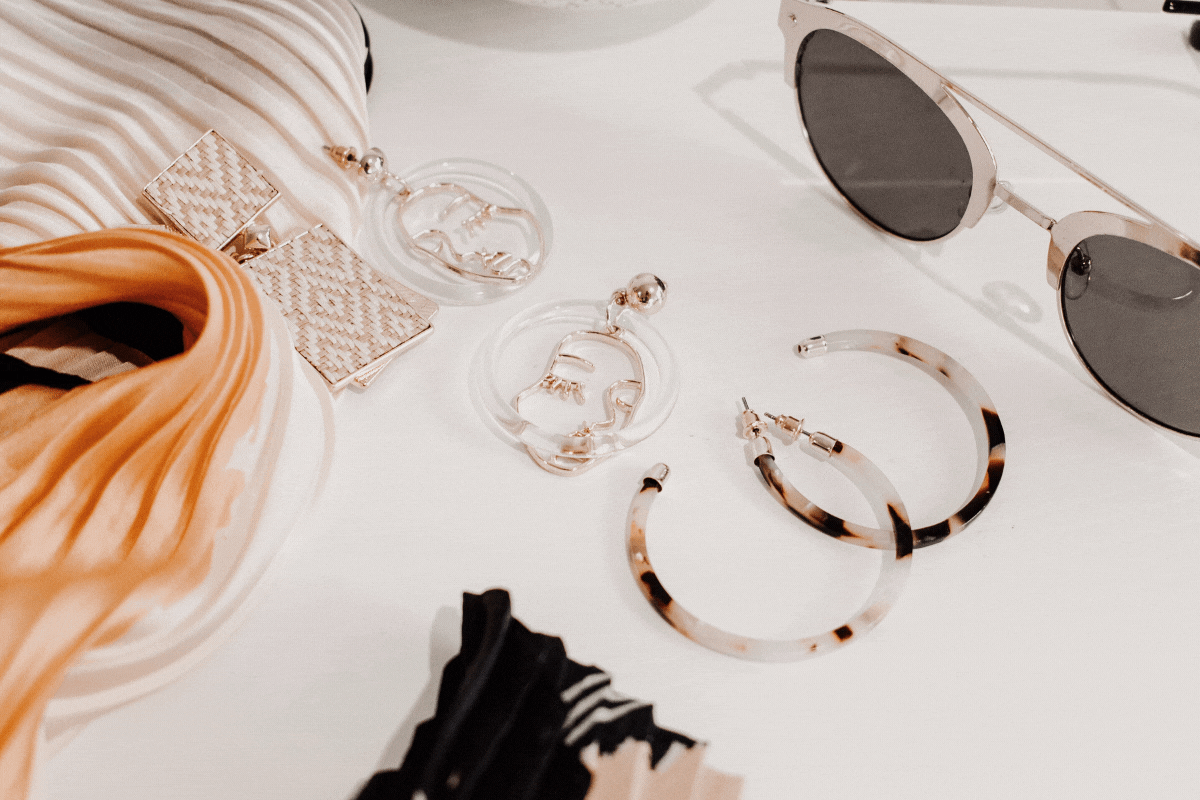
Creating fashion accessories is an art that blends creativity, craftsmanship, and personal expression. Accessories, ranging from the audacious statement pieces to the refined, subtle extras, not only complete a look but also have the power to transform it entirely. This comprehensive guide is crafted to inspire and equip you with the knowledge and skills necessary to start the rewarding journey of fashion accessory design. By weaving in insights from the industry, we aim to guide you through the process of creating accessories that resonate with your unique style and vision.


Gathering Inspiration from the World Around You

Inspiration for accessory design can be found in the vibrant hues of a flower district or the eclectic textures of urban architecture. These environments encourage designers to think outside the box and experiment with shapes, fabrics, and colors. The journey of creating fashion accessories is about pushing boundaries and exploring the playful side of design. Take advantage of your surroundings to fuel your creativity, drawing on everything from nature’s organic forms to the geometric patterns found in city landscapes.


Exploring Plastic, Denim, and More

The choice of materials plays a critical role in defining the versatility and appeal of your accessories. Transparent plastic, for instance, offers a contemporary edge suitable for clear handbags and avant-garde jewelry, embodying the modern fascination with transparency and minimalism. Denim, with its enduring appeal and durability, presents endless possibilities, from chic tote bags to casual wear accessories. However, the adventure of working with materials like untreated indigo denim comes with its challenges, such as the potential for color transfer. A simple yet effective test to determine colorfastness can mitigate this risk, ensuring your creations maintain their integrity and appeal.


The Crucial Phase of Wear Testing

After crafting your accessories, the next step is to subject them to real-world testing. Wearing your creations for a full day will reveal much about their practicality, comfort, and durability. This hands-on approach allows you to identify any issues such as pilling, cracking, or tearing, offering you the opportunity to refine and perfect your designs. It’s a process that marries the creative with the practical, ensuring that your accessories are not only aesthetically pleasing but also durable and wearable.


Take Your First Step Towards Fashion Innovation

For those looking to deepen their knowledge and skills in accessory design, Parsons Fashion Industry Essentials Course at Yellowbrick offers comprehensive training. This course covers everything from material selection to design principles, equipping you with the tools needed to succeed in the fashion industry.

Creating fashion accessories is a journey of creativity and experimentation. By understanding the basics of design, seeking out unique materials, and continuously refining your work, you can create pieces that stand out. Take the first step towards realizing your creative vision – enroll today!