Test Strategies for Unbiased User Feedback

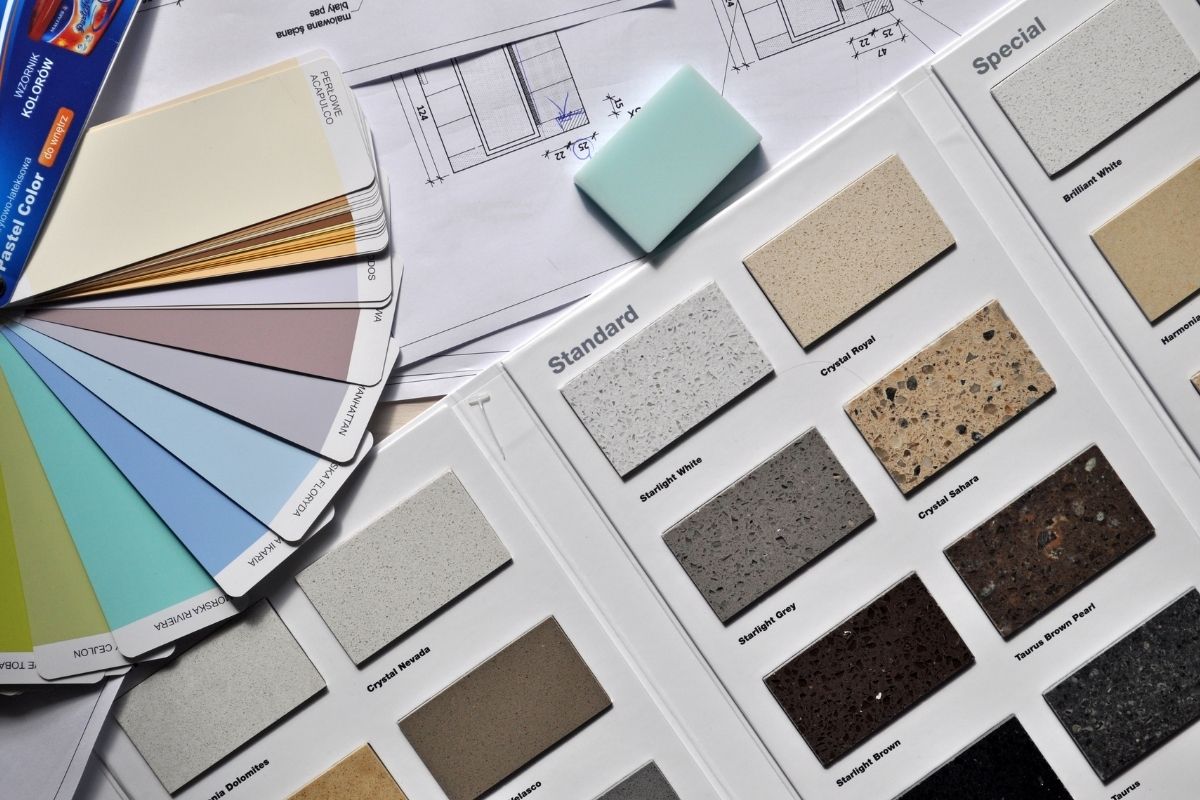
No matter if you’re working on a physical project or if you’re working on digital project, having a set and well thought out testing process is something that’s very important. Keep the following three things in mind in your pursuit of online UX design education.

I took a course in Parsons around usability testing, especially around digital app design. One thing that I thought it was really helpful that I still use nowadays is to first of all figure out a script that you’re going to follow to do your usability testing.

Secondly, when you’re doing your usability testing, you don’t want to give any social pressure to the person that’s testing your product to make them feel like they have to say good things about your product. That’s something that’s very important.

Thirdly, it’s really important to set clear tasks for your tester to complete on their own with your product. Then while your tester is testing your product, we encourage them to speak out loud in terms of whatever they’re thinking in their mind. It could be that they completely have no idea what they’re doing or they just don’t like this particular color. It could be anything. What we want is to create a safe non-judgmental environment for your tester to feel free to speak out loud and say any thought they have in their mind when they’re interacting with this product.

All of this helps you as the designer of UX or UI to get unbiased feedback, which helps drive the choices you make in UX design or UI design.

The Differences in Designing for Film Versus Theater

Design elements in film are a little bit different from those of a live theater production. Theater recognizes that the actors who are in front of the audience are live. They engage with one another through their energies and their sound. They feed off of one another. If they make mistakes, then it’s live. They have to account for all of those things.

This is opposed to, let’s say, a how a movie tells a story. In a way, that’s a very finite linear narrative. Because of that linear quality, it allows the audiences, through this technology, to sit back and think about the interface of a cinema, or later, on your TV. The idea that you sit back and you absorb this story that’s being told without really being able to interject with it is a very different way of viewing a story.

That’s not to say that your brain is not working. That’s not to say that your brain doesn’t go between scenes and that this story is taking you somewhere else, which is that level of interactivity that takes place.

This places more emphasis on the UX design or UI design of the product that’s being displayed. It’s important for anyone pursuing online UX design education to think about what each choice in UX or UI requires of the audience. Think about what the anticipation or expectation of the audience is in terms of their role in viewing or experiencing this story that’s being showcased. Is their passive or active? How does that affect the design choices in the film?

The Evolution of Screens and Motion Pictures

If you want to learn about the history of viewing media, you need to look a little bit further away from the decade we’re in. We can perhaps go back, at least within the realm of the digital experiences, to the interface that really defined so much of what we are experiencing now, which is the screen. But the screen itself has really come from much further back than that, right? So, let’s talk about the implications of camera, picture, and then motion picture.

If we look at just the way in which experiences have been created and interfaces have been constructed, we have to really look at the essence of motion pictures. Motion picture is, at least to me, really one of the technologies that has truly defined our sense of self in the 20th century, which we are going away from now. We’re now seeing that process of being and becoming away from the motion picture.

I say that because what the motion picture really created was the understanding that you have frames that are still photography. You place them on a continuum, and you show it at a certain rate per second. And then you have the illusion of reality on a screen through that projection. It’s exciting to think about it if we put ourselves in the shoes of those who, for the first time in the early 20th century or late 19th century, were experiencing those kinds of interfaces.

To think about the first time the idea of a train coming into the screen, which was simply captured by holding a camera down on the railroad, and to think about what that really meant for people who had never seen this illusion of reality, is really amazing. The anecdote says that those who saw those first movies were quite terrified by what they saw, as they really felt that there was a train coming through the screen, and as a result, they left the cinema. That in itself has really defined how we came to understand the role of the audience.

Understanding the history of the screen interface can also help those who are taking online UX design education. In this type of online course, you will learn about UX, UI, as well as UX design and UI design.

The Importance of Accessibility in UX Design

For the best user interface (UI) design, you have to think carefully about the features of the product you want to make.

Let’s take something in the physical world as an example. We have public accessibility codes designed to help disabled people navigate their way through a city. What does that mean as far as user experience goes? What does good UX design look like in this case?

The design includes the things we have that meet the goal of those accessibility codes. We have things like ramps, walkways, and spaces on the sides of a metro station specifically for disabled people to use.

We don’t have that kind of accessibility code in the digital world. More accurately, we do have it, but it’s not enforced in UI design like the real-world code is enforced by the government.

What ends up happening if you don’t follow the accessibility code is that you end up not including a large section of society who would also be benefiting from and enjoying the kind of products that you’re making. This is a common UX flaw.

How do you take care of this issue as a business? How do you correct it as an organization that caters to a large section of millions of people? What are the concerns that you need to have so that your product is not just usable by a few people?

Something that online UX design education stresses is that whether you’re making a real-world product or something digital, it needs to reach all sections of society and be accessible to anyone who wants to use it.

You have to take care to make sure you’re not restricting any particular set of people from using it.

When we’re building products and solutions that cater to the needs of a broad spectrum of users, we need to bring the engineering team on board as soon as possible. The expertise and knowledge they have about how to build products that are accessible is key to planning and creating those products.

Their insight can help us enrich our prototypes and design solutions. Production is also easier once the engineers start working on the implementation of our solution. They appreciate and understand why accessibility is so important. They’ll build the product from the ground up with that in mind and include accessibility at its core.

The Importance of Information Hierarchies

Information hierarchies in UX UI design guarantee that users see all content organized in an ascending or descending order of importance in regards to the onscreen layout. Information hierarchies are one of the essential components of the visualization of content experiences in UI design required by visual designers and also writers.

I actually love this part. I’m dyslexic. When I read something, I need to be able to really quickly understand what I’m reading because it’s difficult for me if I get tripped up in too many words or the text doesn’t get the point in a relatively short amount of time.

Bites of Information

People don’t swallow their food whole. They take bites. The same is true of content. When people are looking at screen surfaces, you can only feed so much information to them. If they get to a point where they want more, you can let them add more to their plates by diving deeper and getting into more content.

In today’s world, you really need to create a well-edited, deeply considered content strategy so users actually walk away with knowledge or learn or understand something important. For example, they might walk away with a better understanding of something they need to do, such as filling in paperwork for a medical appointment or something related to education.

Online UX Design Education

With all UI content scenarios, you need to be really thoughtful with the written word. It’s essential for UX design. During your studies, you will see both good and bad examples of information hierarchies. You will also receive steps to craft fantastic content strategies that are well thought out and that work at attracting and holding user interest while making content easier for users to consume.

The Importance of Research in Product Design

When you need to perform research for product design and product development, how do you go about it? What are things like ethnographic research, and what does it all mean?

What that fundamentally means is putting yourself in the shoes of somebody else. So, I think many of us often are inspired by our own experience and what we’ve learned from our product design education, but we can also be inspired by other people’s experiences.

This is true even when we watch a movie. Why do we watch movies? We watch movies because they tell stories about other people’s experiences or other characters’ lives, right? So, imagine trying to put yourself in the shoes of somebody else. And we do that through talking to people, through interviews, through surveys, and through designing experiments.

Let’s say you give somebody six different cards with six different words on them, and you ask them to prioritize, or you ask them to put them in order of what they think is important. Then that helps you understand what that person thinks is important.

It’s really important for us to understand not just our own experiences but the experiences of others. Ethnographic research and other research methods that look into users’ needs can help us do that. What we learn about in online product design education can help us understand how to use those types of research to create products people need and want to use.

Because it’s important, again, to design not just for ourselves, but to design for other people.

The iPhone: A Model for UI and UX Innovation

Daphne Lin, an online UX design education professional, argues that Apple was the biggest driver for user experience in the tech industry. “They showed a huge competitive edge by creating and designing products from a user perspective,” she says. “I think companies still have a long way to go when it comes to design.”

Industries understand design is important. However, they still view design as only visual design. In Lin’s own day-to-day work, she educates people that design is not just what it looks like, but how it works. Her goal is for people to realize that, even when they are brainstorming ideas and features or writing requirements documents and specifications, they are still doing design work.

To UI design expert David Owen Morgan, the first iPhone, which came out in 2008, was a game-changer. “It was just rethinking what it would be like to have websites in your pocket, and to be able to access the voicemail interface being totally different,” he comments. “You can just scroll through a visual interface for voicemail. It just gets so exciting to rethink the paradigms that we’re stuck in and recognize that there’s an opportunity to introduce new ones.”

The advent of material design in phone operating systems was a sea change. It was big tech companies showing priority on design and the UX design language. Companies must think about a two-sided marketplace where they’re not just catering to millions of users, but also to hundreds of thousands of developers. They must provide guidelines and tools for a long tail of engineering and ingenuity. “Building tools that help others build tools are always ones that have been important for me,” Morgan adds.

Online Product Design Education Features Wallpaper Designer Highlight Paul Cocksedge

Sarah Douglas recalls her experience with the designer: “I had the privilege of working on a project called Wallpaper Handmade for ten years, in which we married designers and artists with makers and manufacturers to create new one-off objects that sometimes were put into production.” This was an exciting way to see the entire design journey, from conception to completion and everything in between.

Product Development for The Bookmark

“I think the one example I’d like to talk about is actually a product that we made with Paul Cocksedge the designer, and a marble manufacturer in Athens.”

“It was actually an idea that Paul had called, The Bookmark, which was to rethink the idea of what a bookmark is. He very quickly realized that actually working in this type of marble would push the boundaries for him, in terms of the object he would make. It goes against what a bookmark should be, but offers something completely different. It’s a large object that rocks. Now, bookmarks don’t rock. Marble doesn’t usually rock. It was a really joyful product.”

Product Design Education

After some extensive research, Paul made his idea happen. “He went to Athens. He actually had the ability to feel the material, watch how it’s made. This actual bookmark which is kind of like, this large, it was made by using CNC water jet cutting.”

“Paul’s work is always about pushing technology and pushing materials that don’t necessarily behave the way you expect them to. And I think this project-although there were difficulties, there were definitely more conversations to be had throughout the process-the actual final result was really, really well-considered because he had researched the material properly.”

Online Product Design Education: Computer Aided Design

Computer-Aided Design (CAD) is not just for designing buildings but for anything that needs to be assembled. It turns a lot of handwritten hard work into easy workable designs on a computer. Creating two-dimensional and three-dimensional structures and changing them very easily has changed architecture and product design tremendously.

There’s no doubt that computers have helped the world do many things faster and more efficiently than traditional methods. Before computers, architects and product designers were limited because they had to hand draw their designs and use rulers to ensure their measurements were correct. And if they had made a mistake or dimensions had to change, they had to erase and start over. With CAD, you can make changes quickly to a product design without losing the other work you’ve done.

The computer allows you to make changes in product development very easily. Complex and challenging product designs can be created with ease by using CAD. You can also create multiple copies of the same design with some tweaks added. To do this, you simply copy and alter it and repeat that process as many times as you’d like. Find the perfect proportions or see where your dimensions need to change some to make it more comfortable to use in different situations. Then you have multiple versions of the same product and can see which one works the best for you and your clients.

After the design is on the computer, you can do many things with it. For example, you can start with two-dimensional drawings and then move on to three-dimensional drawings. You can see what the faces look like in two-dimensional drawings and then look at them from multiple viewpoints with the three-dimensional drawings. This process uses orthogonal drawings.

Orthogonal drawings allow you to see a top view, side views, front views, and sometimes you even can see the bottom or back views, depending on what you need. You can usually describe the object in perfect detail with a front view, top view, and side views. Product design education can help you learn these techniques to add more value to your efforts in creating products.

After using these multiple viewpoints, you can produce documents called technical specifications. These documents are sent out to the vendors so they can replicate them into real materials. The vendors use their knowledge to make your materials with their processes and the specific use of the materials. Usually, whatever your product calls for, the vendors have their methods of making it a reality for you to do your job. Once you have your materials from the vendor, you can piece together a prototype to present to your client.

There are other orthogonal views telling us the product’s size, what the dimensions are, and what the material is going to be like and how the product will be assembled together. Technical specifications are simply one tool that CAD offers you to make professional and accurate product designs.

Online Product Design Education: Exploring Industrial Design

Industrial design is one of the broadest professions there is because we design anything, from small housewares, to transportation, to exhibits. I designed this product development course to mirror the design process. It starts with an exploration of the field and what kind of opportunities there are.

The next step is where you start sketching. We’re going to sketch out more what the industrial design profession does. And we’re going to show you how designers sketch in different media.

Industrial design is basically designing things, which humans have been doing ever since they got out of the cave. We pulled up a rock, and that was our first design.

The industrial design profession really started in the 1920s when we were called upon by the industry to design things for their machines so they could mass produce. That required us to create this new profession that was focused on manufacturing techniques and also about how to satisfy customers.

What’s great about industrial design is it’s really focused on user needs. What has happened over those last years is our tiny profession has become the dominant method of business nowadays. Everybody’s doing design thinking. They’re all focused on the user’s needs. And all the things that industrial designers invented now are the normal things that everyone uses.

The difference with what real industrial designers bring to the party, besides all that good stuff, is that we actually make real things.

The design process includes sketching up ideas. But by sketching, we mean actually sketching three dimensionally to make a mock up or something. So, the design process goes from trying to understand things, exploring what’s around, brainstorming ideas about how to solve the issues, or what opportunities we can find, taking those ideas, and refining them and trying to figure out how to make them into a real product.

Finally, we have to work with the factories and engineers to actually make the things. So, we get down to the nitty gritty of choosing which materials to use and what manufacturing processes are going to be used.

Then we even try and sell the product because we’ve been through the whole process. This product is our baby. We know where it’s good. We know when it’s bad. We know how to make people want that baby.

Basically, that’s the industrial design in a nutshell. In this module of product design, we call it “explore” because that’s the first phase of an industrial design project. What you do when you start exploring is you don’t know where you’re going. You have to start off with a blank slate.

We’re going to look at different ways you fill up that slate with information you didn’t know when you started out. But, at the end of this phase you’re going to have a good idea of what the project is about.

This is what a product design education course can offer you.