The Impact of Viral Marketing on the Sneaker Industry

There are a lot of ingredients that go into making a viral piece of content. Obviously, there are the technical aspects with how many shares, how many comments it gets, and the SEO value of the headline that you put in. Those are big factors.

Another factor is, say it’s an interview, being brave enough to ask the right question that is going to get the right answer. One example that comes to mind is the sneaker shopping episode with Bella Hadid. Through that interview, there was a real viral moment where Joe asked her what sneakers a guy must be wearing to approach her.

“If homeboy is coming through with these, it quiet. Yeah, no, it’s quiet for him. But, like, if he comes through in these, you’ve got some Air Maxes out here, you’ve got some Jordans, homeboy’s going to, like, get it,” says Hadid.

One of these viral moments that really comes to mind is DJ Khaled on “Complex Closets.” Khaled’s famous line, “Congratulations, you played yourself,” became one of his catchphrases, and that was the first time you heard it, and it was memed. It was GIFed all over the internet.

It’s a combination of all of those things – just knowing the back-end part of it and knowing the right keywords and the right tags, and you also have to know the right SEO headline. Just having the right subject, being brave enough to ask the right questions, and getting that right content is what really makes something go viral.

One of the most important things to remember for social media is that you have to give somebody something and help somebody in some way. A lot of people approach this in sneaker media and in other media basically about conversions, about how they want to use a tweet to get a click or use a tweet to sell a pair of sneakers and make a little bit of money off that. That’s good sneaker education, right there.

But you’ll find that it’s not really about that. You have to think first and foremost about how you’re helping your audience. What are you giving them? Are you giving them a piece of information? Are you giving them a cool shoe? Are you giving them a meme that they might find interesting? Are you giving them an opinion on something that they may not have heard before that may help color their decisions?

You have to actually give them something of value. You can’t just think about the numbers. We get lost in that a lot because we have to make numbers, but you have to consider what your audience wants and what you can actually give to them to create a bond. That only furthers the trust you have with the people who follow you, with the people who read the things you write or consume the videos you watch, so remember all of these as you continue your online sneaker education.

What makes a social media campaign or a regular media campaign really work is authenticity. That’s always going to be what matters. You could really be someone. You could be someone with 500,000 followers, and if all you want to do is get paid by companies to post things, people are going to catch on to that and realize that you’ll just post anything provided you get the right amount of zeros at the end of the check.

Eventually, your following is going to trail off, and people aren’t going to trust you. You need to build up an identity first if you’re a person working on your own thing and be true to that and recognize that as much as your identity as you share people are building up their own identity for you or getting a feel for what you’re into and what you’re not into.

That’s not to say that you can’t evolve or you can’t change, but if you’re kind of all over the map or if you’re only posting whatever the newest stuff is no matter what it is, eventually people are going to realize they can probably get that from somewhere else. The only thing you really have is yourself.

If you’re a brand, it’s sort of the same way. If you’re pushing something as the latest and greatest, and two months later, you’re pushing something else as the latest and greatest and have completely abandoned whatever came before it, people are going to remember that. And eventually, they’re going to start questioning whether this new great thing is really that great at all or whether they even need to pay attention to it because a month from now there’ll be something else.

So that’s the important thing–remembering that other people are going to remember this stuff too. You can’t just throw random stuff into the void and assume it’s going to go away because it’s not.

The Internet and the Evolution of the Sneaker Industry

The internet has had a profound effect on all our lives, influencing everything from the way we watch television, to shopping to the products we purchase. The internet has greatly affected “sneaker culture” in that prior to widespread use of the web, popularity of sneakers and sales were often regional. At one time, one must either live in a certain area or know someone in that community in order to get certain styles of sneakers. Today, the internet allows us to choose our sneakers with the mere click of a button.

The internet provides information on release dates of limited-edition sneakers as well as those produced and sold solely in certain regions. Now, a person can simply hop on the internet in order to purchase that limited-edition sneaker or those that were relegated to a distant region just two decades ago. E-commerce has broken barriers that once were virtually impossible for most consumers to cross. Plus, the internet provides sneaker release dates so no one has to be left out of the sneaker industry’s latest offerings.

However, the internet is contributing to another phenomenon unheard of prior to the internet – reselling. Reselling of sneakers is at an all-time high, which has both good points and bad. Retailers have difficulty in that if they get a limited number of Yeezys, millions of shoppers may flood the organization’s website, crashing it.

The internet has created a raffle of sorts where consumers are searching for certain brands and styles of sneakers. Even parents are getting in on the selling aspect of retail; many will order that coveted pair of shoes at the retailer’s price (usually around $150). Then, they put the sought-after shoes on the internet where those who weren’t lucky enough to get those shoes from a retailer will pay $800 or more for the latest styles. It’s a win for the retailer who makes their initial profit, but the internet seller on eBay or other resale sites banks a huge profit, too.

However, the “purists” on the internet see this resale opportunity as a bad thing. At the same time, those with careers in retail might not have their jobs without the internet as it operates today.

Social media is also a driving force in both the initial sale and resale of sneakers. Online sneaker education chiefly comes from social media as well as sites that post reviews on upcoming popular models of shoes. Some look at the online sneaker sale movement as somewhat a “cult” thing; however, a company’s social media presence is definitely having a positive effect on sales.

In the 1990s, most of the attention a sneaker received was due to an athlete’s wearing a certain brand or style of sneaker. Maybe consumers would see the shoe on television; however, prior to the great improvements in high-definition television, it might be impossible for consumers to see an athlete’s kicks. Perhaps a photoshoot in the latest edition of “Sports Illustrated” would show that same cool shoe; however, consumers were on their own finding the exact brand and style of shoe.

Social media sites such as Instagram post photos of athletes in high resolution, and consumers can definitively see what their favorite athlete is wearing. Plus, one can quickly go to their preferred web browser to find the shoe and all available online shops. Even with limited-edition offerings, such as Nike’s LeBron James sneakers, consumers are still clamoring to get their hands on a coveted pair. A great example of this is Super Bowl LII, when Justin Timberlake wore a highly sought-after shoe. Those who have certain apps on their phones are alerted that the celeb is live wearing a limited-edition pair of shoes. By the next commercial break, most of those limited-edition shoes – made in a certain quantity, by the way – are gone.

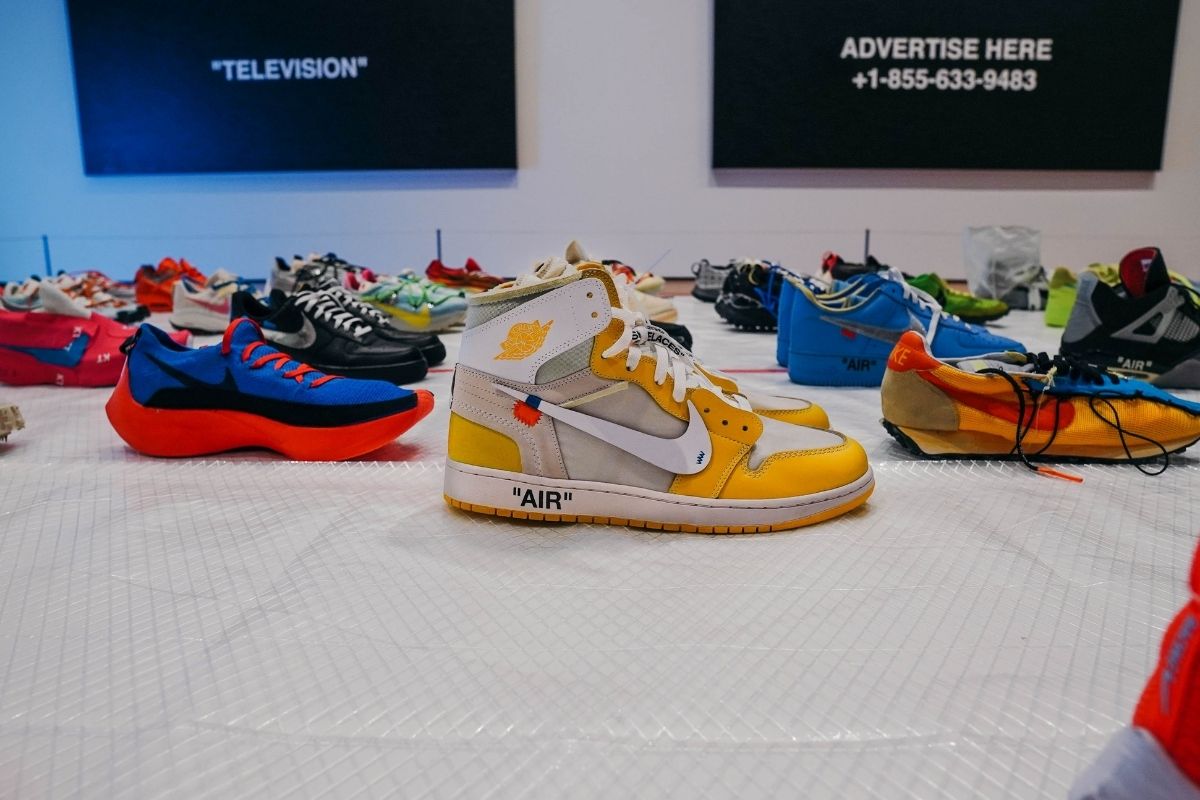
Perhaps shoe enthusiasts should be more concerned with the amount of shoes being produced. Consider the Virgil Abloh Ten Nike – only a certain number of people will get this shoe during the initial drop. Some consumers report only getting error messages when trying to order. A larger number of shoes produced would help prevent this, but manufacturers have little desire to do so. Perhaps retailers should look at ensuring this won’t happen due to their website crashing.

Maybe consumers should be satisfied with the “halo effect” of shoe drops. If a consumer fails to get the coveted Yeezy 350 on its initial drop, then maybe the purchaser should consider the Alphabounce or the Ultra Boost. Regardless, consumers will need to move quickly to get any of the higher end sneakers desired by many in the public.

Perhaps consumers may need to consider looking for a product that is not the hot item at the moment. Few sneaker releases sell out almost immediately, unless the product is one of the highly coveted styles. Unless consumers must absolutely have that exact style, buyers will have to then scour the resale market where some of these shoes sell for up to $1,500. If money is no object, then it’s great to wait on the resale. However, those on a budget will have to find other ways to get that coveted shoe.

Sneaker education tells us that eventually, everything – no matter how popular – goes on sale. This includes those limited-edition sneakers. Consumers should perhaps worry not about what LeBron’s next shoe will look like, but on how they can still procure a recently released and still popular shoe at a much lower price.

Sometimes it pays to look back on previous releases instead of the latest, newest releases. Consider the Air Jordan, after 20 years plus of production, a shoe still as popular as it was upon initial release.

Back in the day, people chose their kicks based on what was popular in their location – on the street, down the block – today, people are looking to the latest sporting event and what a favorite celeb is wearing rather than one’s closest friends. Jordan chose to capitalize on Timberlake’s popularity and his appearance on the Super Bowl’s halftime show. It’s a decision that turned out to be highly profitable for the company.

Procuring our favorite sneakers today is no easy task, but we consumers have more avenues today than our predecessors just two decades ago. Download those apps and set your notifications to be able to get those coveted kicks at the best price possible.

Online Sneaker Education: Sneaker Culture in Film and Video

This history of sneakers in film and videos really dates back to Spike Lee movies like “Do the Right Thing,” and “She’s Gotta Have It.” Lee helped bring sneaker culture to the forefront of film. There is one iconic scene in the movie “Do The Right Thing” where the character, Buggin Out, is wearing a pair of Air Jordan 4s. During this scene, his sneakers are run over by a passing bicyclist. This moment in the movie is, still to this day, one of the most powerful sneaker scenes in film history.

The famous movie scene not only displayed the Air Jordan 4 sneaker on the big screen, but it also exposed the idea of someone getting angry about their shoe getting scuffed. Afterward, Buggin went home and tried scrubbing out the scuff with a toothbrush. This is a very real feeling that all sneakerheads have felt. Spike Lee was able to bring this emotion to film because it was something he experienced himself.

This exposure led to Spike Lee, Nike, and Jordan forming a longer relationship. They worked together to develop stylized shoe commercials that resembled films. Their partnership was a starting point for sneakers in film and pop culture. After that, sneakers played a significant role in movies like “White Men Can’t Jump,” “Blue Chips,” and “Like Mike.”

If it weren’t for Spike Lee and his movie “Do The Right Thing,” we wouldn’t have the sneaker video content that we have today. Sneakers used to play more of a complementary role to performance, but nowadays, sneakers have become more of a main attraction. There is sneaker video content all over the web, on YouTube, and on Instagram.

Sneaker Industry

Sneakers have always been a big part of sports like basketball. However, these sneakers cater to a specific audience of people already predisposed to them. For example, any basketball fan that saw Michael Jordan wearing Air Jordans already knew about them, even if it was just peripherally.

In “Back to the Future,” Michael J Fox wore a pair of futuristic-looking Nike Macs that were almost the costar of the film. The shoes, and that particular part of the film, were both created by famous Nike designer Tinker Hatfield. This unique project was an excellent opportunity for a man who is creative on many levels to flex in an entirely different lane.

A Shift in Sneaker Culture

This shift in sneaker culture created an area in film and video where people would notice sneakers that they usually wouldn’t. Sneakers are often viewed as just a necessity. Just something that people have to buy their kids every year that often comes with a surprising price tag. But when you see something amazing like the Nike Mac in the movie “Back to the Future,” it raises awareness. Those shoes become so much more than just another piece of a school uniform.

Great Scott!

Sneakers like this have a cultural context to them. They represent this importance to another generation that people may not recognize. The futuristic sneakers designed for the movie “Back to the Future” became the future of shoes in reality when Nike created and sold the light-up, self-lacing shoes based on the film.

The cross-over commercial for Nike’s new Back to the Future-inspired sneakers launched in 2011. In the commercial, the shoe store employee shows the futuristic sneakers to the athlete customer. He’s talking about how the shoes light up when Doc shows up and asks if the sneakers are self-lacing. The employee tells him that they will be adding that feature in 2015.

Sneakers in Television

Popular television series like “The Fresh Prince of Bel-Air” and “Seinfeld: were iconic sitcoms, but they were so much more to sneakerheads. A true sneakerhead will never forget Will Smith, standing in the empty living room wearing his all-white Jordan 11s in the last episode of “The Fresh Prince of Bel-Air” or the episode of Jerry Seinfeld when he put his feet up on the coffee table, revealing his Air Jordan 7s.

These were all vital moments in the sneaker culture, and they happened before the internet was a big thing. Now websites like Complex make lists of the best sneakers aired on hit TV shows, and sneaker brands tell stories around these pop culture moments.

Youth Sports Is Lucrative

More kids are consuming more things because it’s competitive. If Joey has it, Johnny has to have it. And that’s what they’re telling mom and dad.

There’s another piece of this business that’s $5 billion. The other piece of this business is something that developed over the last five to seven years. It was the fastest growing segment in travel and tourism. It’s called youth sports tourism.

See, the towns ran out of money after the 2008 financial crisis. One of the first things they cut is the free Little Leagues and things like that, so the parents took over. They started creating travel leagues. When I say “travel,” what do I mean? I mean they’re hopping on planes, trains, and automobiles, and are traveling all around the country.

Youth Global Sports Is Very Profitable

Who’s making money on that? Hotels, restaurants, planes, trains, and automobiles, as well as gas companies. Who else is making money on that? Right now, because of the $7 billion that has been assessed to pour into youth sports travel and tourism, towns that are strapped for cash are investing all of their money into creating these youth sports complexes to host these tournaments. They figure that the tourism money can flow into their little towns. They don’t have a pro team. “Come to our little town. Have a great time, eat in our restaurants. We’ve got great day care.” They set up a whole thing for them. It’s a whole business.

Who else is making money? When kids get hurt, it’s terrible, but they have to go to the doctor. Youth sports medicine is one of the most exploding fields of medicine there is. You know, I tore my rotator cuff a few years ago. You know what else? I had to go to rehab. So there’s rehab involved in that, too, right? I thought I’d see a bunch of old people – it was kids. They’re all kids in rehab – sports medicine, rehab. So they got smart. “We need to prevent these injuries.”

When you only play one sport, you only develop one piece of yourself. Playing all kinds of sports, like I did, or running around in the woods and the rocks and stuff, you fully develop your body athletically. It’s normal development. Nowadays, Nike and all kinds of other organizations have created training, which basically means, “I show you how to jump and land different ways. I show you how to fall different ways.” Things you used to learn as a kid, normally. But because you’re only playing one sport and specializing, now you don’t. They’ve created this whole business around training kids, which is no more than developing your body properly.

Who else is making money? Oh, the pressure the kids are feeling, right? I stand on the foul line. I see my dad’s face. What am I going to do? Sports psychologists. What does this sound like, by the way? Kids are practicing all year round, 365 days a year, same sport. Traveling all over the country, sometimes to other countries. Getting hurt, therapy. What’s this sound like? It sounds like professional sports.

Professional Sports Management vs Youth Sports Leagues

Where does professional sports really make money? Television, the Little League World Series. The expansion from one game a year (which was very cute), to every single game with three people in the announcing booth – full statistical analysis of every single kid.

It’s not just Little League Baseball, it’s every single sport. There are entire networks devoted to youth sport. They’re making money. Well, who’s making money? Not the kids.

Sponsors are making money. Networks are making money from the sponsors. When’s it going to happen that some parent’s going to wake up and be like, “Hold on a second, that’s my kid.” That’s the evolution of all professional sports. There came a time when the athlete woke up and said, “Yeah, I know I’m playing a game, but you’re all making money here.” Who controls youth sports? Well, the NCAA controls most of the major college sports. The commissioner of the NFL controls the NFL. There is no governing body. It’s the wild west. This is the next frontier in the last frontier. It’s absolutely pure.

Sports Management Education: Understanding Sponsorships

When I go sell a sponsorship, I research the guy. I want to spell out a youth sports sponsorship:

I research the guy and I say, “Hey, I see you’re a big Yankee fan.”
He’s like, “That’s right. I’m a Yankees fan.”
I’m like, “You got box seats, don’t you?”
He’s like, “I’ve had box seats for 30 years.”
I’m like, “I know you do. You’d never miss a Yankees game.”
He’s like, “I’d never miss a Yankee game.”
I’m like, “Is that the most important game of the year to you, when the Yankees play?”
He’s like, “That’s the most important game.”
I’m like, “No, it’s not.”

The CEO is like, “How dare you tell me it’s not the most important game?”
I’m like, “It’s not.”
He’s like, “What’s wrong with you, man? I told you I’ve been a 30-year season ticket holder.”
I’m like, “Yeah, but I know your son plays soccer and he’s in junior league. Every Saturday in the fall, they play.” I’m like, “That’s the most important game.”
And he’s like, “Yeah, that is.”

There’s so many parents who feel the same way, who are having the same experience. So, youth sports is this incredibly common and exciting, relatable experience. And it’s pure. It comes without so many of the difficulties and baggage, and controversies. It’s the next frontier.

Sports Management Education: The Future of Youth Sports

Has it been too influenced by the superstructure of professional sports? Has it lost what creates the most interesting athletes to begin with? Think of the kids in the favelas of Brazil who are just kicking a can. That’s where they learn to freestyle. That’s why the best soccer players come from Brazil. What about the kids who play street basketball in the cities of the Unites States? That’s why unsupervised, unstructured, no league – they’re the best basketball players in the world and so on.

Where should youth sports go? What’s the right way to raise an athlete? What’s the social purpose of sports? Is it to have fun, to learn to be a good citizen, a better human being? Or is it to be good at it, to be a pro, which means a vehicle of wealth?

It ties all together. Youth sports to the NCAA, to the pros, to all the businesses that want to find value in the ecosystem. That’s the chart. We just don’t think of it that way, but that’s the chart. Nike knows it. Gatorade and Coca-Cola knows it. It’s a circle. It’s not a line that ends. It’s all tied together.

The question is, as far as sports as a transformative power, whether this stays commercial or whether it moves social impact. Can the two coexist? Was Huizinga right, that play and profit are essentially at odds and always will be? Maybe they don’t have to be and maybe there’s a way to get the benefit of both. We’re starting to hit a breaking point on a number of fronts – leagues and teams, college sports, and youth sports.

Sports. Why do you like it? What does it really mean? How do I know when I’m watching a sport or am I watching a business? What is this thing to you? To understand that coldly, analytically, with no moral center. Put your ethical lens on it. Put your moral lens on it, but understand first. Then, you can do great things with it commercially and socially.

Find Your True Storyline for Media Success

Young people have a lot of stories to tell. It’s important to explore finding your own voice. Have that conversation, even if it’s just with your friends and family to start, but make it something that can eventually be consumed by a larger audience. You need to have a true, common storyline and theme in the sneaker industry. Following what other people have already gotten popular off of isn’t going to help you much because you’re jumping into a crowded pool.

Kicks, the magazine, was something that grew out of Slam. Slam is that connection between culture and basketball, and sneakers are something that sits right on that edge. Sneakers are not something that transcends basketball. Obviously, basketball transcends sneakers.

A Visit to the Nike Campus

We knew that in order to find the sneaker history, the online sneaker education, a lot of that was at Nike, at their campus, and at the Wieden and Kennedy offices. It was a matter of convincing Nike to bankroll this. At its most base editorial level, it was a couple of guys who found something they were fascinated with and wanted to find answers to. If this was something we were interested in knowing about, there were probably a lot of other people interested in knowing about it as well.

In many ways, we had it easy, because people hadn’t done this before. People hadn’t gone to Wieden and Kennedy and asked about the Spike and Mike ads. People hadn’t gone to Eric Cooper and asked about him designing Scottie Pippen’s new shoe yet. Now that stuff is fairly commonplace.

Gaining a Sneaker Education

Sneaker media and Kicks and Bobbito’s story opened this lane to anyone who wanted to try and fill it. There’s something out there that you don’t know the answer to, but you’re interested enough to seek it out. To find what that answer is and talk to the right people and look at the right sources.

Find Your Unique Audience

Chances are, other people are going to want to know the answers too. That’s the way to open whatever the next lane of sneaker media will be. Because, like it was for us, the audience is there. The audience is waiting for you. They just need the right thing, and maybe you’re going to be the one to provide them with that.

Basketball’s Involvement in the Sneaker Industry

The shoes that NBA players wear on the court has its own history. If you go back into the ’70s and the early ’80s, kind of the outlaw days of the NBA and the ABA, you had guys wearing a lot of wild stuff. Sometimes it seems like things now are crazier than they’ve ever been. But if you go back to the ’70s and ’80s, you will find Boston Celtics wearing green suede shoes, or things completely different from anyone else.

I think, obviously, these pre dress code days, maybe there wasn’t too much concern about what guys wore. Then you get into the ’80s, and the now famous Michael Jordan brand show, the black and red shoe while his team was primarily wearing white, they needed everyone to sort of be similar so they weren’t going to let him wear that shoe. That obviously turned into a moment for Nike. That turned into an entire marketing campaign, and those $5,000 fines the NBA levied were nothing compared to the hundreds of millions of dollars in revenue they made selling that shoe.

It kind of moved into a stage where you would have guys wearing player editions. I know us at Slam would look at that and go look at photos of the NBA. You’d also look at what they were wearing. There would be things that were not available at retail and whether it was just embroidery or different colors than you could find in the store, it was still something different and something else to highlight.

I don’t know when this would have changed – probably in the 2000s. The NBA encored sneaker has kind of become self-aware, if you want to say it that way. Guys already knew that what they were wearing, was going to get noticed. I think if you look back in the ’80s, someone like a Tiny Archibald wearing a green suede pair of Blazers, I mean he knows he’s fly but, I don’t think he knows that people are really going to be pointing out his shoes.

Now you have it where before a shoe even makes it on a blog, you have a player themselves maybe taking a picture of their shoes on their way to the game or in their locker saying, “Look out for this.” They’re breaking their own news about what they’re wearing.

Online Sneaker Education: Evolving the On-court Sneaker

You have guys like PJ Tucker, who might not be known very much for what he does on the court, but he’s known for what he wears on the court. He’s a guy who wore the Virgil Air Jordan 1s on the court. Who does that? I think Gilbert Arenas maybe was the one who ushered in this whole era of, “You never know what a guy is going to wear from one night to the next.”

Kobe did it too, when he was a sneaker free agent, wearing a different pair virtually every night. Whatever, they’re pro athletes. They can get away with it. I mean, you look at someone like Michael Jordan who wore a new pair every night, but it was a new pair of the same couple of colors. He wasn’t wearing like anything made for him specifically super crazy.

Now you have guys wearing a different pair almost every game. Basketball drove sneaker culture for a while, kind of unaware of what they were doing, maybe. Now they know all too well what they’re doing, and guys get you to tune in just to see what they’re going to wear on court.

Basically, with sneaker education, anything that happens in sneakers now is going to be scrutinized to an insane degree, and that applies to court sneaker coverage. There are a handful of guys in the league, like PJ Tucker, DeMar DeRozan, and guys like Nick Young, who wear cool, rare, vintage sneakers on a regular basis.

People want to know what they are wearing, what they are bringing out of their closet, what did LeBron James scribble on the midsole of his shoe, what is that Black Lives Matter message that some player wanted to send through their footwear, and things like that. Players have taken advantage of this, too, by referencing social movements or maybe a family friend who died, things like that. They’re using their sneakers to actually say something.

How Celebrities Affect Sneaker Culture & Media

Years ago, there was a website called Dress Like Kanye West. It was run by a guy who actually ended up working at Complex, who now works at Adidas—a very smart guy. But these kinds of sites were popping up because Kanye’s influence at the time was so crazy that everybody wanted to know what he was wearing.

Now, Upscale Hype is a website that’s basically devoted to breaking down people’s outfits. Now Complex does a lot of this kind of thing. When these brands started doing it, that’s around the time we started seeing the shift in people wanting to act cool and act like they don’t pay attention to what celebrities are wearing. But it isn’t true. Everybody pays attention.

Back then, Kanye was at the forefront of having a whole website devoted to what he was wearing, breaking down his outfit. If he was overseas, and he wore some obscure new clothes, people were trying to find out what they were. In a way, this paved the way for how sneaker culture has developed since then.

Whether it’s on Instagram or another social media medium, it’s about being first to post that a certain person was wearing these sneakers. Or that this person just debuted these. Or LeBron James just wore these. And now you can even see it through the tunnels in NBA and NFL games. There is such an appetite now for big stars and athletes to walk through the tunnel and see what they’re wearing, and then it immediately goes online.

And these aren’t even just sneaker blogs that are posting this stuff. It’s also sports blogs posting it. These days, you get the sense that everyone knows that the cameras are watching. Everyone is taking a more deliberate approach to fashion and being seen, and brands are working with celebrities and athletes to make sure that the debut of a shoe that everyone’s waiting for is spectacular and happens in the biggest way possible.

In the past, there wasn’t as much content to see what celebrities were wearing, especially on their feet, and not broken down the way it is now. And because that has changed, everything has changed. I know that at Complex, for example, everyone is always rushing when someone debuts something new to get a post up on Instagram because it helps to build the hype machine and help build up steam for those releases.

These newer things like the celebrity co-signs, celebrities being photographed all the time, and celebrities deliberately working with brands to debut sneakers for big events have really changed sneaker media and the way that it operates.

To learn more about how the sneaker industry and media are evolving and growing, consider exploring the world of online sneaker education. If you’ve been looking for an affordable and accessible means to achieve a sneaker education, it can serve as an amazing option.

Designing and Marketing Sneakers in a Partnership

A partnership is a type of business structure like a corporation, an LLC or a sole proprietorship. You can learn more about business structures in online sneaker education or any beginning business classes. For now, let’s focus on partnerships.

There are two types of partnerships: general and limited. In a general partnership, two or more people carry on the business for profit and act on behalf of the company, either as agents or in some other type of binding capacity. The people involved could be individuals or corporations.

A limited partnership is basically the same as a general partnership, but at least one of the partners will be a limited partner. Limited partners can act on behalf of the business without being liable for the debts and obligations of the partnership.

Designing sneakers in a partnership has advantages and disadvantages over using other business structures.

Advantages of Partnerships in the Sneaker Industry

As a partner, unlike a sole proprietor, you’re not by yourself. One of the biggest advantages is that you don’t have to make business decisions alone. You can have partners to share the work and come up with ideas. You can take on employees, and you can create a much bigger construct for your business.

You can also obtain outside investments, which is impossible to do under a sole proprietorship. You can raise capital and do more with your business.

There aren’t many formalities in a partnership, but there are certainly more than in a sole proprietorship. The interests of a partnership can also be assignable, which means that if someone comes along and wants to buy your business or buy out a partner, you can assign those interests to someone else.

Limited partners are not personally liable for the acts and obligations of the partnership. The big advantage for a limited partner is owning a stake in the company without the financial risk. This is a huge advantage over a sole proprietorship in which the owner has unlimited personal liability for the debt of the company.

Partnership Disadvantages

What are some of the disadvantages of a partnership when you’re creating sneakers? First of all, a partnership is not considered a separate legal entity from the individual partners that are running it. General partners can have unlimited personal liability, just like in a sole proprietorship.

For general partners, a person’s interests can also dissolve upon death. That means that the partner’s estate, spouse, or the party who would normally inherit their assets will not get that interest. It would go back to the partnership.

Something else that can be a disadvantage or an advantage, depending on how you like to treat your taxes, is pass-through taxation. The only way to avoid the individual income tax burden is to structure your business as an S-Corp or an LLC that’s taxed as one.

How Do You Form a Partnership in the Sneaker Industry?

Like sole proprietorships, partnerships are created with very few formalities. In fact, you can form them just by carrying on business with one or more partners. This can vary from state to state, but typically the requirements are pretty lax.

You may need to register your company in the state where you’re doing business. Design courses and sneaker education courses that focus on the business side should stress the importance of a legal partnership agreement, too.

Formal partnership agreements are recommended but not required by most state laws. However, we highly recommend that when you enter into any kind of a partnership with business associates you should consult a lawyer to create the partnership agreement.

Exciting Times in the Sneaker Industry

If I were a sneaker exec now, I’d be pretty excited about the way a new shoe can get marketed or the way a retro shoe can get remarketed. The second a sneaker gets released and goes into the general market, you have so many people on social media being creative in doing things around it and hoping to share it with like-minded people. Back in the ’80s, and even in the ’90s, it was a very straight line. The company produced the sneaker, and a creative agency produced a commercial. The commercial was used to sell that sneaker, and that was pretty much it.

The consumer bought it, and the consumer wore it. The consumer maybe bought it and put it away. But the company was on to the next thing. By the time the commercials came out for the Penny II, they were deep into the Penny III. They were pretty much done with it.

Sneaker Education in Marketing

The retro market has obviously done something to change this, and the resale market has, too. We can dislike resellers all we want but it’s a reality that’s not going away. Look at consignment shops. Sneakers have a secondary life. The lifespan doesn’t end when the design is done, and the factories are producing it.

You get to remarket these shoes. If I were a sneaker company exec, I’d be looking to the consumer. This doesn’t have to be a one-way thing where the company produces the shoe and says, “Here you go.” I think the company can produce the shoe, say, “Here you go,” and then say, “What do you think? What do you want to do with it?”

Social Media Lessons for Online Sneaker Education

Whether it’s an unboxing video or a sneaker shopping episode with someone who doesn’t necessarily endorse your product talking about it, there are just so many avenues. It should all be two-way. I think social media has opened that up to a degree. You can find all these different sneaker designers on Instagram.

And they’re not hugely popular. Sorry, sneaker designers, you’re not Justin Timberlake. You won’t have hundreds of millions of followers. But the good thing about that is, you might be able to actually talk to these people.

When I was at Slam, if I wrote a story, three months later it might get published. A month after that I would get letters about it. Now, if I write something online, I’m getting responses on Twitter immediately about how terrible it is or how good it is. The feedback is so fast.

With sneakers, that shoe isn’t going to go away. That campaign isn’t going to go away. You can be part of it. So it’s interesting to see where it goes. As much as brands are speaking to you, they’re also listening to you, whether it’s at round tables or focus groups.

Before, people would have to pay you $200 to go to a focus group and listen to them talk about some shoe. You, as a millennial, could tell them what you think about it. Now those conversations are going on every day everywhere. And there’s no reason why you can’t be part of them. And there’s no reason why you can’t change what happens in the future.

Early Sneaker Media Personalities

I think the two most important people you have to talk about when you talk about early sneaker industry media are Bobbito Garcia and Russ Bankston. These are two people that anyone who’s into sneaker education or wants to write about sneakers should know about and study. These are guys who convinced bigger platforms that there was a reason to talk about sneakers beyond in the sneaker store, beyond in your living room. These are the kind of guys who made it a point to talk about sneakers on a bigger level to a national audience and even to an international audience.

That really paved the way for people like me to be able to have a job in the industry because now so many more people realize that these are things that readers and audiences care about. Russ is important because sneaker media, writing about or even caring about sneakers, is a relatively young thing, and it’s important for us to have older people whom we can look up to who have been around long enough and who remember these stories. A lot of these stories rely on brands to tell you, and you can’t always trust the brands when it comes to online sneaker education. You need to have actual people who were there who remember these things. Russ is one of those guys. Actually, Russ is that guy.