Online Sports Management Education: Demographics in Esports

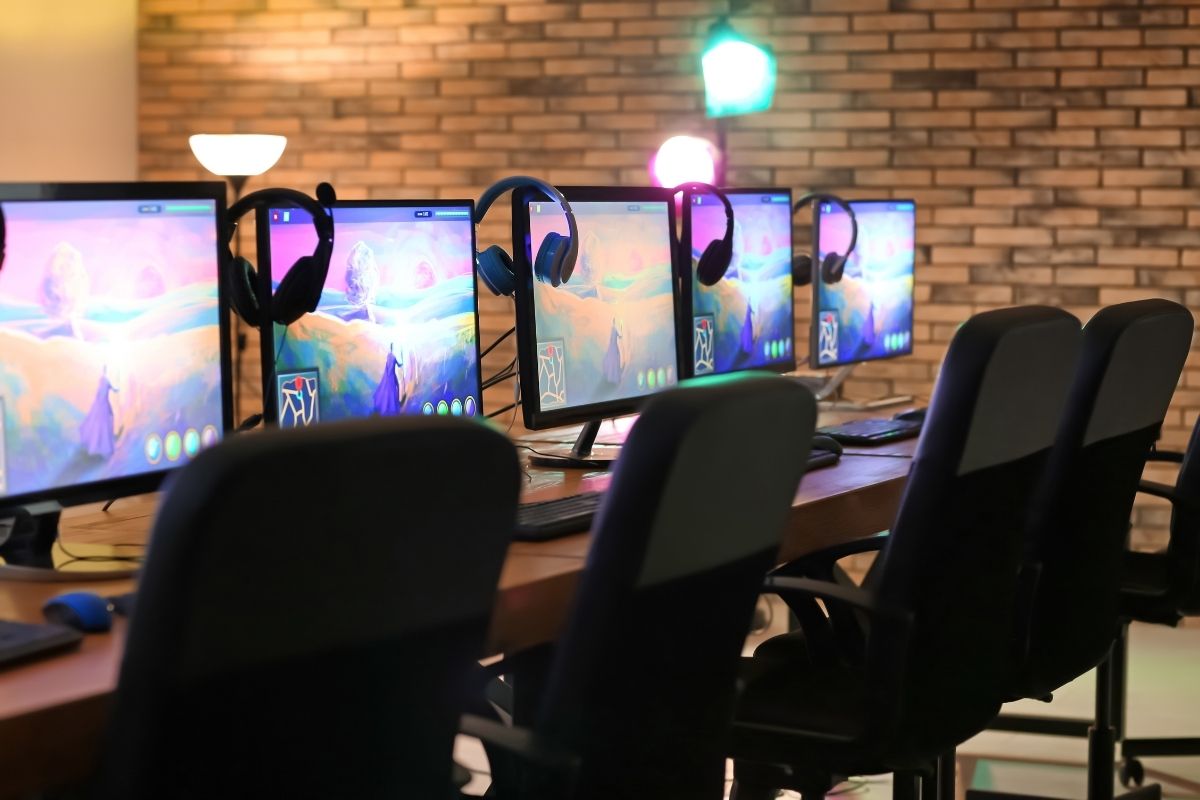
We became the first North American team to acquire an esports franchise in September of 2016. The numbers behind esports are staggering. More people watch the League of Legends World Championships than the BCS National Championship, the NBA Finals, the World Series, the Stanley Cup Finals, et cetera.

The numbers are staggering. The demographics are staggering. And enough fans have yet to be monetized in any way and have yet to really receive some of the professional treatment that sports entities, whether it’s teams or leagues or broadcasters, have currently reserved for traditional sports teams, as it were.

For us, in sports management, this was an incredible opportunity to meet this entirely new demographic, to understand the trends behind the success of esports over the last many years, and what we believe to be the continued explosive growth in the industry. Then, we were able to utilize the fact that we are part of an ownership group that is willing to invest behind somewhat risky, but at the same time, innovative, unique, and new ideas.

We spent a lot of time thinking about, one, do we want to invest in esports? The answer was, “Absolutely yes,” because of some of the demographics that I’ve talked about in the numbers. Number two, which was probably the hardest question to answer was, once we know we want to invest in esports, what is the vehicle that we’re going to choose?

For us, it just made logical sense, given that we are a sales and marketing organization, given that we understand how to run a team, and given that we are blessed to have some of the best sponsorship sales, ticket sales, marketing, fan engagement folks in the entire industry, if not the world.

We figured we could utilize those resources to help really grow Team Dignitas, which is the esports franchise that we acquired, and really help professionalize what is an incredibly exciting but an incredibly nascent industry.

The next six months, year, or three years will really show how successful we, as well as other franchises that follow our path, will be in professionalizing esports and really creating the next sporting behemoth in global sports.

But for us, it is very much about getting a seat at the table to an exciting industry with young fans, passionate fans, and really turning Team Dignitas, which is our investment in this space, into the marquee franchise in all of esports.

These are the kinds of subjects our sports management education course tackles.

Online Sports Management Education: Athlete-Driven Media

In the traditional sense, any given time where a content provider, which is a sports organization — say, the Houston Texans — wanted to give information about one of their players to the fans, they would give it to the mass media first. And the mass media would then distribute it to the given audience and probably a mass audience. If a player was hurt, for example, the Houston Texans would utilize that information and give it to ESPN.

Not only would they be able to give it to ESPN how they wanted, but then ESPN would choose how they would want to distribute that piece of information to the fans. So the fans are actually getting watered-down information not only from ESPN, because ESPN chooses to craft the message how they choose, but the information which comes from ESPN is actually coming from the Texans first.

There’s been an interesting example when social media started to hit its stride in global sports. Arian Foster was hurt in a game. He tweeted out an MRI picture. Now, this is a great example of how a piece of sports information changed drastically in terms of how it’s reached in new ways to sports fans members.

Arian Foster tweeted out a picture of his MRI. No longer did that information have to be understood by the Texans. The Texans didn’t have to give it to ESPN. And no longer was it up to ESPN in terms of how they would report this message.

ESPN, in the past, could have had the option to report on Arian Foster from week to week. Or, perhaps, to say whether he’s going to miss several weeks. It was up to the fans to understand the information from ESPN. Now, with this new tweet, Arian Foster gives his MRI directly to the fans.

Of course there are doctors on Twitter. So, they can completely understand for themselves what is going on with Arian Foster. They can actually diagnose how long he would be out, if at all. So, it was a really interesting example in sports management of how these two graphs represent a shift: not only in terms of sports information that certain teams get and certain organizations receive but also in terms of how sports teams and athletes themselves can have a better way of communicating with their fans and their audience members.

The emergence of athlete-driven media is an important part of sports management education courses.

Online Sports Management Education Urban Renewal Case Study

In the early 1990s in Baltimore, it was time to build a new ballpark for the Major League Baseball Orioles. Part of the ownership group had the idea that there was a good place to do it in the inner harbor, an area with rich history that had seen better times and seen better days. This idea to put a new ballpark with an old style feel in the inner harbor around all of this history was a real innovation.

The ownership group also started to rebuild the area around it, not only for sports, but for all sorts of business, for all sorts of retail, for things that the local government was doing, and certainly for things in the social sector and the nonprofit space. But it really was a sports-led development that built the community. When some of the leadership from the Baltimore Orioles then moved over to San Diego with the Padres, also in Major League Baseball, it was time to build a new ballpark there.

Taking concepts for a new ballpark, giving them some historical touches with modern amenities, and doing it in a location that would really speak to things that are important to the community seemed to be a theme that was working and that was something to go on. It’s a fine example of a terrific venue that stands today and that’s in great use today.

The next project for this team was then to go to Boston and take on what became a renovation of Fenway Park, one of the oldest, most storied sports venues on the planet, at least in modern times. The renovation involved everything from rebuilding some of the seating — not all of it, because we wanted to keep some tradition and some history — but it included updating the luxury suites, putting some seats on top of the famous green monster out in left field, and putting a newer kind of seating in the right field stands.

For decades, beer was hand delivered off of a truck each and every day. It’s quite a cost in a number of ways. One of the things that they resolved to do with the new ownership was to take some property that sat across the street, a warehouse in particular, and to convert it into a beer storage facility. What they were able to do was then pump the beer through lines into Fenway Park, cutting down costs for sure but also making things much more efficient and effective.

An International Sports Management Education Example

What’s interesting about this group is that along the way, the Boston Red Sox ownership, led by John Henry, purchased an English Premier League football club, Liverpool, one of the most storied organizations in all of global sports. And along with that comes Anfield, the venue that Liverpool has played at for ages. That ‘s more than 150 years old. You can begin to imagine maybe what it is that might be done in terms of renovating that if we look at the timeline between what happened in Baltimore, what happened in San Diego, what happened in Boston. This is quite a sports management project.

Online Sports Management Education on Understanding the NCAA

The NCAA (NationalCollegiatee Athletic Association) is very complicated right now. We are only really referring to big-time college football, men’s football, and men’s basketball. Issues are revolving around the black market and the Adidas case where guys were arrested for handing money over. These things wouldn’t exist if there wasn’t pressure around young athletes on national television. Tons of money around them and they aren’t seeing any of it. These are enormous businesses, and these issues defy common sense.

One fundamental question asks if there is something to look at here or not. In 1984, a class-action suit was brought by the major football schools against the NCAA and Walter Byers negotiating to make their own television deals. This case, known as the Oklahoma Board of Regents V NCAA was a supreme court case where Notre Dame at the University of Texas thought that they should be able to make their own deals instead of going through the NCAA.

The NCAA responded to this by explaining that their actions were a restraint of trade and antitrust. They went to the Supreme Court and the court favored the NCAA, confirming that it was a restraint of trade and antitrust. The Athletic Director of the University of Texas, Frank Broyles, says, “These schools can now kill what they eat.” This began the proliferation of conference and school deals for the selling of television rights.

March Madness Keeps Schools Connected to the NCAA

Here’s the curious thing though. Around that same time, another significant college sports phenomenon started becoming extremely popular with the advent of cable television and ESPN. This is known as March Madness with college basketball. Many of the schools with excellent football programs also have excellent basketball programs. However, strangely, the now one billion contract for March Madness is still retained and controlled by the NCAA instead of the schools.

Why would these schools insist on having football rights but not basketball rights? The answer is that if they take basketball rights too, then they wouldn’t need the NCAA anymore. Without the NCAA and the student-athlete, their economic model falls apart. This beautiful thing that rakes in tons of money without paying anyone for it would be gone and there’s no justification for that.

Global Sports: The International Olympic Committee’s Rule 40

People who have no ethical or moral center are aggressively challenging sports business today. They don’t understand, and they don’t care. They don’t care if student-athletes are illegal or if closed professional leagues are illegal. They don’t care that the IOC (International Olympic Committee) has something called Rule 40, which doesn’t allow Olympic athletes to promote their sponsors while competing during the Olympics. The IOC controls all of the sponsorships for the Olympics, so they control the exclusive rights and make all the money.

These strict policies may be completely unfair, but they are what make them so brutally efficient and economically advantageous. They dispassionately, coldly, and clinically understand the models of profit.

Sports Management Education

Until you understand these types of sports business models, then you are just another guy calling up sports talk radio to give your opinion. You need to grow up. Do you want to run this thing? Do you want to own this thing? Do you understand what it means? Do you want to change this thing? If you think it’s a lousy system and want to change it, then maybe you need to join them to beat them because you have to understand it before you begin.

Online Sports Management Education on Sports Ecosystem

One example of the sports ecosystem is the Little Caesars Arena in Downtown Detroit. The community around this arena has always been vibrant. Even though it has seen its share of ups and downs, including more challenging times recently than in the past, it remains spirited.

We are looking at how sports can be used to grow a city through economic and social development. We are looking to take some of the things that aren’t working so well and use these events and venues to spur something new.

Sports Management Investments to Improve Development

Sports facilities have a unique way of helping communities come together. Part of this is due to the development of property that, otherwise, might not have a significant impact on the community for decades to come. It may be in a Brownfields area or an opportunity zone that would never see the level of investment if not for these facilities. So what we see in this type of ecosystem is the community coming to the downtown corridor to watch live sports.

Around 20-30 years ago, sports facilities were developed in the suburbs. People would trek out there or to areas on the fringe of the urban population to watch the games. Now we are seeing sports being developed more in the urban core. Along with that, we see transit and modalities that would never have happened if it weren’t for these investments.

This is not to say that sports are solely responsible for this kind of rebuild. It’s just saying that they helped accelerate the local government’s investments in the community. Sports helped bring more people to the local downtown market. It gets people to walk or take public transportation to the games, letting people spend more time in the urban core.

The Future of Global Sports Ecosystems

Whether these people live there or just visit, they are shopping there now. They are spending time and money there. They eat at the restaurants and see the events there. These people are crowding out money that’s usually being spent somewhere else. In addition, they are generating incremental income for the local community.

Let’s refer back to the example of Little Caesars Arena in the Detroit area. This building opened a year ago as the successor facility for the Joe Louis Arena. There has been a resurgence of putting sports in downtown areas. In Detroit, the Lions played out in Pontiac and the Pistons that played in Auburn Hills.

Even though the Joe Louis Arena was downtown, the Red Wings moved about a half a mile north to the Detroit District because there was a more modern facility there. It’s in downtown Detroit in a place called the District Detroit. It’s close to Comerica Park, where the Tigers play, and the Ford Field, where the Detroit Lions play.

Even in an area that has become a local sports hangout, you wouldn’t even know that the Little Arena was an arena if you walked up to it. Its facade appears to be offices, restaurants, and open spaces. It doesn’t look like the traditional arena of the past. However, when you walk in, you are greeted with videos and the history of the Red Wings and Pistons, who play there.

The flow through the building makes it a wonderful place to watch a sporting event. They offer many different ways to consume the game through great restaurants, shops, and video monitors. In addition, the inside of the building is full of digital media to help viewers enjoy the games. The Little Caesars Arena is a wonderful facility that will probably be the hallmark for how arenas will be built for the next several years.

Now there is this area in the urban core that is sports-related. But if you walk around, there are also restaurants, shops, and parking in the same urban core. More people are moving into the downtown corridor, which may not have happened without sports being built up there. It could have taken many more years to succeed without this kind of influence.

Online Sports Management Education on Interactive Ballparks

The Atlanta Braves’ facility is a good example of a ballpark that is very interactive with the fans. They offer their fans sports perks like renting a baseball glove or ziplining at the stadium. In addition, there are a number of other exciting things that fans can do when they aren’t watching the game.

Sports Management Education for Marketing Global Sports

The interesting thing about this interactive model is that it also benefits sponsorships. Sponsors want people to come to the game. Often, they have signs at any given arena or stadium. For example, Pepsi places advertisements all over the stadium, and they want as many eyes on those signs as possible in order to see a return on their investment.

Great Sports Management Leads to Great Sponsorships

These interactive experiences are a great way to draw people to the ballpark. Sponsors greatly appreciate this because more eyes in the ballpark mean more eyes are their sponsorship signs.

Online Sports Management Education on Athlete Driven Media

The relationship between athletes and the media has changed significantly. Nowadays, athletes don’t necessarily need to rely on the news media to share their stories, successes, or activities. In addition to social media, sports organizations and sports management have the ability to share their own news now. In the past, they were reliant on traditional media, television stations, and newspapers for these things.

Social Media Is the Future of Global Sports

In some ways, social media has given athletes more power of their own. This freedom has empowered them to tell their stories. But, in another sense, this has made things more difficult for them because they have to stay on top of social media all the time. They have to constantly check on what people are saying and posting. As a result, we almost see the media reporting on what happens on social media now, rather than, just covering breaking news stories the way they used to.

Online Sports Management Education Lesson in Revenue Streams

How do teams make money? They make money now in almost any way you could imagine, as long as it touches on something related to sports. What does that mean? It means that in the past, we looked at team revenues in terms of ticket sales, then in terms of merchandise, and some of the other ways that we think about going to the game.

Sports Management Education Examines Added Revenue Streams

But over time, certainly, over the past 50 years, we’ve seen revenue come in major numbers, in billions of dollars through television rights. Now we increasingly see it coming through all the ways we get to watch our games. As if that’s not enough, enter sports betting and all sorts of things online, including E-sports.

Television Revenue in Sports Management

Television revenue for the past 30 or so years has been a major driver of revenue for sports clubs and franchises anywhere in the world. Now what we’re starting to see, of course, is that it’s not just about watching them on television. We also watch on a second screen, which is kind of interesting, because it’s now for many people become the first screen.

Global Sports Access

Anywhere and anyway people are accessing sports, whether it’s a game, a behind the scenes video, or a little piece of the action that you didn’t even know existed, all of that is worth many billions of dollars to teams and the players who play on those teams, plus the players we watch in individual sports, like golf or tennis.

Online Sports Management Education Introduces Evolving Tech

Wearable devices have become such a valuable tool for sports teams. Not only does it help us evaluate talent, but it can also help us develop and coach talent because it provides feedback to the athlete. By providing feedback to the athlete, it allows us to monitor his or her actions on a real-time basis. Wearable devices have become a valuable tool for global sports organizations and athletes, as well as sports management. Wearable devices can monitor athletes’ fitness and wellness. It can also monitor capability in different athletic movements.

It not only can be used to evaluate athletes, but it can also be used to develop, train, and provide real-time feedback. This is really important because athletes are often looking to succeed at the highest level and particularly elite athletes. Sports management education explains the evolving technology. It states that instead of just being used in an evaluative sense, we’re allowing wearables now to be employed as coaching devices.

Online Sports Management Education for the Barclays Center

In sponsorship, an activation is what really brings that sponsorship to life. The sponsoring company and sports organization have come to an agreement. They’ve signed a contract, but then beyond that contract, there are these activities that we call activations. And that’s where the sports property and the sponsor will work together. They say, ‘OK, what can we do creatively to make our consumers aware that this sponsorship exists but also potentially to give our fans and our consumers a sample of the sponsor’s product or the sponsor’s service?

Some examples of that would be signage featuring a Coca-Cola logo that goes all around the entire stadium. Other examples might include names that come up on a board or ‘this is the Halftime show brought to you by AT&T.’ Some of the more intricate activations include Taco Bell’s “Steal a Base, Steal a Taco” promotion or when Lucas Oil Stadium had an in-arena store. Those are all examples of activations, and now that you understand that, take a look around the Barclays center and ask, ‘where are there opportunities to activate sponsorships?’ So if you had a sponsor, what would you do in this particular arena to activate it?

New Sports Management Promotional Opportunities

What makes Barclays Center a little bit more unique than any other arena here in the tri-state area is being in literally the center of Brooklyn. Brooklyn did not have a world-class global sports venue of that spectrum or of that size until five years ago when Barclays Center moved. We pick up markets similar to Madison Square Garden as well as a very new kind of Brooklyn market. So besides the shape, which is obviously a unique factor of Barclays Center, I think the location is important from a marketing perspective. From my understanding, the Oculus is supposed to be immediately eye-captivating. So you walk in, and you kind of feel like you’re in a big space even though you’re outdoors. And the Oculus within the circle is just a large LCD television displaying different videos and marketing pieces 24 hours a day, whether it’s the Nets or upcoming concerts. So, even if people are in the nearby mall, they still can glance over and see what’s coming up at Barclays Center.

Sports Management Education and Next Generation Mobile Marketing

An activation is basically interactive marketing. A customer feels like they’re putting their hands on the brand a little bit. And so we have a number of partners, especially here in spirit partners, where a brand will put their name on the label of a bar. Most of our partnerships are on contract years, and as a contract year ends, we might rotate a new partner in. Most of our in-arena activation is constantly full because of a very high demand for the Brooklyn market. A lot of brands love associating themselves with Barclays Center so they can get their name out there. The LED lighting that we have at the arena-not just the Jumbotron, but all the LED lighting around the arena-is just additional marketing collateral. And for our brands, it’s another way for them to associate themselves with Barclays Center. I know a lot of our health partners put their ads on those LCD screens. It’s just a way to highlight a deal they have going on or get their name out there.

Measuring impressions is probably one of the most exciting new data studies I think arenas are doing. There’s so much constantly growing and changing with that. The most obvious is scan, so we know exactly how many people come into the arena. So if it’s something big like the center Jumbotron, we’ll do count scans. Chances are everyone that entered the arena saw the Jumbotron, but if we’re looking at an LED light on the suite level, then we’re only looking at specific suite buyers or specific suite scans. We also have different activations that are just temporary. American Express has their own little box on our concourse, and we’ll have video games and interactive material in that box, and we can actually measure how many people walk in and out. I know a number of arenas are doing other very interesting things with impressions. A lot of people have sensors on the ground so they can feel how hard people step if they’re getting really excited and measure impressions that way. It’s getting very interesting.

Everyone’s phone has a Mac address that’s unique to that cell phone. So, when someone uses their app, it allows us to provide them with a better experience. We can see the concession stands they visit more frequently. We can gauge sentiment off social media pages, and we can also remarket to them very specifically based on what they like. Because BSE is a brick franchise, we have a number of arenas and venues. If they’re simply just a Nets fan, we’ll only market Nets. If they’re just an Islanders fan that only goes to games in Nassau Coliseum, we’ll only market that material. Having Mac IDs and cell phone data makes that a lot easier than just through email. So what we’re doing with the Mac ID is really an immediate remarketing campaign. If you like something on Facebook that’s Nets Team specific, we will then promote a Nets package to you. So it’s a very, very targeted program that uses that cell phone data.