Animation: Introduction to Animation

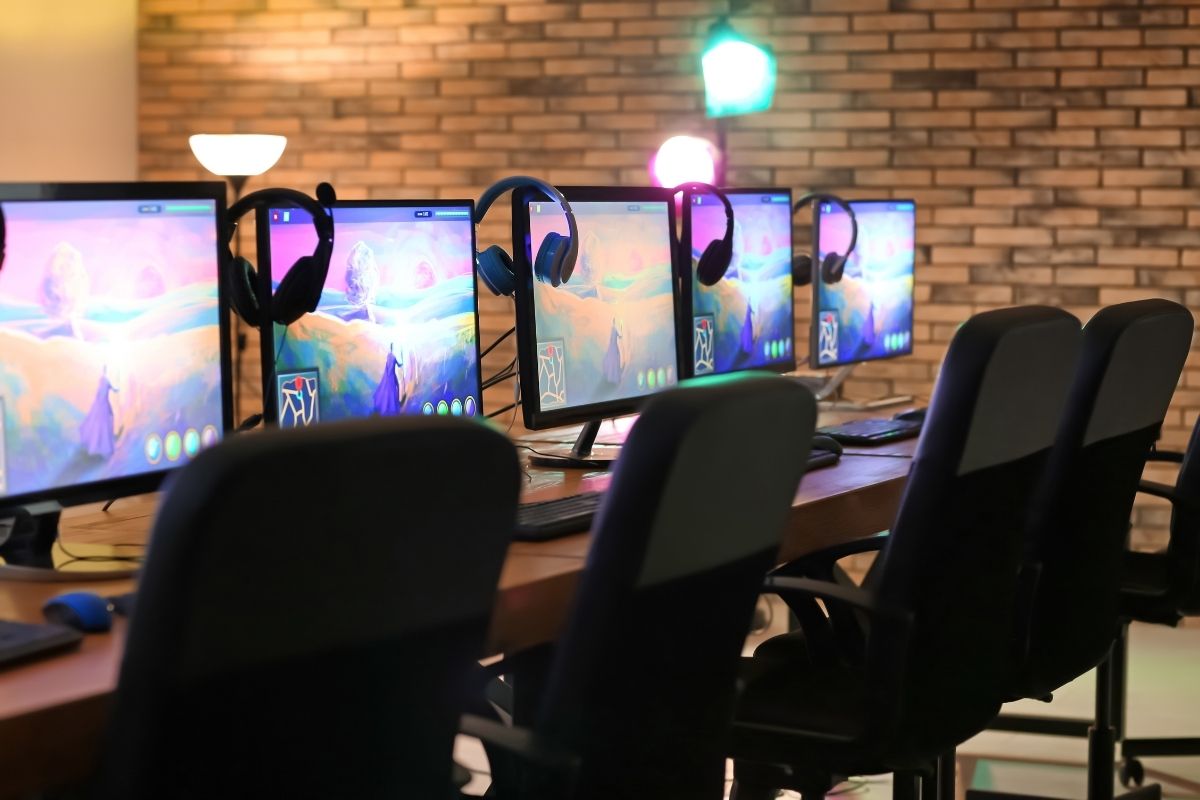
Animation for film, TV, and linear storytelling is you controlling the character, creating keyframes for the posing, and carefully planning it out.

Animation in gaming is about creating a character or an object that has certain behaviors assigned to it so that it will behave a certain way when you control it.

Animation in the gaming industry takes a cold, dead environment and breathes life into it. Animation is not just how your player moves through the world; it’s also the world interacting back with the player.

People tend to think about the obvious, walking around or dancing, but animation is so much more powerful than that.

For instance, you’ve got an ax that you’re swinging. If you go up to a tree and swing the ax and nothing happens, you’re probably going to think that you can’t knock the tree down. If, instead, the tree wiggles and shakes a little bit, you’re going to swing that ax again.

You feel like you’re engaging with the environment, and the environment starts feeling real. You’re also cluing players into the game mechanics and which actions they can take.

You swing the ax again. This time the tree shakes harder – you’re going to swing it again. You have positive reinforcement that swinging the ax does something, and you should keep doing it until the payoff.

There’s a huge team that works on all these projects within the esports industry. And at every level of gaming education and planning, they have to consider the gaming experience.

A character designer and a modeler work together to create the characters, make them look appealing, scary, or whatever the game requires.

Next, the rigger puts in a rig, a skeleton that goes inside the mesh, the skin of the character, and creates movement. Then, the character receives its texture. Textures give the feel of leather, skin, or cloth, and they create the mood, the sense of danger, or lightness, of comedy.

Animation in gaming is different from animation in television and feature films. Each step in the process must take into account the materials of the objects or characters.

For example, as online gaming education teaches, characters made of metal will move a certain way based upon the characteristics of the metal. A program (coding) will determine how a metal character will interact with its environment.

The environment must be specified as well. Is it metal, wood, or ground? Gravity is also critical; it’s the most important part of physics regarding how a character moves.

If you’re on Jupiter, you’re going to move very slowly. If you’re on Earth, you’re going to move like we’re used to seeing people move. If you’re on the moon, you’re going to move lightly.

All of these details get programmed into the game. Whether it’s an esports, 2D, or 3D game, these things give the character the performance that makes the game exciting.

[Please embed: https://pixabay.com/images/id-5091194/ ]

Choices in Development: Engines, Languages, and Platforms: Game Engines and Environments

Game development has become a very welcoming environment. The game engine is the hub that runs the entire game and makes your game assets work. Anybody can develop a game as there are many different types of game engines and environments available.
If you are an aspiring game developer just starting out, you may want to check out Unreal Engine. This is a popular engine that is good for starters in that it is a bit more user-friendly. Unreal Engine involves less technical aspects to it as compared to other engines.
Another popular game engine that quite a few people know about is Unity. This game engine has a platform that allows you to create game characters. You can also add physics to the game assets using Rigidbody dynamics, and you can make your characters do different things by adding some code to your program.
If you don’t want to install a hefty software application on your computer, there are a whole host of game development engines that are web-based. You would simply go onto an internet browser, type in the URL, and then start coding. Once you’ve created your app or game, you simply download your file.
MIT App Inventory is a form of Scratch, which uses a block-based programming language for you to create apps and games. You drag and drop various blocks to build the code needed to run your creation.
Flowlab is another web-based application. Using Flowlab you can create game characters, add different movements for those characters, and create a full-fledged game. You can also access this application on your phone.
If you start working for first-party studios in the gaming industry, such as PlayStation, Naughty Dog, or Rockstar, you may work with proprietary game engines that these studios have created themselves.

Choices in Development: Engines, Languages, and Platforms: Unity or Unreal?

“Some game engines are better for creating great, giant worlds,” says Genevieve Johnson. Unreal was initially known for that, whereas Unity’s metier was smaller, boutique 2D games that could render smoothly on a tablet.
“But what we’re seeing today is that Unity’s excellent for creating large, 3D games. And Unreal can create wonderful games for your phone,” continues Johnson, “It then becomes a question of, how strong are you in coding?”
One thing that Johnson particularly likes about Unreal is its visual scripter.
”I tend towards using Unity as my game engine because I find it to be programmer-friendly. Whenever I have a unique mechanism that I want to work on, I can effortlessly write the code from scratch. That may be more difficult for some people. But to me, it’s very freeing,” says Dan Shimmyo. Unity enables him to try lots of things in a flash.
Malik Forte’s advice to anybody trying to decide between Unreal and Unity is that if you’re looking for accessibility and don’t want to get too deep into learning a code language, then Unreal is the way to go. It’s a lot more accessible and easier to use.
“Unity is for more veteran developers who understand coding language and are further along with working with game engines,” he says.
So, for someone who is just getting started and wants to get an idea of how a video game engine works, according to Forte, Unreal is the way to go to get the hang of things.
“If you want to move on to something bigger like Unity, you can do that later,” says Forte.

Community & the Design Process: But Make Your Game

Community building is essential when designing your own game. Some designers are great at it. They are going to love us. And they might have loved us as humans. But the minute the game comes out, if it does not engage them, it does not matter.
Drawing a Death – When Community-Building Becomes Excessive
David Jaffe recalls a game he worked on. “Drawing a Death is the biggest failure I’ve ever worked on,” he says. “It was a total crash and burn. I loved it-super proud of it, so proud of the team. Got a couple of good reviews. But mostly, the reviewers hated it. The audience didn’t show up for it-total disaster.” However, Jaffe and his team did great with the community.
So, what went wrong? Jaffe felt they spent too much time community building on drone death. While they were community building, their open and closed betas were not doing well.
But you can put such an emphasis on community that you give it way too much value than it really deserves. Then, it is more lip service. They will say, “oh, community is everything. We listen all the time. We’re here to serve you.” But that is not true. As David Jaffe learned, if you focus too much time on community-building, you can lose sight of how well the game is performing.
Community is Not Just a Two-Way Street
The relationship between customer and designer works when you make what you want, the team wants, and you take appropriate feedback from the community. Pleasing the customer is crucial, but building a successful game is also important. It is not really a two-way street. To keep the relationship healthy, it is more like a 1 1/2 way street.

Community & the Design Process: Case Study in Community-Based Design: Roblox

The way Roblox looks at building our developer and player communities comes from a place of respect built into the very foundation of what Roblox is, starting with the building tools.

For example, Roblox Studio uses LUA, one of the most friendly coding languages there is. That wasn’t an accident. As a company, it was essential to choose a coding language that was accessible for all, not just those with a gaming education.

Rule 1: Give Players Creative Freedom

[Please embed: https://pixabay.com/images/id-1077863/ ]

From the very beginning, we wanted players to have the option of creating giant immersive worlds to expressive themselves in. Each decision made about gaming tools focuses on these shared collaborative experiences.

We respect our community; it’s one of our pillar beliefs.

That foundational respect is considered each step of the way. Before making decisions, we ask internal questions such as, “Is this really respecting the community?”

We recognize that the company is nothing without our players and developers. It’s no different than in any other gaming company, but Roblox, in particular, leads with our need to take care of them.

Rule 2: Listen to Your Players

We realized long ago that the best people to talk to when determining what players want were the players themselves.

[Please embed: https://pixabay.com/images/id-2587571/ ]

Because of this, we want to give them the tools they need to create. And that’s what we do. That’s where we see our players become developers.

They create games that a traditional gaming company would probably never allow.

If you look at the top games on Roblox and would pitch them in a traditional green light fashion in the gaming industry, they probably would never happen. But Roblox doesn’t have that green light process.

Any kid can come on and create a game. It allows them to express themselves without adults getting in the way and assuming to know what kids like. Kids know what kids like.

Rule 3: Remove Roadblocks for Community Development

For developers coming into Roblox, there are tremendous opportunities for creativity and expression in a fast-to-market way. It’s possible to come up with a wacky idea and create it, no matter what your crazy idea is.

You might think, “I want to make the floor lava, but not just the floor, the sky too!” I just came up with that idea, but on Roblox, you could prototype it very fast and then share it with the Roblox community instantly.

Community & the Design Process: Social First….

Many gaming audiences today prefer the social aspect of gaming almost as much as the gameplay itself. For many gamers, the ability to socialize with their communities is the most important part of the whole experience.
“It’s a social experience first, it’s a piece of meaty game design second,” explains David Jaffe.
Games like Dota or League of Legends resonate more as “gamer’s games” but this hardcore focus on gameplay can turn a lot of people away, especially if that’s not what they’re looking for. Game designers are tasked with finding the balance and understanding the experiences that draw their audiences in, to begin with.
David Jaffe details the pitfalls of neglecting the social aspect of gaming:
“It’s very easy to become a game designer and fall in love with play mechanics and nuance and strategy and tactics. And there are games out there that you can make that speak to an audience that will care about those things. But if you’re making mainstream titles, it’s kind of like trying to be a four-star Michelin chef, but you’re making a menu for McDonald’s. There’s nothing wrong with McDonald’s, and there’s nothing wrong with Ruth’s Chris Steak House either, but you have to know who you’re cooking for.”
Knowing your audience is a core feature of good game design. For example, the community aspect is especially prioritized in multiplayer games that rely on coordination, group strategy, and cooperation. There is, of course, a balance between catering to an audience’s needs and presenting something fresh that can be appreciated in its own right.
“You have to engage with the community,” says Jaffe, “but you also have to understand that you’re not a short-order cook for the community. . .Your job is to sit there with the development team, the publisher, and sometimes the license holder, and go: this is what we are making.”