From Idea into Production: The Producer

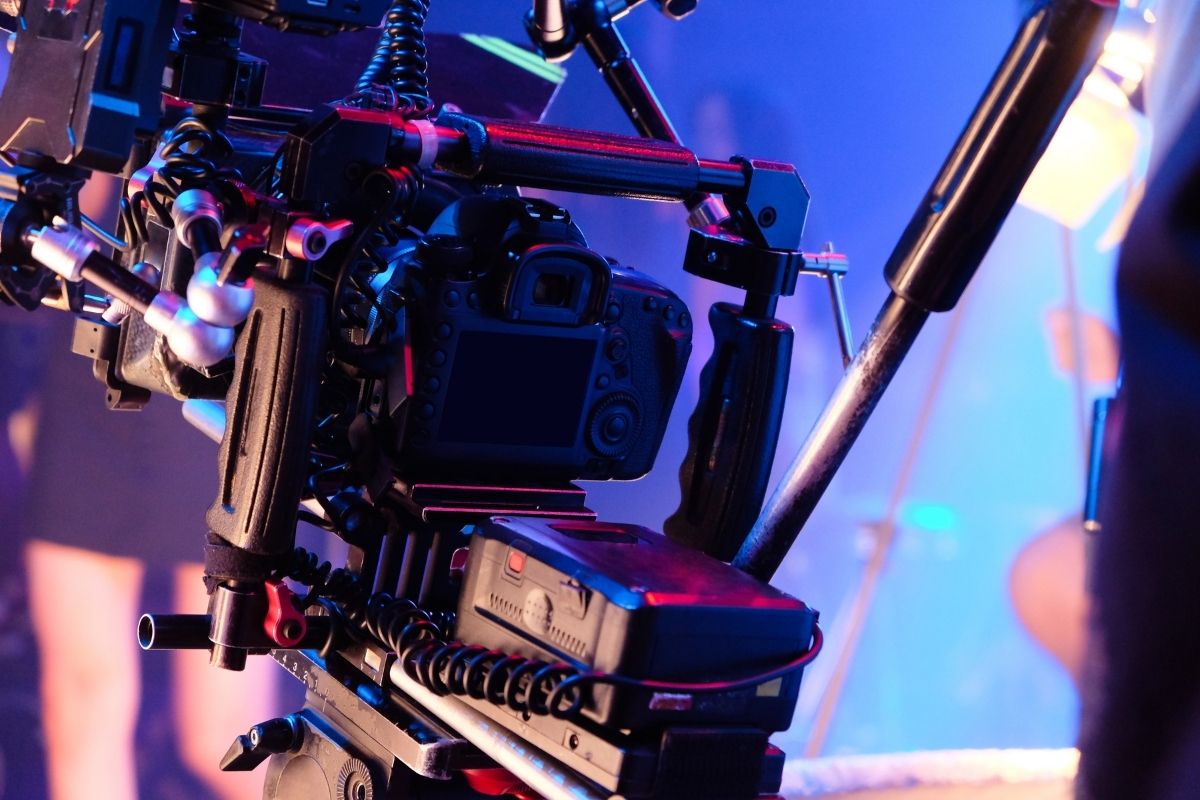
“The producer’s role can be defined like this: they’re the person who turns the lights on, staying until everybody else has left the room. Then finally, when everyone else is gone, the producer is the one to turn the lights off. The producer is the person(s) responsible for the making of the film from start to finish,” explains Janet Grillo.
“Typically, that involves conceptualizing the movie in some way, either engaging the services of a writer, a director. Sometimes it may involve optioning underlying intellectual property and hiring a writer to adapt it. It may mean finding a project and becoming partners with somebody else, joining another existing production team, or perhaps a writer/director who has already initiated the project.
It’s being part of a collaborative mind that supports the vision of the project—what it’s going to be. It’s figuring out how the team will assemble and then supporting the filmmaker in executing that vision. It’s bringing on required team members.
“As a producer, I would be there from the very start, helping to ideate what the team is envisioning,” says Grillo. “We determine immediately who wants to see this story. Who’s the audience? Is there an audience for this film? This helps us determine the market value, right? Because what gives a project market value is an audience.”
Determining your film’s value
How can you determine what the audience is?
Well, what kind of story is it? What’s the genre? What is the type of audience that typically wants to see this kind of film?
How is it enough like other movies that you can kind of sense its appeal, but different enough that it will draw an audience? We figure the film’s estimated production cost. So, then the question becomes, ‘is it too much? Will it cost more than the perceived market value?’
Market value for a movie is often contingent upon star attachments. So, the next question we try to answer is: ‘how can we get stars attached to a film that will give it this perceived market value and attract funders?’
“The producer is actively part of that ideation, that strategizing. Once market value is determined, we’ll try and identify potential funders. We’ll also look for producing partners, financiers, and distributors,” Grillo explains.
###

From Idea into Production: The Stages of Production

“There are three main stages of film production,” explains Alrick Brown. “In the film industry, there is the pre-production, the production, and the post. You might think that planning and pre-production are the most important things, and you’re right. But when it comes down to the practical time of filmmaking, people rarely put enough time into the pre-production, getting the script together, the casting, and the location. You do that part right, and your life is much, much smoother in the production.”
On set, the actual shoot may last a day or a couple of days, depending on the length of the script. In Hollywood, it could last anywhere from a month to three months. That part of the process is the meat and the bones. Before you get to the meat and the bones, you’ve got to get the recipe, organize the kitchen, and gather the ingredients so that the cooking process goes smoothly.
Then there’s the post. In the film industry, the post is the last draft of the script. It’s the final version of that script. No matter what you wanted to write or do, you can only edit what you have.
Brown continues, “Looking at the material of what you shot, you say, this is what I have to work with. Did I capture my story? How well have I captured it? You cut it together and have to think about sound design, color correction, ADR, and everything that can help enhance. For new filmmakers, it’s crucial to look at this journey as a holistic experience.”

Intro to Post: Editing is the Foundation: Editing Documentaries

[Please embed: https://pixabay.com/photos/shooting-cinema-camcorder-cuba-75599/]

In the 21st century, the editing process is very different between fiction and nonfiction. For Sam Pollard, the nonfiction editing process depends on whether or not the film contains interviews. “If it’s an interview-based film, I will make sure that the director has transcribed all the interviews, which I can read to make selects,” says Sam.
“Sometimes I just read the interviews. Sometimes I read and watch them at the same time, so I can hear the cadence of the person who’s being interviewed.”

Once Sam makes his selects, he uses a step-by-step system. If the filmmaker has shot B roll or verite footage, Sam starts by watching that. He pulls the things he likes and the things that work in terms of look, feel, and relevance.

From there, Sam determines the film’s structure. He writes down the interviewees’ themes on 3×4 cards. On a poster board, Sam lays out a three-act structure for the film based on those themes. He arranges the cards into these three acts, and that’s how he builds the film.

Of course, Sam’s editing process looks different for films with no interviews. “If it’s just raw footage that’s been shot on location, I’ll just make selects from that footage,” Sam explains. “Instead of using the storyboard structure, I’ll just edit sequence after sequence. Fo example, someone shot me today, getting up and doing my activities. I would just edit that sequence in order.”

After Sam edits his sequences, he starts thinking about the beginning of the film. “How do I want to start this film?” he asks himself. “Do I want to start with Lizzie having the idea? With me getting an email about this program?” Then, Sam moves his sequences into place.

This editing process lets Sam create order and structure. “That’s the way I work with documentaries,” Sam says, “because 90% of documentaries have no scripts.”

Entertainment Press: Critics

Let’s take a look at the role critics play in the film industry and how every year they get together to discuss the best films and reward them for their effort.

“Film gets released. Critics write about it. Critics love to champion work that they’re passionate about,” explains Eugene Hernandez. “A group of critics, at the end of the year, meets to say, Ok, what were the films that mattered to us this year?”

Critics watch the most films out of any kind of writer or journalist. They’re like programmers of festivals, the folks that choose the films. Eugene explains that they watch lots and lots of movies. At the end of the year, they sit back and make a list, and they say, well, what was my favorite? What was my favorite film of the year? What was the best performance? What was the best-what had the best costumes or the best editing or the best direction, writing, various categories?

There are several critics groups at the end of the year in December you see a lot of. If you’re aware of it and thinking about it and you do a search on Google at the end of the year and you look for sort of critic’s prizes or best films according to critics or even top 10 lists, you’ll see a lot of that. You’ll see that critics are championing, celebrating, and highlighting the films that they were the most passionate about.

Eugene says that could be a great way to bring more attention to a film as well. A film comes out maybe early in the year or it’s at festivals earlier in the year, and then suddenly at the end of the year, critics are looking at it against all the films they’ve seen, the hundreds of films they’ve watched that whole year. And they’re saying, oh, these are the ones that stick with us, that matter, that is worth giving more attention to.

The awards season -as it’s called for the industry at the end of the year and into the beginning of the new year- is the moment when a lot of these films are celebrated.

“Whether that’s at the Golden Globes in January or at the Oscars later in the winter or early spring, these are the highest-profile awards,” Eugene says. “There are different levels and layers of awards, starting at local film festivals and national, international film festivals, but also continuing to the critic’s groups in the fall and then the higher profile, well-known awards.”

Intro to Post: Editing is the Foundation: In the Cutting Room

 “Being an editor gets you to understand the whole process of what a script needs, what production needs, and then, ultimately, what you need in the editing room in order to make your film effective,” David K. Irving explains. “The editor will want to spend a lot of time with the director thinking through how they want to do the story. They usually do their first cut, which is called an assembly, based on the script, and then they’ll eventually cut it down. Their most important job is creating a rhythm or a sense of pace in the film, so the film moves along.”

“I know when Shakespeare would write his tragedies, his first act always ended on a very tragic note, but he would always start the second act with a little comic scene for relief, so the audience could relax and then build up their tension for the tragedy that would happen at the second act.”

An editor, too, is looking for all those rhythms. They’re built into the script. Ideally, the director has given the editor everything he or she needs to put it together, but the editor is not on set. The editor is only making a movie out of the material they have in front of them.

“For example, many times, with an editor, I’ve seen them take a shot from an early scene and put it in a later scene as long as the wardrobe matched because it’s what they wanted in terms of their eyeballs going left to right. There’s a lot of freedom in the editing room. You have to let an editor be freeform in order to make sure they make the best movie possible,” Says Irving.

“As directors, we often get very stuck on the material we shoot. I shot a single take scene where at the end of the scene, one of the actor’s wardrobe got connected to another actor’s wardrobe and got dragged off the set. The actor was smart enough to come back on the set, but I didn’t print that take because I said I can’t use the shot if the continuity doesn’t work.”

“My editor said ‘the audience will never see the continuity problem’. That’s the take with the most energy, and that’s what’s in the film now. I, as the director, cringe every time I see it, but the editor made the right decision.”

In Midnight Cowboy ,the very famous movie with Dustin Hoffman and John Boyd, they almost get hit by a taxicab in the middle of the street in the middle of a scene, and Dustin Hoffman stayed in character as “Ratso” Rizzo, banged on the front of the taxi, and said, ‘I’m walking here! I’m walking here!’ That was never planned in the script, but in the editing room, we’re able to put it together and get this great moment that wasn’t planned, but the editor was able to use it to great effect.

Film Distribution: Move to Self-Distribution

There’s a movement right now in the world with streaming and online audiences, and filmmakers who self-distribute their films. These filmmakers figure out how to get their films booked and get them into theaters and do everything themselves. Taking the self-distribution route is completely possible for you, too. It takes a lot of work, but it’s definitely possible.

According to film industry expert David Ninh, “When I think about the role of distributors that we work for, and specifically our distributor and my role, it’s very curatorial.” Distributors look for unique storytelling. They look for whether or not the filmmaker has an interesting voice or an interesting story that they want to tell the world. They look at the film and if it’s going to be relevant and special down the road in their library. Or if it’s going to become a classic, because distributors sometimes compete for films. David adds, “I think that when there is a good film, there’s a lot of interest. A lot of distributors want it for themselves so that they can put their stamp on it and put it out to the world with the filmmaker.”

Those are very striking instances for the filmmaker to figure out the right home for their film, to get the film out to the world, and to figure out who can be the best partner for them to get it out in the widest way possible. Filmmakers need to outline the goals for their films. Some filmmakers just want a lot of money and to sell the film. Some filmmakers are more concerned with getting it out organically and having the theatrical experience by getting it rolled out in as many theaters as possible. The money is secondary to them because it’s more important to build the profile of their film in their career.

Alternative Distribution and the Future of Film & Television: Digital Media Analytics

KIMBERLY ALEAH: As a content creator, data is one of the most powerful tools that you have at your disposal. Ultimately, when you make something, you want to make sure that you’re getting it out in front of as many different eyes as possible. What I do when making a piece of content from a creative standpoint, is always start with the fact that we need a hook. We need something that’s going to add something different to the larger cultural conversation. This is because when you’re on the internet, there’s unfortunately a lot of other stuff to compete with.

Once I have that hook that we’ve used from pre production, production, editing, all the way through the development process, we have to figure out where we’re going to put it. This is when data comes into play, because data allows you to profile your audiences. That can look like a number of things.

For one, you want to find out when people are consuming content. Are people consuming content on Monday, Wednesdays, and Fridays at noon? Are people consuming content on Tuesdays and Thursdays at 6:00 PM?

Another thing you want to ask yourself is – what is my target audience? Am I going for school age children? In which case, maybe I want to publish stuff before the school day starts at 8:00 or after the school day is over at 3:00? Is my audience younger professionals? In that case I might want to wait until they get off from work. Is my audience more based in New York than LA? What does that day look like for them?

Just asking all the different questions about who an audience is, what type of content they want to consume, when they want to consume it, and then lastly, on what device, is important to effectively reaching them.

Are they consuming content on a smartphone? Are they consuming the content on a desktop computer?

Across different age demographics, you’ll find that for the 13 to 18 window, a lot of that is vertical video. When you’re a creator, it might incline you to consider shaping your piece so that it plays a little bit more aesthetically for a phone.

It’s just thinking about all the different questions of who the audience is, what time they consume their content, where they are consuming their content, and lastly the ideal duration. Duration is one of the most powerful aspects of data because it lets you know that not only is an audience engaging with content, but they’re sticking with it. They’re watching for more than three to five minutes. They’re watching the full 12 to 15 minutes.

This is where you find your strongest audiences, because you’ve made something that they find interesting. If you’re already starting with something on your phone, and you’re doing it with a group of diverse individuals, and throwing it into this larger ecosystem, it’s not only going to inspire other people to share your work, but it’s also going to inspire you to create new things that you didn’t think of originally.

And so for me, I love smartphones, which are very on brand for millennials. It really is one of those things that you have as a tool in your pocket to tell stories instantaneously. When we talk about these larger social movements that are happening, there’s a reason that a lot of the stimulus, a lot of the incidents that start those movements were recorded on phones.

They’re so much more accessible. They just let everyone have an immediate voice that doesn’t have to be mitigated by a traditional development room, a traditional studio process. A lot of the bureaucracy gets skipped, and a lot of the content making gets put first.

Alternative Distribution and the Future of Film & Television: Theaters: Our Once and Future Temples

What does the future of cinema hold? I have often been beaten up over the last 10 years. Therefore, I’ll be very shy to say what I ought to say. You know my guess. I can tell you what I hope it will be, because we’re witnessing a television take over, streaming services take over the theater business unless you’re a big tent-pole movie.
We need to think about what we want for the theater industry in the future. The streaming television industry is booming because they produce great and digestible content, a user-friendly format, great funding, and plenty of resources. These factors negatively impact the film and television industry, which makes it difficult for traditional theaters to sustain their industry in the future.
I believe in the theater. I believe in human nature working as a society. However, we must employ the mentality of a ritualistic temple to maintain human nature in society. I refer to it as a temple because many of us don’t attend a physical church or a temple anymore.
We need to go to the movie theater. I’m not hallucinating. We, as a group, go to a place, preferably a dark house. We’ll speak freely, a heart-to-heart communication so that we enter an abstract world, forgetting reality. But you get down to the truth. I think that’s something. When you walk out, life is different. You are inspired.
It’s more than entertainment—it’s spiritual as well. I don’t see how you can get the same effect sitting at home watching television, going to the bathroom, and resume watching. It’s different. I think of the ritualistic event presented in a black box, where you’re sitting as a group, as a congregation. I think from day one in the cave; the cavemen spoke of how to hunt lions over a campfire. People become absorbed into storytelling and togetherness.
I still believe in the theater. However, I think it needs an upgrade. It’s hard to compete with television. If you want people to schlep into a big place, but have safety issues, then at some point it will cease to be. I don’t know how much theater can survive. Everybody’s going through a difficult time.
My thoughts are immersive, so we can experience with a group of people. You’re inside a movie instead of watching it from outside. The movie has its own language, 2D film, whatever, but it’s something bigger than life, with fine quality. Like when I was young, and I’d see a Hollywood make a movie.
No matter what they do, we go see it. You have a choice in this. Those days are probably harder to get back. It’ll be taken away by television, and unfortunately, sometimes iPhones. But in theater, you must make something good, very special. And some of them will be immersive.

Cinematic History: An Art, a Technology, Culture: Capturing Movement

“When talking about film history, you have to begin to think about what cinema is at its core. Cinema or motion pictures is an image that moves,” Alrick Brown explains.”
“As soon as man could see, he started interpreting stories, looking at the stars, differentiating shapes of objects, naming constellations. As soon as a kid could, they probably were drawing images with sticks and dirt.”
Early cave dwellers used image paintings in caves to communicate. Later, the Egyptians used hieroglyphics to tell their stories and preserve histories.
Those symbols and images were a prelude to film’s beginnings.
Over a century ago, the Lumiere brothers and Thomas Edison’s company, experimented and found ways to make images move, creating motion pictures.
Gomez-Rejon’s film tells how film history and Edison, others are joined by history
“I made a film recently called The Current War: The Director’s Cut. I wanted to show how filmmaking and electricity were invented at the same time,” comments Alfonso Gomez-Rejon.
It started in the 1870s with beautiful studies in film motion by Eadweard Muybridge. They were done, I think, with twelve cameras. That evolved into William Dixon and Edison working together on the kinetograph and kinetoscope.
Next came, the Black Maria, Edison’s film production, considered to be the first film company. Remember, at this time in history film was still a novelty. But then we see it progress. The Lumiere brothers (Auguste and Louis Lumière) have the first kind of commercial film screening.
Georges Méliès starts doing narrative storytelling, but it’s still very theatrical with a fixed camera.
“Everything evolves again with Edwin S. Porter’s, The Great Train Robbery. This film, with its illusion of uninterrupted time caused by innovative (for the time) camera cuts and pans, is like the beginning of modern film language, or film vocabulary,” states Gomez-Rejon.
It’s fascinating to see their work and how it’s been interpreted by film industry types throughout the ages. Certainly, these films spoke to me.
###

Cinematic History: An Art, a Technology, Culture: Fundamental History of Film

[Please embed: https://pixabay.com/photos/movie-film-roll-filmstrip-analog-3057394/]

“Fundamentals” means understanding the basics. For filmmakers, that means understanding where film has come from. Film is only a little more than 100 years old, but it includes literature, photography, drama, theater, dance, and music, all rolled into one art form. It’s a very powerful tool.

If you want to be successful in this field, it’s important to know what’s come before. When you stand on the shoulders of those giants, you yourself can become a giant in the field. Knowing the history of film will teach you what works and what doesn’t work, and that will make you a better filmmaker.

For instance, if you want to pitch a story, you might reference a film. Sometimes, these references can help you communicate an idea to somebody else.

Sometimes it’s hard because you don’t want to sound derivative, because hopefully you’re moving the medium by doing some original work or interpreting. It depends on what kind of filmmaker you are.

Still, you can connect to previous films to develop your style. Someone who expresses themselves with a camera should learn from previous films, just like an author would want to know literature to see how other voices interpreted certain feelings. When you make these connections, you can find a kindred spirit in a ghost of the past.

It’s sad that people in this industry don’t love history as much as they should, because we are artists. There’s always a struggle between art and commerce, but it is important to know everyone that came before.

There’s always something beautiful to learn from film history. Consider the originators of the montage, colors in film, Avant Garde film, documentaries, and music. They’re all telling a story. By looking back, you can move forward and stay current. You’ll hear new voices, learn from them, and be humbled by them.