The Esports Landscape: Recent Changes and Trends

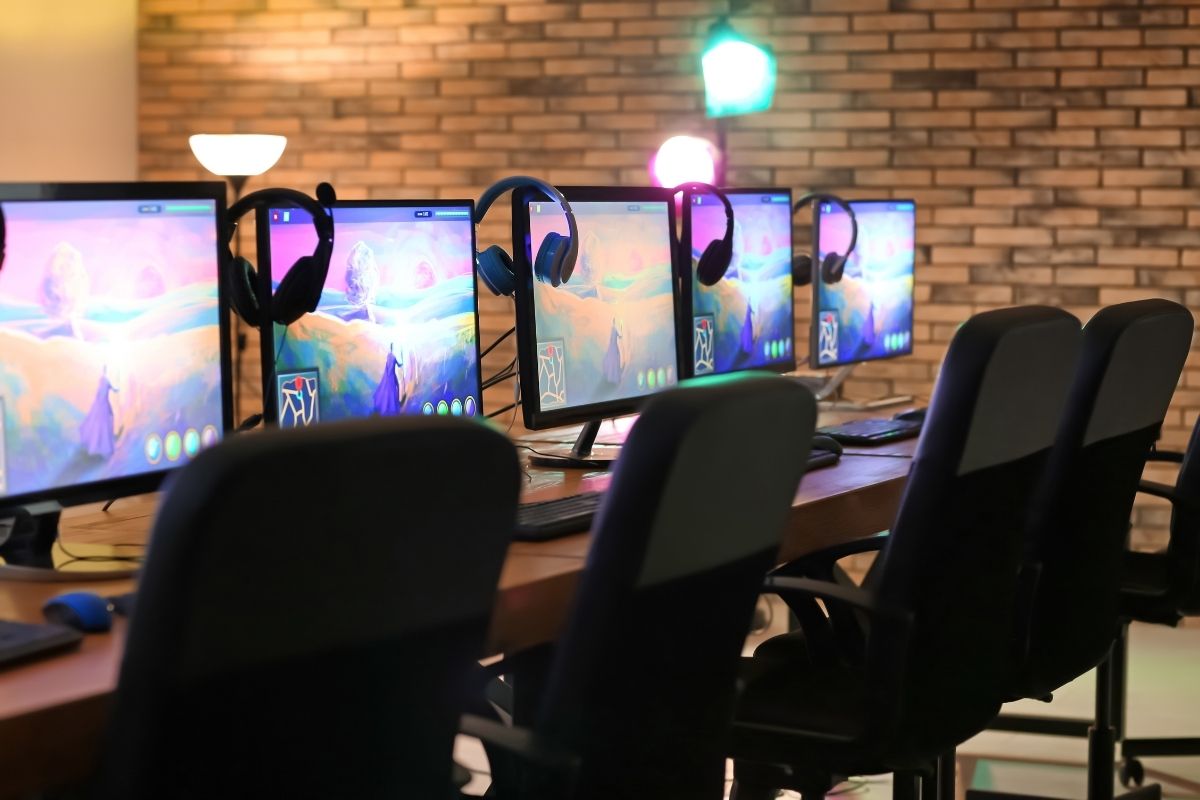
A few things have changed.
One is that esports has become more accessible to a wider range of people. So, the affordability of gaming consoles, gaming moving towards mobile, and free gaming, have all grown exponentially over the past few years. Consequently, it’s been easier to get gaming in front of more people.
The second thing that has changed is what I call the mainstreaming of esports, where you see esports information on sports networks such as ESPN and others. You turn on your TV, in some instances, and watch esports competitions live.
That is only going to increase because esports is ultimately a global sport. We believe that there are three global sports at the end of the day: soccer, basketball, and esports. Those are the three sports that anyone can, theoretically, play at any moment of the day.
So, that’s why you see the growth of esports all around the world; because it is a universal language in that regard. It’ll only grow as technology, communication, and connectivity keep growing.
In terms of breaking into the industry — for anyone who’s interested in pursuing a career within the esports landscape, I would make a few recommendations.
One would be to familiarize yourself, as intimately as possible, with the landscape. What are the top games right now? What are the next games coming out? When and where are the big tournaments? Actually, you should attend a big tournament.
Besides, are you reading the trades of esports? Are you following esports journalists on social media? Are you watching the events online? You need to immerse yourself in the space if you’re not from it. If you’re not a native, you can’t be an outsider looking to just break in; there are so many on the inside that already want these positions. So, you have to learn as much as you can in the gaming space.

The second thing I would suggest is to look for organizations that are interested in becoming part of the gaming space. As you see more non-esports traditional entities and sports organizations get involved, — whether through investment in esports organizations or owning and operating esports organizations (such as the Cleveland Cavaliers owning and operating a team in a professional esports league) — there are more and more non-esports endemics who are tasked with leading this shift.
Therefore, if you can get to people like me first before others (people who know the space and have the connections and the knowledge), you’re going to prove your worth and help yourself potentially solidify a position. Because people like me need people who know the space.
There are going to be more endemics and organizations getting involved in esports. So, knowledge of the esports landscape, performance, and connections is a gold rush.
We’re still so early in the gaming space. It feels like esports has gotten really big over the past few years. Think 10 years from now; we’ll be looking back at around this time and realize that only a handful of games were franchised and had leagues. Theoretically, a decade from now, that could be the norm. So much could change.
So, I would say this: Learn as much as you can and make contact with as many organizations and people looking to be in the gaming space.

Games for Good: Medical Gamification

Let’s take a closer look at medical gamification and how tools from the gaming industry can be used for gaming that is designed for our wellbeing and health.

“In medicine in general, I have not seen a lot of cases where gains have been fully integrated,” explains Maria Hwang. “It is more gamification, meaning there are game aspects that are added to whatever system they have, whether that’s an application or that’s a whole infrastructure and people go through certain steps to accomplish their goals.”

Maria goes on to explain, “It is a little bit unfortunate coming from a game designer perspective to see that it’s just using one element of games that are sometimes we like to say it’s tricking the patients.”

So you provide incentives. For example, for type 2 diabetics, we want them to log their meals. So every time you log something, you get a point for something. Every time you take a picture of your meal, you get a point. Every time you log your glucose measures, you get a badge.

Then you share that with your other friends, then you get a social media badge or not. Those are the superficial gamification aspects that we’re putting into these apps or infrastructures, says Maria. That will incentivize the patients to do something that they don’t want to do.

“From what I can tell, that’s the extent of how games are being used in medicine. We can go a little bit further and take advantage of all the affordances of games and make it more beautiful.”

Some efforts have been made in terms of mental health. There’s a lot of games that address mental health. It’s a full-blown game where people play it in and, some communities talk about the characters, the issues, the conflicts they resolved inside the game, and really from that, they’re healing and doing therapy. The goal is to keep relaxed. This is the neurofeedback headset that it comes with.

There’s one sensor right here at the front that is reading your brainwaves. The more relaxed you are, the bigger your midnight grows in the game. We have been trying to teach kids if you change the way they think, then the world out there looks different. It’s an incredibly powerful metaphor, says Maria. So, there are efforts in that area.

Maria explains that from a game designer perspective, the majority seen is only using superficial incentivized aspects of games, at least in medicine.

But it’s changing.

The Future is Now: New and Developing Gaming Technologies: Case Study: Twitch plays Pokemon

Twitch Plays Pokémon (TPP) was an exciting era in gaming, especially for game designers who were curious about how such a project could work. For those who are unfamiliar, Twitch Pays Pokémon is a social-experiment-slash-game played live on Twitch, where actions and decisions are crowdsourced via the chat function.
Dan Shefelman lived through that moment and remembers all the fascinating ways the game evolved around its clear obstacles.
“I thought we’d seen it all. We’ve seen multiplayer games, we did platform games, we had FPS, we’ve just seen every genre possible. And then, Twitch Plays Pokémon comes around.”
The most glaring obstacle was how thousands of commands given by the chat could be distilled into one cohesive decision so the game could progress.
“[I asked if] it needs to take one input and the character moves. And they said no, all these people are putting in that input and they’re – somehow – getting averaged. Well, you know, at one point, then a voting system came out.”
The technology also had to answer the question of lag. If a user gave an input from South Korea, and another user gave an input from Brazil, which would arrive first? Would the first one count before the second? These questions were slowly rising, and communities developed out of the solutions people found. Eventually, they developed a voting system, until another problem arose.
“The voting system went away and it was just this incredible phenomenon of how we deal with, basically, overpopulation . . . Maybe it’s almost like a democracy deciding on a policy. And they did.”
This happened outside of the game, and players returned ready to navigate it as a team, like a crowd-sourced game.
“We as a team, a world team, we can beat that by coming together as communities to plan and strategize, to play one game,” says Shefelman. “Like a million people played one game together with one character. And that was basically a new genre.”

Games for Good: The Future of Medical Games

From advances in virtual reality (VR) technology to more basic play, gaming is increasingly used to help people heal and manage illnesses and disorders of all kinds.

For example, VR is a great space for healthcare providers looking to utilize games for good to treat patients. Those suffering from body dysmorphic disorder can use VR to make them feel more comfortable in their own bodies; additionally, soldiers suffering from PTSD have been found to benefit from VR treatment as well. One study followed soldiers who, after incorporating VR, saw a tremendous decrease in PTSD-related symptoms.

Voice technology like Amazon’s Alexa devices have also proved helpful in dealing with health issues. For example, communicating with individuals who are type 2 diabetic, who have a certain lifestyle, and family members who are not. Voice communication technology can help avoid conflicts not just by start dialogues, but also by tracking what food is available in the fridge and proposing recipes that can accommodate type 2 diabetic family members as well as a those who are unafflicted.

Now, imagine if this voice communication system adds game elements to the process to create a more fun, engaging experience. Here’s a scenario: there’s a certain amount of ingredients left in your fridge, and Alexa provides potential recipes you could make. By adding gaming elements, perhaps family members can participate in a cooking competition together, with points awarded for including more protein as opposed to carbs.

This is just one example for how to make treating a medical issue, especially chronic diseases like type 2 diabetes, a less exhausting, more engaging experience. Instead of individuals feeling like they must apologize for perceived inconveniences caused by their illness, they can make it something fun and invite others to participate in their lifestyle. If gaming can be a vehicle for achieving that, it could be a huge win for not just the medical community, but the gaming community as well.

The Future is Now: New and Developing Gaming Technologies: The future of gaming: Mobile Gaming

Gaming is becoming an increasingly sensory experience. Pong, as a 2D game, was satisfying. Now gamers are expecting to play tennis in a VR on Mars.
Another big part of the future is going to be Augmented Reality and Mixed Reality. You’ll be playing a game in an actual space with minuscule glasses and not a giant Oculus while interacting with other people and holograms. There will be multiplayer games fighting a hologram in the middle of Times Square. That technology is already available, but games are now going to use it on a large scale. Games will come out of virtual reality and the console, into public spaces.
Sluice, a web-based multiplayer game made by The Molecule, a company in New York City, is a harbinger of the future.
Web-based gaming is going to be huge. People walk by a giant screen with their iPad or phone. There’s rain coming down, and there are little paddles and buckets. Anyone can log in and control a paddle. There could be over 100 people walking by and playing this game, the point being to fill up your bucket.
That a game could be an open platform in an open space, where people come with their phones, connect to the game, and play simultaneously, is fascinating. In Pokemon Go, people were connecting and playing the game in a real space.
If there’s a real dinosaur coming down Broadway, and everyone is shooting it from different places with their iPhones, that would be cool. I would play that game.

Gaming Communities Overview: A Community for Everything

Community is a big component to the gaming industry. According to Maria Hwang, community is essential and one of the most beautiful aspects of games, especially in the modern day.
In these communities people learn how to strategize, how to talk to each other, what not to say, what to say, what was courteous, what was not courteous, and what was the decorum. In a lot of MMORPGs (Massively Multiplayer Online Role-Playing Games) you form groups and teams inside the game and then you do missions together.
Anything you can think of that’s in a game has a community that it’s involved in, where you interact with people around the world at any time of the day. This is a strong aspect of the whole gaming community.
League of Legends is a great example. There’s a new fancy skin with Louis Vuitton that just came out, and now people discuss what kind of skins they should choose and how much to invest on that. That is a community and you’re meeting new people through that.
The Twitch Plays Pokémon is another wonderful example of how communities were generated because of that specific gaming genre. Players realized they needed to talk to each other if they wanted to beat this game. From there they created groups where they could get together and strategize. This brought communities together and it generated all these beautiful online discussions.
It is just an incredible positive affordance that games have because people inherently and intrinsically love to play games. They want to win, and only through shared knowledge via a community can you achieve that. There are outlier games where you can win all by yourself. But it only gets stronger when you talk to each other, plan together, collaborate, and get some tips.

Gaming Communities Overview: Social Affinities and Gaming Groups

Games do very well when it comes to the notion of affinity space, according to educational scholar James Paul Gee. If you like a game like World of Warcraft and you have a strong interest in it, you can visit a site on the internet dedicated to the game. Many such sites exist. And in many cases, the websites link to each other. On these sites, you can join a group of people who share your interests or passion. There are all sorts of activities you can partake in, explains Gee. You can review, strategize, theory craft, and mod. You can even set up gameplay. You can redesign, make apps – there is a wealth of possibilities!

And soon, this affinity space will be recognised as a physical space. If you’re at a conference or playing in a land party, you may be in a physical space, but you could also be in a virtual one. As Gee explains, an affinity space comprises of a group of people joined together by interest and passion, because you can take that interest as far as you want. It’s a place where everybody can teach and learn. You teach what you know well while also learning from others at every level of expertise.

Through affinity spaces, games are not only offering a portal into a world where you can show off your problem solving and use the tools listed above, but they’re also giving you a common identity. Not an identity as an American, or White, or Black, but as a World of Warcraft player – a new type of identity in the world.

There are now affinity spaces for everything you can imagine. And they are not only a very powerful way of organizing learning, but also organizing membership, belonging, and identity. As we’re learning today, human beings only feel safe to others, and happy with themselves if they feel they belong, matter, and can participate. Unfortunately, lots of people in America don’t believe that what they do really matters anymore, or that they really are participating in their society. This mentality can make people physically ill.

In extreme cases, it can also become dangerous, warns Gee. Sadly, human beings will take participation and meaning wherever they can find it. So if they can’t find it in a good cause, they’ll find it in a bad one. White supremacist groups are affinity spaces. So was ISIS. So are all of the tremendous networks of physical and virtual spaces through which rich people hide their money offshore. They’re well organized and the people involved learn a lot from each other. They’re very powerful and they give a strong sense of belonging. But they can be dangerous to us. So, Gee recommends that anyone designing affinity spaces for good intentions such as video games should learn how they worked in-game, because the game designers understand their game’s community and intentions.

Community & the Design Process: Case Study in Community-Based Design: Roblox

The way Roblox looks at building our developer and player communities comes from a place of respect built into the very foundation of what Roblox is, starting with the building tools.

For example, Roblox Studio uses LUA, one of the most friendly coding languages there is. That wasn’t an accident. As a company, it was essential to choose a coding language that was accessible for all, not just those with a gaming education.

Rule 1: Give Players Creative Freedom

[Please embed: https://pixabay.com/images/id-1077863/ ]

From the very beginning, we wanted players to have the option of creating giant immersive worlds to expressive themselves in. Each decision made about gaming tools focuses on these shared collaborative experiences.

We respect our community; it’s one of our pillar beliefs.

That foundational respect is considered each step of the way. Before making decisions, we ask internal questions such as, “Is this really respecting the community?”

We recognize that the company is nothing without our players and developers. It’s no different than in any other gaming company, but Roblox, in particular, leads with our need to take care of them.

Rule 2: Listen to Your Players

We realized long ago that the best people to talk to when determining what players want were the players themselves.

[Please embed: https://pixabay.com/images/id-2587571/ ]

Because of this, we want to give them the tools they need to create. And that’s what we do. That’s where we see our players become developers.

They create games that a traditional gaming company would probably never allow.

If you look at the top games on Roblox and would pitch them in a traditional green light fashion in the gaming industry, they probably would never happen. But Roblox doesn’t have that green light process.

Any kid can come on and create a game. It allows them to express themselves without adults getting in the way and assuming to know what kids like. Kids know what kids like.

Rule 3: Remove Roadblocks for Community Development

For developers coming into Roblox, there are tremendous opportunities for creativity and expression in a fast-to-market way. It’s possible to come up with a wacky idea and create it, no matter what your crazy idea is.

You might think, “I want to make the floor lava, but not just the floor, the sky too!” I just came up with that idea, but on Roblox, you could prototype it very fast and then share it with the Roblox community instantly.

Closeup on TV Writing: Child Separation

When Yahlin Chang wrote about child separation in The Handmaid’s Tale…

she had no idea how much that subject would hit close to home. “Parents and children were being ripped away from each other at the Mexican border,” Yahlin recalls. “Refugees were being put in cages.”

Yahlin remembers writing similar scenes for the show. “There is a scene with rebellious women being put in these large cages, these holding pens,” she explains. “And they did look like the holding pens that we’re using to jail migrants and refugees.”

The show took the startling imagery even further in an episode called, “The Last Ceremony.” “I wrote the scene where June gets to see her daughter for 10 minutes,” explained Yahlin. “Her daughter has been kidnapped and is now living with new parents. This scene is both a hello and a goodbye.”

When Yahlin wrote this part, she couldn’t imagine that the same scene played out every day in the United States. “I talked to UN experts, psychologists, and international human rights activists,” says Yahlin. “We were talking about things that happen in Laos, Cambodia, the Congo, and Syria. We were talking about these incidents happening all over the world. But I never for one second thought that these scenes would be happening in America.”

The week that the episode aired, news broke that the United States was separating parents and children at the southern border.

“You’d see these scenes on TV of parents and children being ripped away from each other. This was happening in our own country,” Yahlin remembers.

When the uncanny episode aired, Yahlin got a lot of attention from reporters. “Suddenly, my phone was lighting up,” she recalls. “All these reporters wanted to ask me, ‘How did you know this was going to happen?’ And my answer was that we had no idea. We just spent a lot of time asking what would happen if you have the worst people in charge with the worst possible motives. What are the consequences of their horrible and cruel decisions? And so sometimes, our show interacts with the real world in extremely unfortunate ways.”

Learn from Yalin Chang in the online certificate course, Film and TV Industry Essentials. Grads get a certificate of completion from New York University’s acclaimed Tisch School of the Arts and learn from experts across the industry – including the pros at NYU, IndieWire, Rolling Stone.

Community & the Design Process: Social First….

Many gaming audiences today prefer the social aspect of gaming almost as much as the gameplay itself. For many gamers, the ability to socialize with their communities is the most important part of the whole experience.
“It’s a social experience first, it’s a piece of meaty game design second,” explains David Jaffe.
Games like Dota or League of Legends resonate more as “gamer’s games” but this hardcore focus on gameplay can turn a lot of people away, especially if that’s not what they’re looking for. Game designers are tasked with finding the balance and understanding the experiences that draw their audiences in, to begin with.
David Jaffe details the pitfalls of neglecting the social aspect of gaming:
“It’s very easy to become a game designer and fall in love with play mechanics and nuance and strategy and tactics. And there are games out there that you can make that speak to an audience that will care about those things. But if you’re making mainstream titles, it’s kind of like trying to be a four-star Michelin chef, but you’re making a menu for McDonald’s. There’s nothing wrong with McDonald’s, and there’s nothing wrong with Ruth’s Chris Steak House either, but you have to know who you’re cooking for.”
Knowing your audience is a core feature of good game design. For example, the community aspect is especially prioritized in multiplayer games that rely on coordination, group strategy, and cooperation. There is, of course, a balance between catering to an audience’s needs and presenting something fresh that can be appreciated in its own right.
“You have to engage with the community,” says Jaffe, “but you also have to understand that you’re not a short-order cook for the community. . .Your job is to sit there with the development team, the publisher, and sometimes the license holder, and go: this is what we are making.”