Lessons: Digital Connections

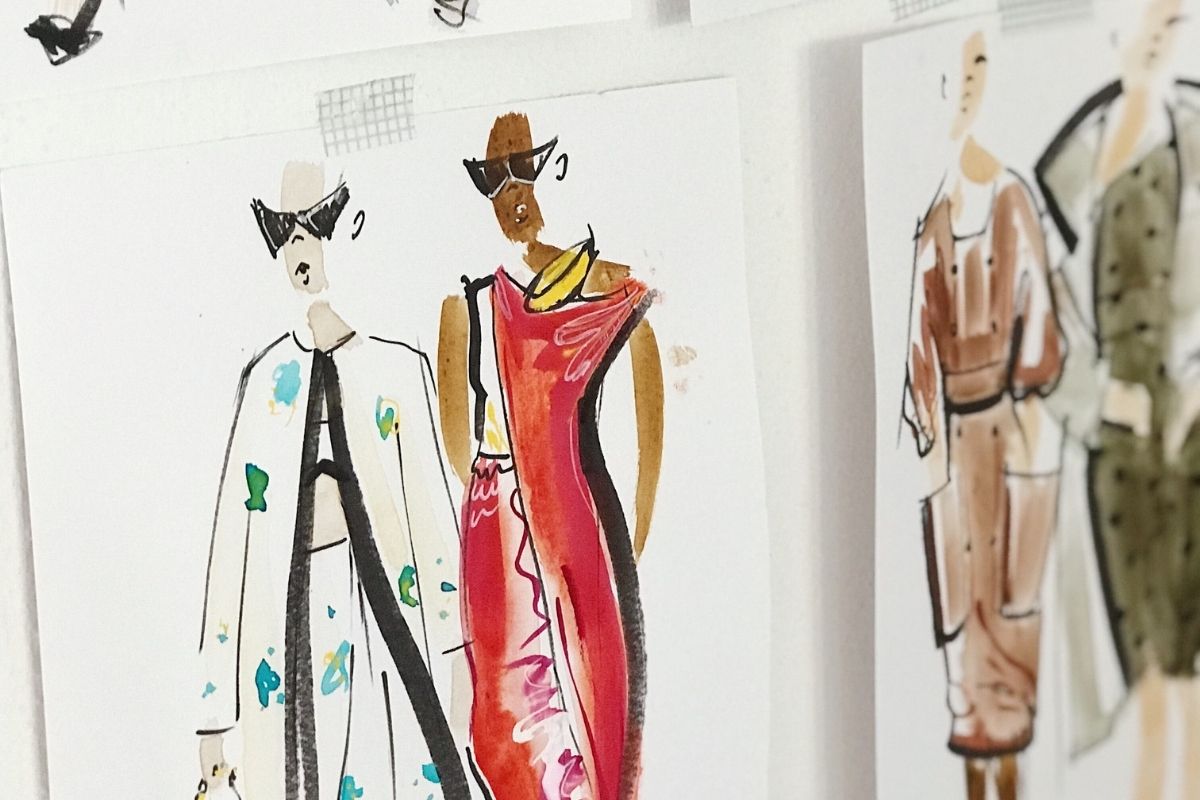
Get an inside look on how creators in the fashion business tailors digital content and come up with fresh ideas for online fashion education across.

“All our digital platforms are unique. Each one is its own creature,” explains Amy Astley. “So what the Pinterest audience is looking for is different from the Tumblr, Twitter, and Facebook audiences, which are huge audiences, by the way.”

In some places, people are looking for services, information, or news you can use. In other places, it’s a visual bit of inspiration, just a quick delight to the eye for the day.

We think about every single platform and teamvogue.com differently. Asking, what is this audience looking for? “But then in addition to serving the audience, we try to surprise and delight them too, with something that they didn’t think of.”

Ashley explains that when you’re making digital content, you want to keep it short, keep it shareable, make it something that grabs you. “Because it’s so beautiful, it’s so clever, it’s so funny, it’s something that their friends have to see that there’s something about it that’s grabbing them quickly.”

“And it has to be a real idea,” Marie Suter adds. “I feel like what we’ve discovered is that if it’s just behind-the-scenes or something similar, nobody’s interested.”

“Been there, done that. Seen that. You have to keep challenging yourself.” says Amy.

“For the last six months, I’ve been meeting a videographer, showing Amy, and we’ve been entering this world,” explains Marie. “But now, not only do we have the print team that does the shoot where we would get extra shots, but we often have a videographer with a completely different idea.”

In the last three months, it has changed. At first, the photographer from the shoot was doing the video and was on the side at the end of the shoot, when there’s no more light. Where now, there are specific times carved out.

We shoot a lot of musicians and with this content you want to do something on the website that’s linked to their music, where you can listen to it. When we do beauty shoots for the magazine, we work with those big makeup artists or hairstylists. Marie explains, we’re going to go a little more editorial. Then we will simplify it slightly, more on a how-to for the web.

“Ideas just have to be better from the get-go, so we can spread it out over all those platforms,” says Marie.

Lessons: Everyday Chic Collection

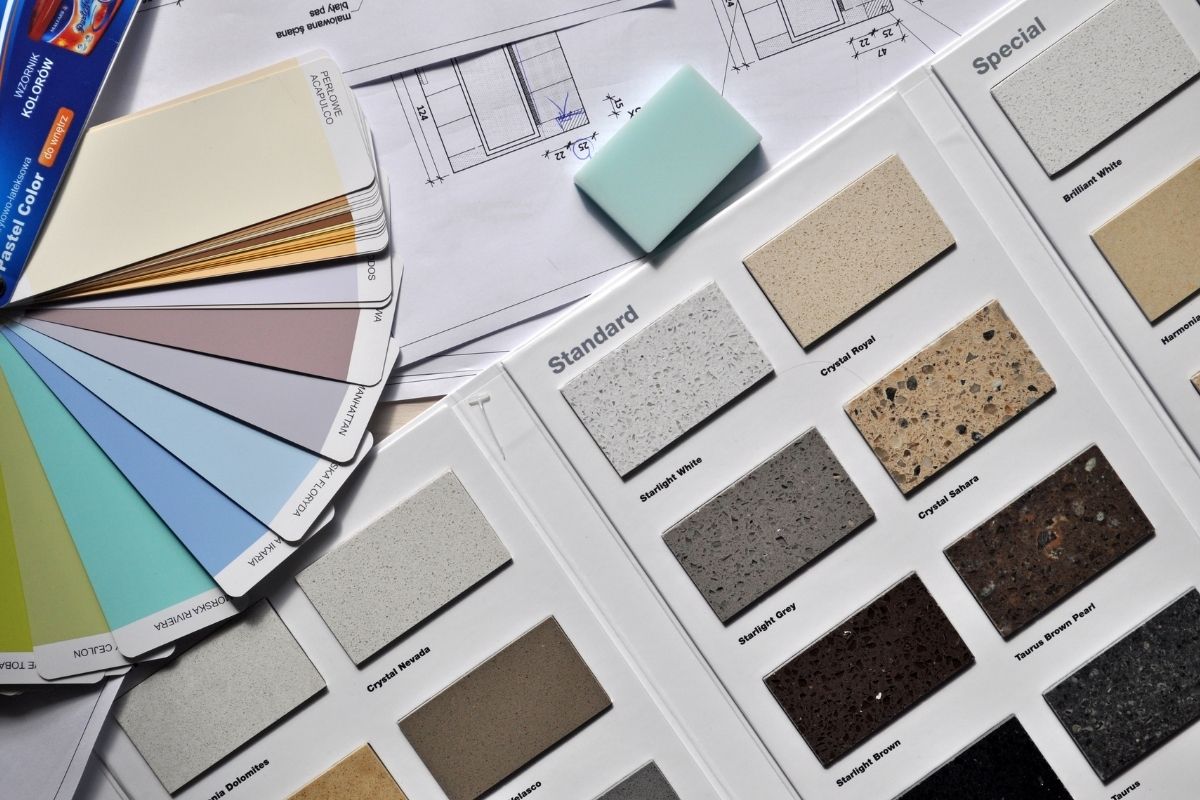
Muriel Favaro is an accomplished artist and associate professor at Parsons School of Design with a few things to share on the subject of creating fashion from everyday objects. This creative pursuit is a way to sharpen your fashion education skills and eye for design using found objects. As fashion business increasingly looks to sustainability, repurposing items is more than a fun trend.

For her homemade chic project, Favaro decided to take a handmade crochet knit and simply put it in the photocopier. She shot screens of the crochet knit and screen-printed the muslin. She repurposed a tissue holder to put all her clips in it and everyday objects for a simple, friendly, and homemade chic.

“In talking about doing always what you truly, truly love – since I was a child, this is my geometry book from when I was 10 years old. I loved geometry. I loved clean lines. I loved colors. And just out of the blue, I discovered that this print I made recently, it’s the exact same thing that I was doing when I was a child. It’s charming.

I also want to speak about my love of what I call everyday objects. I love the tape measure, the scissors, the ruler, pattern paper. I’ve been painting everyday objects myself. So I’ve been painting my scissors, and I have series on all of that. I’m going to just show you some examples.

This is actually a soap grater. I’ve been painting my tools, and it has every stain, every detail of my very used-the screwdriver I took with me when I came to New York almost 40 years ago. My pliers-I came with this pair of pliers also 40 years ago. It has been just a companion in my life. And making it become all of a sudden a piece of art that is going to be noticed on the wall feels really great.” (Muriel Favaro)

Lessons: Factory Prep

[Please embed: https://pixabay.com/photos/rolls-of-fabric-factory-material-1767504/]

“When we’re referring to the production process, it means that you create specifications and tech packs,” explains Angela Gao. “They send it to the factories, and then they’ll follow the instructions to produce the samples in bulk.”

The tech pack, Angela explains, provides precision. “In a standard tech pack, on the left-hand side, you have something that’s called specs, or specification. And on the right, you have an image of the garment.”

The specs include the style numbers, brand, label, and fabrications you want to use. They also include points of measurement.

These specs will help you produce a sample size. Let’s say, for example, that your specs are for a medium. You can set an Excel formula to fill in the measurements for an extra small, extra large, and more. “Usually in this industry, a small size is two inches smaller than a medium size, and so on,” Angela explains.

Angela also points out that your specs should have a standard deviation. “That’s because even though we’re using machinery to stitch these garments, there are still human errors,” Angela says.

The factory can have a deviation of half and inch, a quarter of an inch, or an eighth of an inch in specific areas. However, Angela adds that you probably shouldn’t include standard deviations in a high-end collection, as these garments are made to measure.

After you’ve sent the tech packs and received your samples, the next step is preparing the garments for sale. That process involves a line sheet.

“You could think of a line sheet as a mini Excel spreadsheet,” says Angela. “You can have images of your garment at the top and detailed information, such as pricing, on the bottom. At the top, you can also have your company name, the season, and delivery dates.”

Depending on how many pieces you have in the collection, you might have as many as 10 to 20 pages of line sheets. From there, you can take the line sheet and prepare yourself for trade shows.

Lessons: Integrated Marketing

Marketing is an organic process in many ways. It exists at all points of the process of fashion. It’s in the ways you understand both your audience and your customer base in the process of designing. Marketing is also the way your customer base knows about you, ultimately, once your work is out there in the world.

If integrated marketing doesn’t happen, then you’re talking to yourself. There’s really no way knowing whether your work and your fashion designs are going to resonate because people simply don’t know about your brand. You need a fashion education and an understanding of the different market channels, how they work, how traditional marketing techniques work, as well as how emerging social media works in today’s changing market.

Social media marketing is now dominating the fashion industry. Online fashion education can help you understand how social media works, the attitudes of various generations and demographics to marketing. It will also help you determine whether certain forms of marketing may turn off potential customers, whether they want be involved in the formation of marketing, and the storytelling that wraps into marketing.

Through integrated marketing of traditional and newly emerging methods, you can also gain great intelligence about this very community you’re wanting your fashion design and your brand to be a part of. Your brand is both working off of that community and also contributing to it. This is what people expect and want from marketing now – to have a two-way dialogue and participate in its development.

Today, consumers want to know the brand intimately and the way in which it’s marketed to better understand the brand. They want to know the brand does care about the lifestyle and aesthetic they’re portraying. This is vital. If the marketing doesn’t embody and represent these values with its customer base, people move on quickly.

Lessons: Introduction to Collections

 “Design is at the heart of everything that drives the fashion industry. Without design, we don’t have a profession. We don’t have an industry. It’s fundamental. It’s core to everything that happens,” Explains Tim Marshall.

But there are many people that work in the fashion industry who are not designers. They participate in all sorts of different ways through marketing, styling, editing, and so on. You may want to be participating in the fashion industry from one of these other positions. Wherever you are, you absolutely have to understand design because it’s absolutely fundamental to everything that happens in the industry. If you don’t have that understanding of design, you’re going to struggle to be convincing to the community you’re a part of.

Design itself is a process by which the things, the artifacts, the clothing, the objects in the world are created. Where they come from, how they’re generated, what their point of view is, what their attitude is. It’s encapsulated in the actual design process. The design process is what brings together all of the elements of what is it made from? What does it look like? How is it manufactured? What price point is that aiming at? What customer or client will it be appealing to?

“To be a designer takes a unique blend. It’s something that we like to profess at Parsons is this unique blend of having a great deal of confidence about your identity, your visual style, your visual language, and your design process alongside a certain humility because a humility is not just about you as a designer,” Marshall says. “You have to understand your customers or your potential customers. You have to understand their lifestyles, their values, their attitudes, and what they’re aspiring to.”

That also takes a certain kind of displacement of yourself. You have to understand more about society. The way people are living, the way their lives are evolving, and their very complex ways to make sure your designs actually connect and resonate with that audience and customer base. Without that, it’s simply your own self-expression, which doesn’t necessarily find an audience. That may be interesting for you, but it will not be successful.

If you’re in any other part of the industry, you’re not going to be a designer, but you have to understand that point about design. Whatever role you’re playing in the industry, you have to also make sure that design essence, that fundamental point of view that the designer is expressing, is then connecting through to the customers and clients in every other dimension. Through its communication, through its marketing, through its styling, and so on and so forth, and the economics and marketing aspects of it as well. It all has to come together and integrate into a whole package of different elements that then makes it a highly successful brand or highly successful design.

Lessons: Introduction to Fashion Media

Understanding fashion media and how media represents the work that you do as a fashion designer, or how you participate in the styling and marketing of fashion, is really at the heart of the whole industry. People only know about your work through media. They don’t understand your brand from direct experience. They only understand it through a magazine, blog, video, or on a runway. Generally speaking, the vast majority of people will be experiencing your brand through some form of media.

Understanding how your fashion business or design work is being represented in this two-dimensional form – whether it’s on a screen or page, can help you determine what works for your particular brand. The attitude and demographic of the publication should be the right fit visually and language-wise for your brand for it to make the most impact. Getting the right visual language for your design, your brand, and putting it into the right media context that represents your audience, customer base, and approach is crucial to your success.

This can mean many different things depending on where you’re starting as a designer and the design attitude is of the brand. It may be a lot of images are basically very indexable. Many fashion education websites that are merchandising clothes directly will be very descriptive. In other contexts, in more cutting-edge magazines, they might be representing the fashion where the clothes aren’t the main focus. The point is the whole attitude, mindset, demographic, or community with similar values to your brand. The clothing fits into that, but it’s not necessarily the only driving force.

Online fashion education can help you pinpoint which media outlets are a fit for your overall brand audience and aesthetic. Understanding the media context and how it works with your brand is vital to sharing your work with your desired audience.

Lessons: Introduction to the Production Cycle

Because production is a vital part of the industry, it’s essential to understand the production process and all it entails. The clothes we wear and essentially everything we own is produced somewhere else. All products are sourced, manufactured and distributed.

To work in the clothing industry, you must have a reasonable grasp of what is really involved in the production process-supply chain, the environmental issues, labor issues, quality issues, etc.

It’s important to know and truly understand the customer, including their demands and expectations. You’ll also need to know your price point and how that translates into the various fabric and textile options you offer your customer. You’ll need to know where you’re sourcing materials from and how the products will be manufactured.

Having a good relationship with your manufacturers is critical. There’s a certain degree of trust involved. You’re relying on the manufacturer to execute and deliver your design from across the world. There’s naturally going to be some concerns at first. Will the design be what you requested? Will it work? Will the fabrics used meet the quality and durability standards you demand?

If you don’t get this right, customers won’t come back. If they’re disappointed by the quality, or they’re disappointed by the way the fabric feels, or they think the brand doesn’t embody their values in terms of environmental issues or labor issues, you’re going to have a hard time establishing an on-going relationship with the customers, which is key.

Consumers are holding brands and their designers accountable for understanding environmental issues and sustainability. In the fashion industry, you’re expected to understand the environmental consequences of choosing one fabric over another, the effects of the manufacturing and dyeing process, whether it contributes to water pollution, and more.

You’ll need to know the labor involved in manufacturing, as labor issues can impact the brand identity and the way customers perceive your brand. Customers must feel comfortable with the production process and the values the brand embodies in terms of labor, because as stated before– satisfied, repeat customers are a must for success in this industry.

These are all things that will ultimately impact your brand. In the age of the internet, transparency is everything. There’s little room for error. Thanks to social media, word spreads fast. Customers are quick to “cancel” brands if they’re not producing quality products that align with their values, pose a threat to the environment or misuse laborers. Being ignorant of it, pleading ignorance after the fact, or saying it wasn’t your fault, doesn’t cut it nowadays. Designers and everyone involved in the design industry should ensure they have a really good understanding of all the aforementioned production issues in order to make wise choices.

You have to understand what your choices represent and take responsibility for those choices. On one end, you have to know your customer. You need to know what they can afford, what they want, what they expect and hopefully exceed their expectations. On the other end, at the back end, production sets your price points and also connects to marketing, thus production embodies your brand and your brand’s values.

UX Design: Making Dynamic Prototypes

In the next stage, you add a little bit of dynamics to your prototype to figure out what is the best way to create this conversation. You start by looking at different elements, including animation, colors and images. By adding dynamics, you can also start to go to the specific person that you’re designing for to seek more input. After all, at that stage, you want to have a very specific scenario in mind as well.

UX Design Prototype Feedback

When you go to a person and you design a system, such as a map for a person who wants to go from Point A to Point B, the user flow that you create should have a very specific scenario so that you can have a person try out your system or the prototype. For example, they might try out one that has colors, one that has animation or one that is dynamic in other ways. The user can actually try to use that system to help them go from Point A to Point B.

If they’re successful, your prototype is successful. If they’re not successful, and more often than not they won’t succeed with your UI in the first few stages of the prototype’s design, you have to ask yourself: Where did they come across a UX problem? Did they fail when they tried to press a button because they interpreted the button as text and not as a button? Did they fail because they interpreted the image as something that conveyed too much information and looked more like text? Did they fail to enter the information into a text box because the text box was just too small?

These are the things that you can identify in your UI design with a digital, high-fidelity prototype. When you allow this type of interaction with one or more users, the results convey to you the exact areas in which your prototype is failing. You then have to decide how best to reverse course and quickly refine the prototype so that you can try again to see if a user can accomplish that task.

As you’re learning through your online UX design education studies, a prototype gives you the ability to do something that you don’t have to fall in love with and can even throw away. A prototype allows you to more successfully get to the goal of designing a simple pleasurable application.

What Is Agility in Terms of UI Design?

“An agile workflow is all about iteration and moving quickly”, Camara explains. The best way to go about agility when working on a UI assignment is to implement design sprints. Design sprints are typically two-week spans in which you are to complete as much as possible before moving on to the next sprint. Waterfall, however, is a process that’s based more on phases. So, when carrying out this process, you would then be working through your project by completing each phase at a particular time. Also, there is no specific timeframe for each phase, but as you get through them, you would essentially be making your way through the finish line as well.

Ultimately, agile development refers to the division of labor, the division of milestones, and the kind of path that is taken from A to Z. You can learn about this entire process in detail through online UX design education.

Why an Agile Workflow Is so Beneficial Nowadays

The old-school way of doing it called for designers to take six months, a year, or even three years before having something new to show. And though we can keep that as an ultimate goal, agility proves to us that by conquering smaller milestones on a regular basis, you will always have something fresh to show. In fact, your software might not even be finished, but you can still present some of its workings rather than leaving the engine open until all of the parts are ready. As you develop your UI design, you can say, “Hey, this part of the engine is that”, or “This part of the engine is already done”, allowing your productivity to be known as you work towards the completion of your UX design.

Working little by little will help you to paint the perfect picture or narrative because your creation will be constantly testing itself against the people who will soon be using it.

So, the idea of having something to show, whether it’s your funders, your current group of test users, your classmates, or even an active research group, gives you the unique advantage of receiving consistent input so that you will have a better idea as to which path you’re taking and what it’s meant to do. That kind of invaluable UX feedback will help you stay on track and put you on a greater level of success.