The Studio Era and its Discontents: The Studio System

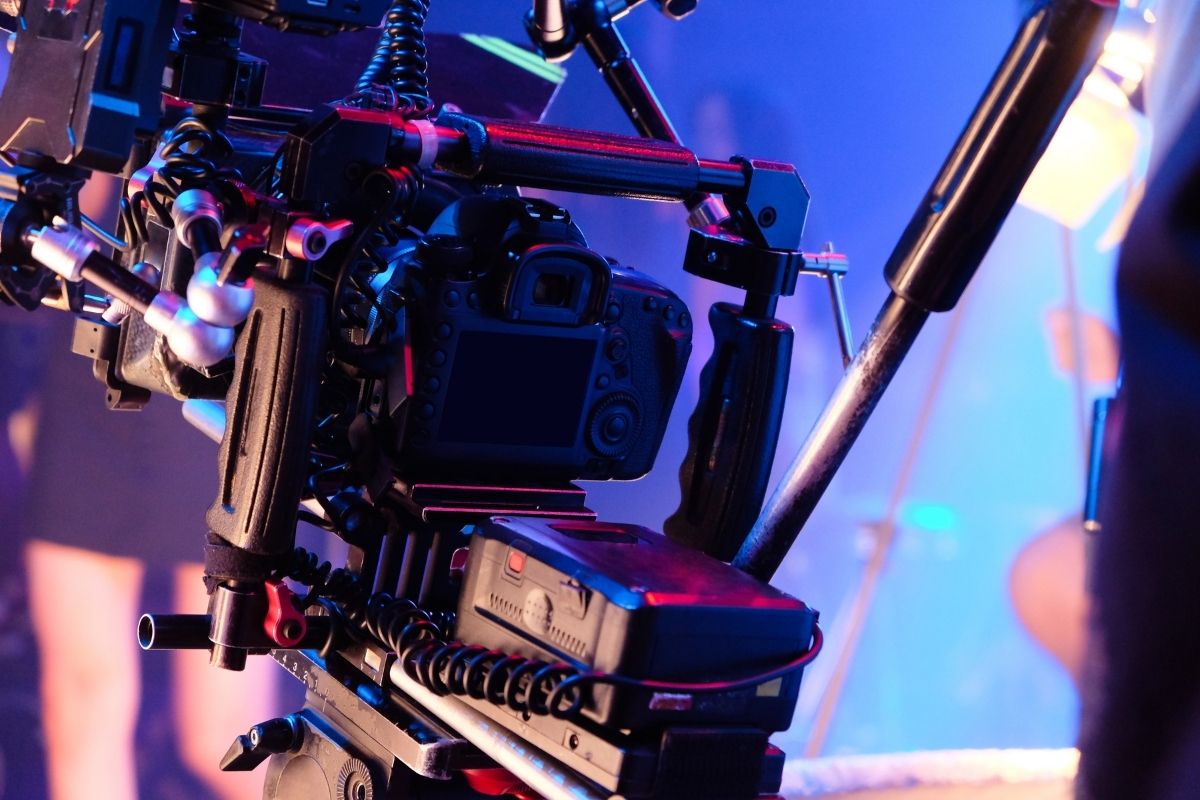
“The 1930s and 1940s were kind of the heyday of the American studio system. It was the heyday of Japanese filmmaking—many amazing filmmakers were doing so much work; however, the studio systems were still being established. And when Alrick Brown says the system, he means these things are built to just create and crank out stories. So, filmmakers became adept in storytelling because they had to constantly kick out stories,” Brown explains.
These were the filmmakers Brown first watched—Hitchcock, Orson Welles, they all came from that system. Brown continues, “Filmmakers like Ozu and Kurosawa also started their careers. It’s when I started seeing films that came before them; it was Buster Keaton, and it was Charlie Chaplin.”
Now, this new generation of filmmakers who grew up watching Keaton and Chaplin were making films. But these filmmakers functioned more independently and had a system that supported them.
Brown explains, “Films were often made while being written in these studio systems because they were just cranking out material. They put stars under contract—you are under contract; you made a certain number of films. They put directors and producers under contract.”
“And so, it was a film studio—with filmmaking machines. And in that machine system, some people were excluded. A lot of stories were excluded, as well as a lot of people who weren’t included in that part of the journey. European filmmakers who grew up on some of these American films, and were like, that’s not about them,” says Brown.
There were formulas to filmmaking. You had to believe that the French New Wave had some filmmakers trying more innovative things, that they were looking at the formulaic approach to some of the romance films that were coming out of Hollywood.
“Film noir was another popular genre in the 1930s and 1940s. This genre focuses intensely on a particular style or look. Film noir was a genre that had certain conventions it practiced. The audience always knew who the hero and villain were. They knew who the femme fatale was. This formulaic type of filmmaking, although entertaining for the masses, bred populations of filmmakers who thought of doing something different. They forgot about the narrative in the same way,” Brown states.
Brown further explains, “The filmmakers thought to loosen up the storytelling just a bit, where they were not going have this person be the hero, but instead, make them kind of a haunted hero, particularly after the war when many men came back with ailments from the war.”

The Studio Era and its Discontents: War and the Soundstage

 “World War II comes along, and they have to develop a camera. They develop a camera in World War II to be on the battlefield and capture the action. This was a revolution,” Says Janet Grillo.

It was a revolution in the way that newsreels were being made and showing people what was really happening on the front lines. If you went into a movie theater in those years, in the ’30s there’d be a newsreel because people didn’t have TV’s back then. You’d go into a movie theater, and there’d be a newsreel with footage of what was happening on the Western front, and then you’d watch your movie.

Things evolved even further. Those cameras were more lightweight. They could be carried and brought into the field. After World War II, a lot of filmmakers started to think ‘what if I took that camera and that technology. What could I do with it? Where could I go?’ They took these lighter cameras, and they went into the streets.

Important Italian filmmakers started the birth of Italian cinema in the 40s and 50s right after the war. They were telling very authentic, true stories about their experiences. Vittorio De Sica, the Bicycle Thieves. Open City, Rossellini. Really important, beautiful movies. Umberto D., Vittorio De Sica. They’re taking these lightweight cameras, and they’re moving into the world and the post-World War wreck that was Italy. They’re poignant, human stories, and oftentimes they’re not using actors. They’re using real people.

This knocks the film-going audience off its feet. This is a revolution in terms of what cinema is. What it can be. The French picked up on this right away, and they created the whole Cinéma Vérité. The truth. The truth of cinema. It has related to documentation and documentary film. The kinds of ways that cameras can move fleetingly, fluidly, naturalistically to capture moments and do weird things in weird places.

Then you have Auteur theory coming up, with this whole birth in the ’50s and ’60s that the French filmmakers were enthralled and respectful of the films that are made in the studio by Alfred Hitchcock. They respected what he was doing, but they were also very excited with how they could change things. The Auteur film is the author. Auteur means author. The camera is the pen, and they can use that fleetingly and quickly.

Entertainment Press: Critics

Let’s take a look at the role critics play in the film industry and how every year they get together to discuss the best films and reward them for their effort.

“Film gets released. Critics write about it. Critics love to champion work that they’re passionate about,” explains Eugene Hernandez. “A group of critics, at the end of the year, meets to say, Ok, what were the films that mattered to us this year?”

Critics watch the most films out of any kind of writer or journalist. They’re like programmers of festivals, the folks that choose the films. Eugene explains that they watch lots and lots of movies. At the end of the year, they sit back and make a list, and they say, well, what was my favorite? What was my favorite film of the year? What was the best performance? What was the best-what had the best costumes or the best editing or the best direction, writing, various categories?

There are several critics groups at the end of the year in December you see a lot of. If you’re aware of it and thinking about it and you do a search on Google at the end of the year and you look for sort of critic’s prizes or best films according to critics or even top 10 lists, you’ll see a lot of that. You’ll see that critics are championing, celebrating, and highlighting the films that they were the most passionate about.

Eugene says that could be a great way to bring more attention to a film as well. A film comes out maybe early in the year or it’s at festivals earlier in the year, and then suddenly at the end of the year, critics are looking at it against all the films they’ve seen, the hundreds of films they’ve watched that whole year. And they’re saying, oh, these are the ones that stick with us, that matter, that is worth giving more attention to.

The awards season -as it’s called for the industry at the end of the year and into the beginning of the new year- is the moment when a lot of these films are celebrated.

“Whether that’s at the Golden Globes in January or at the Oscars later in the winter or early spring, these are the highest-profile awards,” Eugene says. “There are different levels and layers of awards, starting at local film festivals and national, international film festivals, but also continuing to the critic’s groups in the fall and then the higher profile, well-known awards.”

Film Distribution: Move to Self-Distribution

There’s a movement right now in the world with streaming and online audiences, and filmmakers who self-distribute their films. These filmmakers figure out how to get their films booked and get them into theaters and do everything themselves. Taking the self-distribution route is completely possible for you, too. It takes a lot of work, but it’s definitely possible.

According to film industry expert David Ninh, “When I think about the role of distributors that we work for, and specifically our distributor and my role, it’s very curatorial.” Distributors look for unique storytelling. They look for whether or not the filmmaker has an interesting voice or an interesting story that they want to tell the world. They look at the film and if it’s going to be relevant and special down the road in their library. Or if it’s going to become a classic, because distributors sometimes compete for films. David adds, “I think that when there is a good film, there’s a lot of interest. A lot of distributors want it for themselves so that they can put their stamp on it and put it out to the world with the filmmaker.”

Those are very striking instances for the filmmaker to figure out the right home for their film, to get the film out to the world, and to figure out who can be the best partner for them to get it out in the widest way possible. Filmmakers need to outline the goals for their films. Some filmmakers just want a lot of money and to sell the film. Some filmmakers are more concerned with getting it out organically and having the theatrical experience by getting it rolled out in as many theaters as possible. The money is secondary to them because it’s more important to build the profile of their film in their career.

Film Festivals from the Director’s Chair: Closeup on: New York Film Festival

An international film festival: early beginnings
“I was living in New York in the 1950s where there was this guy named Amos Vogel. He showed independent films in downtown New York in alternative spaces to various audiences,” Eugene Hernandez recounts. “Later Richard Roud, a Londoner, came to New York and to the Lincoln Center, where the New York Film Festival (NYFF) is now held.
The Lincoln Center for Performing Arts was founded in the late ’50s, early ’60s as this kind of arts campus for different art forms: ballet, opera, the philharmonic, and various other art forms.
“This is what started the connection between Amos Vogel, a guy presenting films in downtown New York, and Richard Roud, who showed films at London film festivals before moving to New York,” explains Hernandez. (Vogel and Roud co-founded the New York Film Festival.)
The NY film fest-where being different is the norm
The New York Film Festival has shown diverse cinema styles over the years. And it continues its tradition toward distinct filmmaking—high-profile films with well-known actors and directors.
Celebrated films from all parts of the world. Films that haven’t yet played to an audience in New York.
“This is the big thing about the New York Film Festival—each fall it introduces new films to new audiences, particularly to New York audiences,” Hernandez continues.
“Hundreds and hundreds of films are submitted for consideration each year, but few are selected,” Hernandez points out. “It takes place over a few weeks at Lincoln Center, at other parts of the city, and online.”
Short films, experimental films, movies from all over the world come here to New York to be discovered by audiences.
New York Film Festival is for film lovers
There’s a lot more festivals now, but NYFF has become an annual fall gathering place. Audiences get an overview, a cross-section of which films and filmmakers stand out for the fall season.
NYFF is highly regarded because it has a relatively small program, with only 25 to 30 films.
“It’s a place where we get a measure of what’s new, what’s celebrated, and what’s so special about the art form of filmmaking,” ends Hernadez.

###

Film Festivals from the Director’s Chair: Submitting to a Festival

So you’ve made your film. Now, what do you do? Do you have this burning fire to share it with others and an audience? Then your first step is to start thinking about which film festivals you want to send it to.

Hopefully, your film isn’t too long. That’s the first piece of advice Caran Hartsfield would give: “I think there is this misconception that I am more of a filmmaker, the longer my film is. From what I’ve seen, that is the wrong way to think about it. A film festival and being a filmmaker is quite the opposite.” The tighter your film is and the more in control your story, scenes, and directing are, the better it is. If you can do a tight 10 (minutes) as opposed to an okay 20, it’s better to have the tight 10. And depending on your skill level, the shorter, the better. Just show you’re a promising filmmaker, and that’s all you have to do. Caran adds, “I’ve seen careers launched off of five-minute films, so don’t think, the longer, the better.”

It can’t be stressed enough that a lot of film festivals also cut off minimums and maximums. Often, the maximum for many festivals is 20 minutes. It’s really hard to program longer films because then they have fewer films to put in the festival. So even if you’ve made a film under 20 minutes and you think it could be longer — know that you already have your film to share with the festival.

Also keep in mind that film festivals usually have an entrance fee. Be strategic about how and where you spend your money. However, some festivals do waive fees. Send an email, explain your situation, and see if it is possible to waive the fee. If you already have a track record and you’ve established some sort of momentum with your film, this can especially be a door opener for you.

Film festivals are really great practice for you as a filmmaker to talk about your work too. Usually, there’s a Q&A after screenings for filmmakers to talk about what inspired them or their filmmaking process. This is helpful in getting you comfortable to have a dialogue with your audience and thinking about your work. And as you move forward to your next project, you will be much more aware of what you’re interested in thematically and why you’re telling this story. Because you already know that Q&A is coming. You definitely want to be clear on how your story is connected to what you’re thematically interested in.

Caran highly recommends submitting your work to film festivals. She explains, “It’s a great opportunity for an audience to see your work and share in the thing that you were most interested in and passionate about for so long.” So send out those films. Have a strategy. And put on your calendar when the film festival deadline is, and submit on time because those deadlines can come and go quickly.

Film Festivals from the Organizers’ Table: Even if You Aren’t Accepted

“Filmmakers can benefit from the experience of submitting a film to a festival, even if they don’t make the cut. I’m talking specifically now about the New York Film Festival. There’s only so many slots. Only 25 to 30 films are chosen for the main section of NYFF,” explains Eugene Hernandez.
“Imagine watching hundreds of films and having to choose only 25 or 30. Well, I can guarantee you, as someone who watches a lot of movies, there’s another 10, 20, 30 films that you really like, but there just isn’t room for them in that festival that year.”
So, you may get a note from a film fest programmer saying, ‘We liked your movie a lot. Unfortunately, there isn’t room for it in our limited program this year. We really hope you’ll stay in touch with us. Maybe there’s room for it in another festival we organize or another way we can show it.’
Feel free to stay in touch with these people, these fests.
Festival programmers and organizers talk to each other, share information. Maybe someone will have three or four film entries, all on the same subject matter. They’ll say, ‘It’s a documentary about a topic we have another film on already, but I’m going to recommend it to my friend at a different festival. I think they might like it.’
Film fest organizers are people, too
People are busy.
A curator won’t give extensive notes to every single filmmaker -for every film they view. But if they care deeply about a film, if they feel a connection to a specific film or subject, they might. It doesn’t hurt to ask, to say, ‘Hey, can you share with me any feedback? What did you like? What didn’t you like? Your notes would be really important to me to help me understand how people are responding to my film.’
“Then as an artist, as a filmmaker, be open to what they have to say. Be open to the fact that just as we individually have our own tastes, what we like, what we don’t like, the programmer you’re sending it to may also.”
“It’s not personal if they don’t like your movie, but their response can be informative. It can help you think about how you can adjust a film or just how you talk about it. Maybe your film is being read differently by audiences than how you intended. You can go back and kind of tweak some of your messaging to account for that response,” ends Hernandez.
###

Film Festivals from the Organizers’ Table: Festivals are Spaces for Unique Stories

Telling stories of identity with film
“Representation is huge for Outshine, as an LGBTQ festival,” remarks Ebony Rhodes. There is this other element in the festival world, beyond cinema as entertainment.
Our mission is film as education, inspiration, and entertainment.
“We’re talking about communities, especially communities where representation is so key to our identity,” Rhodes explains. “I mean that’s why I’m a part of the festival. I believe in supporting film-because of the power of it, and what I’ve seen and value in being able to see yourself represented on screen.”
Seeing your unique story, told in a way that resonates with you as an audience, is powerful. It’s necessary that filmmakers speak with narrative authenticity to tell their story, to tell stories that need to be seen.
“There’s documentary, narrative film—so many ways to approach it. It’s important to the identity of a community,” Rhodes continues.
Building a film festival that resonates with a community
There’s a lot of elements when you’re talking about putting together a film festival, that’s our strength. It includes our local community support, with partnering with social justice organizations.
We also partner with other nonprofits that have a mission they’re trying to articulate, groups where the film industry is essential to spreading their own message.
Film education leads to hearing more authentic voices
An example of an issue we may partner with another group on would be a film about the bullying of LGBTQ youth in schools.
To have a great film that tells a story using personal perspective and really gets to the heart of the humanity and identity of LGBTQ students can speak volumes to a huge audience in a way that a nonprofit doing this work couldn’t do.”
“That’s where you have your audience, where you have your buy-in, your support,” says Rhodes. “Pairing those missions together and finding a way to build that sense of meaning is really the heart of the festival world, versus other theater experiences,” Rhodes finishes.
###

Film Finance, Scheduling, and Budgeting: Filmmaking Outside The Studio System: Raising money for indie films

The world of independent filmmaking primarily has to do with figuring out how to raise money to make your films.

“That’s certainly something I spend a lot of my time doing,” says Ekwa Msangi. “You know, after the housing crash, we started in earnest the introduction of crowdfunding. Which used to happen in a less official way before, in terms of aunties, uncles, friends, you know?”

Ekwa goes on to say: “It’s actually important to be able to pay something to people.”

At the very least, you need to pay for equipment and some insurance. Actually, it’s quite important to have insurance. You don’t want anything happening to people who are working for you and giving you their time. You also need to feed people and give them a copy of your project.

That is the bare minimum of what you have to give people if they are helping you on your project.

Crowdfunding is not only about raising cash money that you need to rent your van and the like, but it’s also about raising friends, like supporters, audience, people who are invested in your work.

People who are then going to be looking to watch your film when you’re done. “What you’re trying to relay is the excitement, is the reason why it’s good for them to invest in you and in your work and in this story and having people rally around,” says Ekwa.

When making a film, you are creating something out of nothing. You were sitting around in the shower and you came up with this idea for creating a world that did not exist. Creating a character, a person, or whatever out of nowhere.

You are literally talking about making magic! Who gets to do that? Most people in their day-to-day job don’t get to create magic.

Filmmakers do.

Artists do.

That is valuable.

Ekwa goes on to explain: “And if it’s not that, it’s, what are you going to talk about this summer at your next barbecue? You’re just going to talk about all the stocks and shares that you sold? Or are you going to talk about, like, I made a movie.”

“How many people get to say that? So I’m offering you, crowdfunding person, person who I’m inviting: I’m inviting you to come on this journey, to come on this adventure with me of creating this world and building this opportunity that we’re able to say these things that you care about.”

Ekwa acknowledges that it’s hard to raise money. If it’s your first time, “I wouldn’t start by raising $30,000. That is a lot!”

Unless you’re a professional, that’s a lot of work. If it’s your first time and this is your first film, do something small. Do something small and figure out where it is that you can cut corners.

Or if you know there’s an apartment or a house that you can use to shoot your thing, then you need to write a script for that.

There’s a lot of actors in New York and probably in LA as well who want to act and who would love to come on as an actor-producer or a DP-producer or whatever to help you get this film done.

Finally, Ekwa affirms that crowdfunding is not just about the money. It’s also about the people who are involved in helping you do this.

The friend who’s going to make a whole bunch of peanut butter sandwiches or the pot of pasta to give to your crew for lunch breaks and things like that.

All of that is really important stuff and is part of the crowdfunding process of getting your work done.

“And maybe you start with a small film and that’s the first stepping stone to the bigger project that you want to make.”

Film Finance, Scheduling, and Budgeting: The Budget (above/below the line)

We sat with an industry expert in film to take a closer look at how the above the line and below the line budget works in the film industry and tv industry.

“When the film is getting made, the producer will work with and help to assemble a team that will help to execute it,” explains Janet Grillo. “So, when we look at a budget, there’s a top sheet budget, which is a thick document, 26-30 pages of real detailed, thoughtful estimation of the costs, from development all the way through to distribution.”

There’s a top sheet, which is usually one or two pages, that’s summarizing what those costs are. On the top sheet, imagine a sheet and imagine a line. There’s an above the line, and then there’s below the line.

The costs above the line on the top sheet of the budget, are everything to do with the ideation, creation, and envisionment of the project before cameras roll. Think of above the line as before cameras roll, explains Janet.

“Below the line is when you’re ready to make the damn thing,” says Janet. “It’s getting the cameras rolling. So what’s going to be above the line? Your writer, your director, the cost of the intellectual property, meaning the screenplays, is it based on a book, a magazine, a comic strip, is it a remake, that’s the intellectual property and all the costs of developing that into a screenplay.”

The people involved with doing that are the director, the writer, yourself, the producer, and some other producing partners that you might have, they are above the line.

And sometimes stars. If to get the film funded, you’ve got some big market value actors, they’re going to be above the line as well, says Janet.

Below the line is going to be everybody else. That includes the cinematographer, camera crew, and everybody involved with handling the equipment to the lighting, the gaffers, all the teams that put the equipment in place, the production design. All the people who work on building the sets, costumes, the people involved with wardrobe, creating the look and making the costumes and dressing the actors, all of the people involved with hair and makeup. All of the people who work on the making of the film.