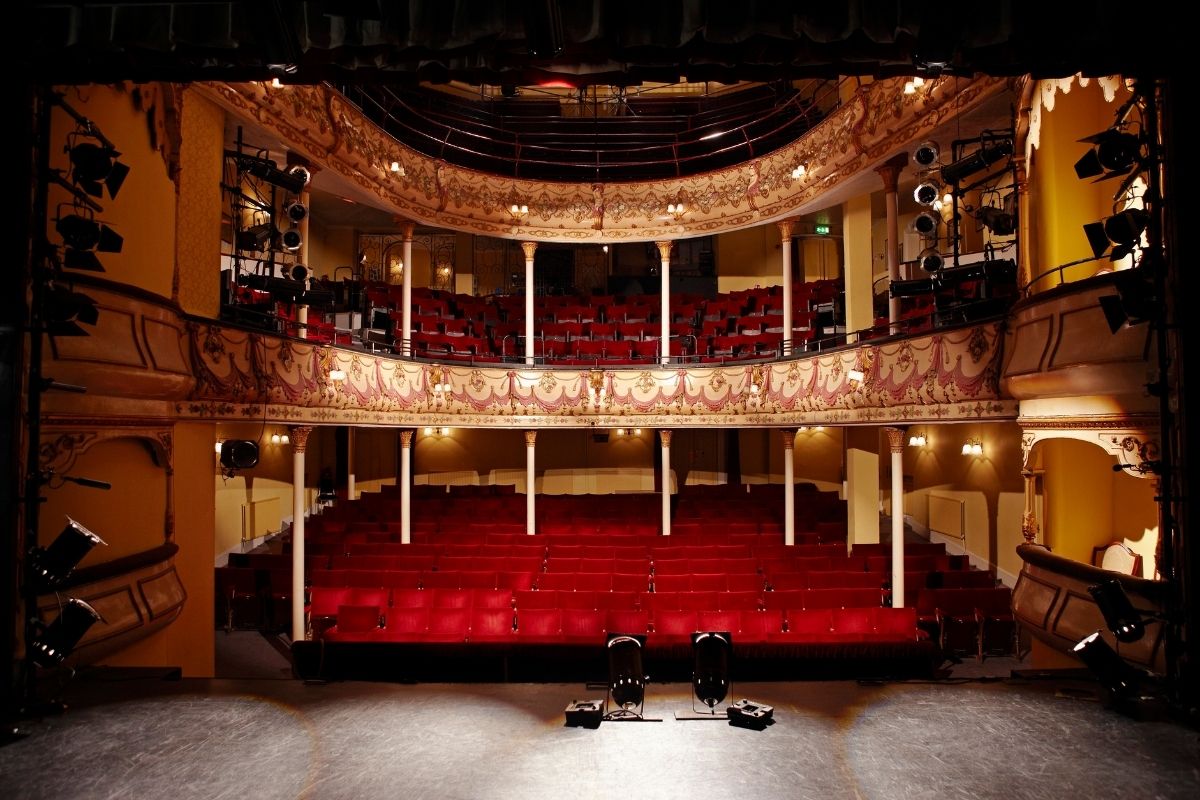
Change and Growth Are Vital Parts of Media Education

The state of media writing today is very different from the state of writing 10 years ago. Even 20 years ago, websites were brand new. They were novelties within newsrooms.

The most important product that that newsroom may have created in the year 2000 was the print edition of all of the work from the reporters there. And if you look at a television company, the most important thing there was not its website but whatever the reporter or correspondent or anchor would be saying on the nightly news later that night. So, remember that the media industry that you’re choosing to work in is in flux, and change has become a near constant these days.

Judging from the jobs that I’ve worked in, changes in management, learning to adjust, and becoming reorganized as a staff under new leadership are experiences you can expect to go through, especially if you decide to become a staff member of an organization.

So, as you see in your online media education, digital communication is becoming more and more important, but there is a split in the industry. Those who work in major media organizations that put out a television broadcast or a newspaper may be really devoted to the paper copy or the televised copy of the information that they have to share that day. However, the digital presence of a news organization is competing with these more traditional forms of communication. A news organization’s homepage becomes its front page. The benefit of that digital organization’s homepage is that it can be changed without having to print anything or make any major changes. With a click of a button, you can create a new front page.

Even though Variety is more than a hundred years old, we want to be as fleet and intelligent and new as we can, which is why we have a number of great reporters of different ages and generations and interests in our newsroom. They’re interested in all different kinds of music and different pockets of film. We even have a lot of people whose main source of entertainment is TikTok. That is in our newsroom; that is represented.

Each year, we sponsor the Power of Young Hollywood event where we cede the mic to the upcoming generation, the biggest trendsetters that are all under 20. And you wonder how they’ve been able to gain a foothold already. As long as you’re willing to understand that things change, and you want to change and grow along with the industry, that’s how you keep fresh.

Defining Your Lane as a Successful Media Industry Writer

As you’re making the choice to enter into media writing, you need to first decide which kind of writer or journalist you would like to become. With more available media data and a greater understanding of who our readers are and what they want these days, we know so much more about what we can do to serve them.

With the proper media education, you can become a culture reporter or even a food critic. In fact, there are so many different routes that you can take based on both your interests and on the needs of the particular organization that you might be reporting for.

One great way to make your mark in the media industry is to become an expert in one or two areas so that when your favorite editor calls on you to report on a particular issue, topic, or story, you will be able to produce it right away.

We will now learn a little bit about online media education, the many ways in which you can report, and the wide variety of topics that you can cover as a journalist in the industry today.

How Data and the Digital Age Have Changed the Media Industry

Today, we have something called data at our fingertips. Before the era of digital journalism, we only knew who our readers were based on their subscription information. So, if you can remember subscribing to a newspaper on a piece of paper and mailing it to that newspaper’s office, you might provide some information like your age, gender, your name, the neighborhood that you live in. Those become the demographic and psychographic points of information for that news organization. That’s the information they had to go off of.

Then, that is the information they sometimes use to make decisions about the pieces that they did. In the golden age of journalism, what we did see is reporting for reporting’s sake, news of the day. The most important information was put on the front page. And you might find that information on a competing newspaper’s front page as well.

Nowadays, with data, sometimes newsrooms, news managers, and editors might make decisions based on really granular data that they have at their fingertips because people come to their websites and give over data that helps them understand, “Who are our readers? Where are they from? What are their likes and dislikes?”

Especially with social media helping out with that data, we know our readers so much more today than we did before. There are some people who say in the industry that that’s a great thing. We can find out more about our readers. We can serve our readers in a better way. There are others who say we depend on data too much, and we are making decisions based on the data that we have versus the news of the day and what is newsworthy.

This is the conversation that is happening within newsrooms today. You might see over the next 10 to 15 years these legacy outputs that come from these news organizations, like nightly broadcasts or newspapers, lessen as digital properties grow.

How Editors Help Media Writers Publish Abundantly

I became an editor because there are so many stories that need to be told. As a media writer, you can only work on so many at a time. You might have several stories going at once: You’re working on a long form story, a shorter story, and something more personal while also writing something with characters. Media education is a booming field, and as an editor, I can assign more pieces for media writing and have more stories being told at the same time to produce a wealth of storytelling.

Nowadays, there is an entrepreneurial side to writing. Writers are urged to publish newsletters, post blogs, or maintain a Medium account. You’re going to write online media education materials continuously. But you’re still limited to the amount of physical effort you can put into it. At some point you’re going to burn out.

When you’re an editor with a hundred writers all writing at once, you can time the release of their work, you can pace it. You can publish at different intervals and tell a variety of stories that relate to the media industry. You have the chance to share a broader perspective with these options in play that allow you to publish an abundance of stories.

How the Media Industry Hasn’t Changed

Nowadays, when we think about the multimedia environment, there’s been a lot of change from the past. We’ve been talking about new media like eBooks and sort of this evolving landscape for a good 20 years now. Remember that as you continue your online media education.

There’s always been a great deal in the way of antecedent and history in media writing. Because when you look at the invention of the printing press, even there you have this long cycle of egalitarian movement in print. You had originally these illuminated manuscripts, which were handwritten by scribes which took a very long time to produce compared to the blazing speed of today. You could really just produce only one of that manuscript.

But then you had something that just poured out into the world with the printing press. That’s essentially what we have again with the information on the internet, which was great for media education. And again, as it happened with the printing press, we had information that was really good and valuable in the beginning, and then kind of a sea of nonsense. Now you have this shrinking pool of where you want to get your information from. So increasingly it became these high-powered publishers because you trusted them more in the same way that we have our trusted websites today.

How to Write Compelling Stories for the Media Industry

One of the more difficult aspects of the media industry is figuring out what’s interesting to others and what makes a good story. That starts with the pitch — the story of the story. What is the reader going to learn? Why does the reader want to know it? And what has come before the story that you’re writing today?

A good rule of thumb for media writing is that if you think a story is intriguing, others might like it as well. So, first ask yourself, “Is this interesting? Would I read it if I weren’t the writer?” That’s one good way to gut-check yourself and figure out if you’re writing something worthwhile that will grab an editor’s attention and make them want to share it with their readers.

What makes a good story? That’s something we all grapple with every day. It’s one of the most difficult parts of the writer’s job — and the one that’s most critical to your success. News editors are looking for something that’s going to immediately attract readers and make them want to know more.
Now, what you had for breakfast this morning may be new information, but it’s not something that anyone cares about. You need to find that sweet spot where you have a particular insight, or, even better, fresh facts about a subject that people already want to know more about. Then, you can bring those to your writing and say, “Look, you may have already learned something about this, but if you read what I have to say, you’ll come away with something new and better.”

Online Media Education: Writing Versus Editing

People always ask me, “What’s the difference between a writer and an editor, and why does one become a writer or become an editor. Or can you do both?” Personally, I do both.

But, a writer is mainly focused on crafting their pieces. I mean, they’re going to draft them. They’re going to potentially edit them. I was editing and writing always. A lot of times, people ask me that question, “Why did you become an editor? What’s the difference between an editor and a writer? Or, is one better than the other?”

Personally, for me, I became an editor and went down that path for probably two reasons. One, because you have to have a really big ego to be a successful writer. And the reason why I say that is you’re dealing with a lot of criticism, a lot of rejection. To be able to survive that, you have to be able to deal with that level of rejection and criticism. It’s a little easier, sometimes, to be in the background and not get that in your face all the time.

The other reason is that I had so many ideas. I was so curious. There is no way physically and mentally that I would be able to do and execute all the things I want to do myself. That’s why I needed an army of people doing things — I can assign them things and then edit them. And then we’ll tell all these stories I want to tell that I can’t physically do myself. Furthermore, some people are just more talented than me. They have a great writing style or voice. It’s very satisfying to work with people in the media industry who are talented and give them an extra level of attention.

As a singular career path in the media, if you’re looking at editorial, you’ll continue to improve as a writer. There are a lot of writers who are editors for years and years and years, and then they write a remarkable novel. In the past, it was really looked down on in the publishing world that it was another failed writer. You had to sort of keep it a secret that you were working on a novel on the side. I think that’s changed a little bit.

The etiquette may still be to keep your mouth shut a bit with media writing, but there’s a reason that those editors do that. And, you know, they’re just very skilled. They know how to structure a story. They know the workflow of the story. When they have a story to tell, they know how to get it on the page.

Differentiating Your Hotel: Case Study: The Standard Hotel

Shirley Lu, Revenue Analyst for The Standard Hotel explains what makes The Standard different and how they generate their revenue.

“As a revenue analyst, what we do is optimize the revenues that come into the hotels to make sure that we are performing the best and reaping in the most revenues that we can,” explains Shirley Lu. “A lot of that has to do with research and pushing our sales team to prospect new clients or continue their relationship with their current clients.”

Some of the job is managing distribution channels, making sure that we’re restricting what segments we need, to enable the highest-producing segments to come in. Overall, Shirley explains that it’s a mix of distribution channel management, analyzing data, and researching what new business we can potentially get for the two properties.

Starting with the Standard High Line building, it’s a book shape elevated on top of the High Line. “With the book shape and the floor-to-ceiling windows, I think it is those elevated floor-to-ceiling windows that add value to our product,” explains Shirley. “When people are staying in the property itself, it feels much more spacious with those window features. And having the views of the river and the city, also lets the natural sunlight in, definitely adding to the experience of the Standard High Line.”

As part of that, we are very keen on trying to contribute back to the community. “With every reservation, we give guests the option to donate $2 to the High Line to help maintain and preserve what it gives to the community and tourism. I think that’s a great initiative that we continue to do daily,” says Shirley.

Now, moving upwards into our top of the Standard venue and our Le Bain venue, Shirley explains that they are two very different venues. Top of the Standard is an elegant space for people who enjoy cocktails in a less party scene environment. We also offer sunset service to our guests, where they can watch the sun go down across the Hudson River and enjoy a cocktail up there as well. It is a much calmer, more elevated, and elegant scene.

Then, you move over to Le Bain, and you’ll hear the pumping music, the beat of the bass from our DJs, and just a wild time. So definitely, the two venues are managed differently and we try to keep them separate. But that allows for us as a hotel company to allow different clientele to come and join us all under one roof but under different venues.

So for our Le Bain, we often have guest DJs coming in. And we like the crowd to be diverse. That’s something we strive to do, is to allow as many different people to come in as possible, explains Shirley. We have the rooftops as well, where it is, again, very much a different scene from Le Bain on the 18th floor, where you have the pool, the whirlpool, that is now open for the season. Then, on the top floor, you have the open-air rooftop and views of the city all over both venues. It’s a very unique space. It continues to be the center of attention for a lot of nightlife in the city.

Then moving down to our ground floor venues, we have the beer garden, which has a lot of different activities. I think of it as an adult playground. You have giant Connect Four, ping-pong, foosball, and you have your beer. It is a very cool space as well. And then we have our highly acclaimed restaurants like the Standard Grill. We just have our chef, Rocco Forte, spearing that and bringing us to get the recognition that we strive to have.

The Plaza is the outdoor space leading into the lobby and that venue we couple internally with our Living Room, which is the indoor area where we often have a guest DJ come in, just to liven up the scene as well. Shirley mentions those two spaces, the Living Room and the Plaza work together in terms of staffing and as a venue itself.

The Plaza is a multi-purposeful space. And that is the space that we use for our art installations and different installations because it has an outdoor component. That is a space we like to allow guests to still experience the joys of the outdoor weather while still being under the High Line and in the shade of the High Line. It’s a very unique space, and we’ve been able to do so much with it already.

Speaking generally to food and beverage and how it relates to our hotel rooms aspect of the industry-so food and beverage is often separate from our hotel operations. Shirley explains most hotels outsource food and beverage because there’s more experience to be had from those who’ve already done food and beverage in the restaurant industry versus having the hotel operate both hotel rooms and food and beverage. Food and beverage generally don’t do well to bring in revenues for a hotel property. That influences the decision for a hotel to outsource food and beverage.

For us, we are completely operated, both food and beverage and hotels, under one company, The Standard. So we don’t outsource. “We are strong in the food and beverage industry for a hotel company. And we take pride in that,” explains Shirley. “So, while most hotels are losing money on the food and beverage side, we tend to generate revenues on that side.”

Shirly says she doesn’t do much with the food and beverage. Her role is specific to selling the rooms of the hotel. However, sometimes they will package rooms’ specials with food and beverage credits or food and beverage experiences to sell both components together. That’s how she interacts with the food and beverage departments. Otherwise, it is pretty separate within our property and most of the hotel properties.

Food & Beverage Careers: Options In The Restaurant Industry

There are many ways to get into the restaurant industry. The quickest and simplest is to get a job at a restaurant. Become a server, cook, or manager. The easiest way to get into the business is to get a job at a food establishment.

There are more complicated ways because you may want to have more ownership in the restaurant. Franchising would be another way to get into the restaurant business very quickly. We see franchises every day-Dunkin’ Donuts, McDonanld’s, Chopped, and Burger King. They’re all around us. These franchises provide you with all the rules, regulations, and instructions.

You rent all of this from the franchisor, and the franchisor helps you establish your business. It is a quick way to get into the business. Quick meaning three to four months- especially if you’re buying a franchise that was already in existence and the restaurant was already open. If you choose to build a new franchise, it may still take only four months, but it’s going to be a lot more difficult because you’re dealing with the construction of a restaurant.

If you don’t want to become a franchisee and buy into somebody else’s product, you can always buy a restaurant that is closed. It has a kitchen, there are tables and chairs, and it has lighting fixtures, equipment. The kitchen is equipped, but it hasn’t been open for months. You’re going to buy it, clean it up, buy food, and start a new restaurant there.

That’s another fairly simple way to get into the restaurant business fairly quickly. More complicated ways to get into the restaurant business include developing a concept of your own brand-new restaurant and then find a bare space to design a kitchen and dining room. Now you may be 18 months away from opening your business because there are permits, licenses, fees, and training.

You need to establish how you’re going to buy food and test your menu. It’s a lot more complicated. That’s the most difficult way to get into the restaurant business. The speediest way is to work for someone in the restaurant business. If you want to be an owner, a quick way if you have the capital is to buy an existing restaurant that’s already open. When you buy it, it will continue to be open and operate.

A lot of research must be done to make sure that it is a restaurant that is profitable and will continue to be profitable. If it is not, then you could be buying someone else’s albatross, and you could be out of business quickly. If it’s not, but you have a great vision of how to reinvigorate energy into the menu and the concept and know that you can market it and build an entirely new crop of consumer for it, is a quick way to get into the restaurant business and be successful fairly fast.

Food & Beverage Operations: Back of House

The back of house of a restaurant operation is like a manufacturing section. This is where culinarians perform. In the back of house you have several roles that make the kitchen hum, including:
* Executive chef
* Sous-chef
* Line cooks
* Grill cooks
* Utility team

Everyone likes to be romantic when they talk about their food, but the back of house is like a manufacturer. It might seem unromantic but the stark reality is that raw materials come in the back door of a restaurant.

From vegetables, meats, to fish, everything comes in a raw state. It is butchered, sliced, and diced by the team in the kitchen. Then just like you take raw materials to build a car, the materials are manufactured into a wonderful meal that leaves the kitchen. Ideally, it’s beautifully plated and at the right temperature, ready to impress the guest receiving the meal at their table.

The kitchen, or the manufacturing team, is the back of house. These are the people who we call culinarians – ones who are preparing all the food.

There are also a lot of utility jobs in a restaurant. There is someone to clean the restrooms and someone to make sure that the plates, flatware, and glasses are sanitized and clean. These types of jobs are also part of the back of house function.

Hidden in between back of house and front of house, there are lots of jobs in the restaurant industry. It might be easier to say front of house and back of house, but there are lots of professional jobs in between as well.

Many professional jobs that are also now part of the restaurant industry. Restaurateurs need to make sure they have a good attorney and good accountants. They may even need consultants who help them navigate city codes and health departments, to make sure that they can get their certificates in a timely way.

Restaurant operations are complex, and there are many back of house functions that help bring the food and beverage operations to life.