Gaming Communities Overview: A Community for Everything

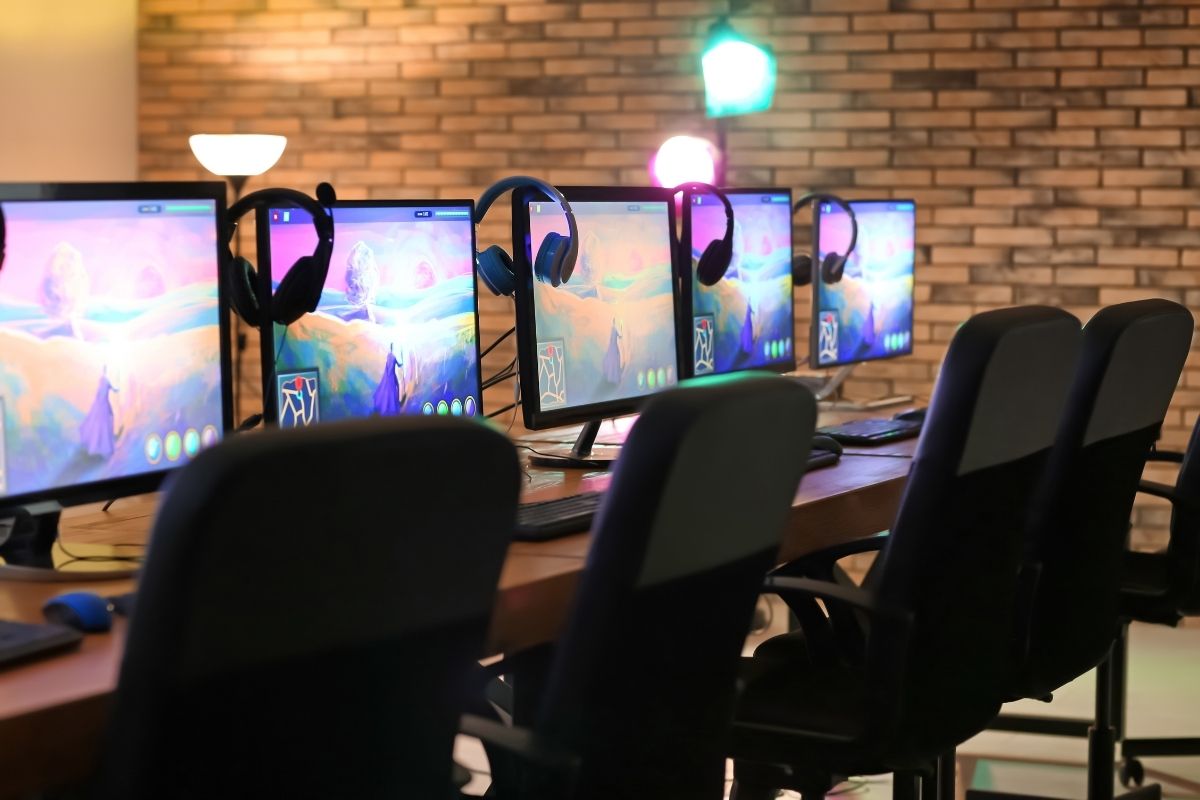
Community is a big component to the gaming industry. According to Maria Hwang, community is essential and one of the most beautiful aspects of games, especially in the modern day.
In these communities people learn how to strategize, how to talk to each other, what not to say, what to say, what was courteous, what was not courteous, and what was the decorum. In a lot of MMORPGs (Massively Multiplayer Online Role-Playing Games) you form groups and teams inside the game and then you do missions together.
Anything you can think of that’s in a game has a community that it’s involved in, where you interact with people around the world at any time of the day. This is a strong aspect of the whole gaming community.
League of Legends is a great example. There’s a new fancy skin with Louis Vuitton that just came out, and now people discuss what kind of skins they should choose and how much to invest on that. That is a community and you’re meeting new people through that.
The Twitch Plays Pokémon is another wonderful example of how communities were generated because of that specific gaming genre. Players realized they needed to talk to each other if they wanted to beat this game. From there they created groups where they could get together and strategize. This brought communities together and it generated all these beautiful online discussions.
It is just an incredible positive affordance that games have because people inherently and intrinsically love to play games. They want to win, and only through shared knowledge via a community can you achieve that. There are outlier games where you can win all by yourself. But it only gets stronger when you talk to each other, plan together, collaborate, and get some tips.

Games for Good: The Future of Medical Games

From advances in virtual reality (VR) technology to more basic play, gaming is increasingly used to help people heal and manage illnesses and disorders of all kinds.

For example, VR is a great space for healthcare providers looking to utilize games for good to treat patients. Those suffering from body dysmorphic disorder can use VR to make them feel more comfortable in their own bodies; additionally, soldiers suffering from PTSD have been found to benefit from VR treatment as well. One study followed soldiers who, after incorporating VR, saw a tremendous decrease in PTSD-related symptoms.

Voice technology like Amazon’s Alexa devices have also proved helpful in dealing with health issues. For example, communicating with individuals who are type 2 diabetic, who have a certain lifestyle, and family members who are not. Voice communication technology can help avoid conflicts not just by start dialogues, but also by tracking what food is available in the fridge and proposing recipes that can accommodate type 2 diabetic family members as well as a those who are unafflicted.

Now, imagine if this voice communication system adds game elements to the process to create a more fun, engaging experience. Here’s a scenario: there’s a certain amount of ingredients left in your fridge, and Alexa provides potential recipes you could make. By adding gaming elements, perhaps family members can participate in a cooking competition together, with points awarded for including more protein as opposed to carbs.

This is just one example for how to make treating a medical issue, especially chronic diseases like type 2 diabetes, a less exhausting, more engaging experience. Instead of individuals feeling like they must apologize for perceived inconveniences caused by their illness, they can make it something fun and invite others to participate in their lifestyle. If gaming can be a vehicle for achieving that, it could be a huge win for not just the medical community, but the gaming community as well.

Games for Good: Medical Gamification

Let’s take a closer look at medical gamification and how tools from the gaming industry can be used for gaming that is designed for our wellbeing and health.

“In medicine in general, I have not seen a lot of cases where gains have been fully integrated,” explains Maria Hwang. “It is more gamification, meaning there are game aspects that are added to whatever system they have, whether that’s an application or that’s a whole infrastructure and people go through certain steps to accomplish their goals.”

Maria goes on to explain, “It is a little bit unfortunate coming from a game designer perspective to see that it’s just using one element of games that are sometimes we like to say it’s tricking the patients.”

So you provide incentives. For example, for type 2 diabetics, we want them to log their meals. So every time you log something, you get a point for something. Every time you take a picture of your meal, you get a point. Every time you log your glucose measures, you get a badge.

Then you share that with your other friends, then you get a social media badge or not. Those are the superficial gamification aspects that we’re putting into these apps or infrastructures, says Maria. That will incentivize the patients to do something that they don’t want to do.

“From what I can tell, that’s the extent of how games are being used in medicine. We can go a little bit further and take advantage of all the affordances of games and make it more beautiful.”

Some efforts have been made in terms of mental health. There’s a lot of games that address mental health. It’s a full-blown game where people play it in and, some communities talk about the characters, the issues, the conflicts they resolved inside the game, and really from that, they’re healing and doing therapy. The goal is to keep relaxed. This is the neurofeedback headset that it comes with.

There’s one sensor right here at the front that is reading your brainwaves. The more relaxed you are, the bigger your midnight grows in the game. We have been trying to teach kids if you change the way they think, then the world out there looks different. It’s an incredibly powerful metaphor, says Maria. So, there are efforts in that area.

Maria explains that from a game designer perspective, the majority seen is only using superficial incentivized aspects of games, at least in medicine.

But it’s changing.

Games for Good: Charity

This last year for Christmas, we helped raise $1,200 for the VFW to give 20 families a Christmas. We even got everything on their list. One of those things that I was passionate about — I threw my funds in on top of it to make sure I got it done — was the PS4 for a young kid from a veteran family with a missing father.

People come to me sometimes and they’re like, “I got a cause” — like the VFW. One of them messaged me privately, and I vetted him. I got his information; I got his 401C, and I got his bank account information so that I knew they were legitimate.

That is the primary goal: If you are going to do any kind of fundraising, you don’t deal with the cash yourself. Also, make sure you vet the people you’re giving the money to.

Besides that, we also do things like suicide-prevention strain streams. The last one we did was 35 minutes in from my end. I put seven streamers together — two of which were veterans because that’s our most at-risk community for suicide prevention.

Right behind them were us — gamers and streamers because a lot of us are alone or introverts and we struggle to communicate outside of ourselves. However, gaming allows us to open up.

So, when doing suicide prevention awareness, we’re not asking for donations; we’re just asking people to be aware, to reach out to people, and to let them know they’re not alone.

There are many opportunities to do things without money or without asking for money, since, sometimes, that’s a turnoff.

In summary, vet who you’re going to work with. Then, make sure that you’re going to represent them while you’re doing what you’re doing. That way you don’t reflect poorly on their cause because you’re their face at the moment.

Esports Media and League Marketing: Marketing Analytics & Data

 “So much of marketing around esports is done very differently than it is around traditional consumer experiences or traditional consumer products,” Explains Wim Stocks. “Using influencers and building influencer involvement with a particular campaign is a special set of understandings. That’s a really important role.”

“For us, it’s analytics. A huge part of our business from how we improve our events to how we improve our player experiences are all derived from the analytics around an event, a player’s participation in the event, what our stream looked like, how we’ve engaged an audience for our streams. Those are all very analytics driven, and those are huge opportunities in the esports space.”

“How does one incorporate data and what is the importance of data and knowing it and knowing the importance of it, etc. within our business landscape?” Jonathan Sumers asks. “It’s extremely important because in the digital world one of the benefits of digital and social media in general when we speak to partners and potential partners is the measurability the fact that you can track it. You can target it. You can measure it.”

“It provides all that information. I tell people all the time that the analytics debate in traditional sports is funny. It’s been happening over the most recent years, where people feel as if you either are an analytics person 100% or you’re an old-school iTest person.”

“Obviously, the answer is somewhere in between, right? Numbers and data are information. Information is power. The more information you have, the more leverage you have, the better position you’re going to be in in any circumstance, personal or professional,” Says Sumers.

“If we can gather as much data, whether it be performance of our social post for our partners or nonbranded posts or how many viewers we have per stream or how long they watch per stream or how many unique viewers, etc. that’s all crucial to the story we’re telling as we go into these partnership meetings and other meetings because they tell the story of our brand.”

“If you’re going to hold a traditional sporting event, and your venue holds 20,000 people, you can’t hold the game and not tell people afterwards how many fans showed up. You scroll to the bottom of that box where it tells you the attendance of every game. Numbers, data, and information are crucial across the board and even more so in esports because it is a digital-first property.”

Professional Leagues, Events, Venues, and Player Facilities: Collegiate programs

There has been a lot of interest coming from schools. The innovative schools in the early days recognized that if they offered esports programs, they’d be wilfully attracting some of the brightest STEM students on the planet.

STEM is a big part of gaming. Engineering is a big part of gaming. And computer science is definitely a big part of gaming. Some of the brightest kids on the planet are coming into STEM programs because of gaming, and the wise schools recognized early on that they could use esports for recruiting.

In that regard, Wim Stocks helps schools that may not have seen that very early tide coming in. They’ve aided them in building their curriculum. They’ve helped schools create the notion of a career by offering a curriculum, training, and learning opportunities for careers in esports and venue design.

Wim Stocks also had a hand in helping a college cultivate local sponsorships to help support the building and funding for an esports program on that particular campus. But they are not just the intercollegiate competitor, enabler, and league. They are also helping schools build far bigger footprints in esports than they might have been able to do independently. So much of esports is focused on competition.

Let’s use an analogy. First, think about the business of traditional sports. Then, think about all the jobs surrounding traditional sports: production, broadcasting, stadium design, agents, analysis, marketing, advertising, and sponsorship. Those same dynamics exist in esports.

One of the schools that Wim Stocks have a close association with has identified that there are 87 different skill sets that they can base their curriculum around to help students who want to be involved in esports build their knowledge, education, and experience. By no means is this a small opportunity. They also work very closely with production companies. There are very specific things to esports that don’t come into play from any other sports or any other experiences. And so that’s a powerful dynamic for esports, the marketing of esports.

Professional Leagues, Events, Venues, and Player Facilities: Talent Pipelines

The pathway into professional gaming is an important bridge in creating more opportunities for players. Unfortunately, when it comes to esports, that pathway isn’t as well defined as it is in more established sports industries.
Wim Stocks better outlines the disparity using the talent pipeline in baseball:
“If you want to play baseball, you want to be a professional baseball player in Major League Baseball, you know what to do. You start at T-ball when you’re six years old. You go to little league. You play for your high school. You play for your college. You play Minor League ball.”
According to Stocks, this pipeline isn’t nearly as defined in esports. Luckily, the work he’s doing with World Gaming and Collegiate Star League (CSL) is aiming to turn that around.
“You could say we act like the NCAA of esports,” Stocks explains. “We organize leagues. Every game is a league, no different than there is an NCAA football league. In our case, there’s a CSL League of Legends league. There’s a CSL Counterstrike league. There’s a CSL Dota 2 league. There’s a CSL Madden league.”
These leagues aren’t just to host competitive matches – they’re designed to help aspiring players get better while creating a global gaming society. The collegiate leagues are open to college students. Like other major collegiate sports, the aim is to build an infrastructure around creating enthusiasm for esports, developing talents, and presenting clear opportunities for those who want to take their gaming to another level.
As for what adopting this model means, Stocks is clear about what the future of the esports talent pipeline could look like:
“The more this starts to look like traditional sports that have a template – that have a built-in infrastructure and tremendous understanding – the more we can model that for esports.”

The Future is Now: New and Developing Gaming Technologies: The future of gaming: Mobile Gaming

Gaming is becoming an increasingly sensory experience. Pong, as a 2D game, was satisfying. Now gamers are expecting to play tennis in a VR on Mars.
Another big part of the future is going to be Augmented Reality and Mixed Reality. You’ll be playing a game in an actual space with minuscule glasses and not a giant Oculus while interacting with other people and holograms. There will be multiplayer games fighting a hologram in the middle of Times Square. That technology is already available, but games are now going to use it on a large scale. Games will come out of virtual reality and the console, into public spaces.
Sluice, a web-based multiplayer game made by The Molecule, a company in New York City, is a harbinger of the future.
Web-based gaming is going to be huge. People walk by a giant screen with their iPad or phone. There’s rain coming down, and there are little paddles and buckets. Anyone can log in and control a paddle. There could be over 100 people walking by and playing this game, the point being to fill up your bucket.
That a game could be an open platform in an open space, where people come with their phones, connect to the game, and play simultaneously, is fascinating. In Pokemon Go, people were connecting and playing the game in a real space.
If there’s a real dinosaur coming down Broadway, and everyone is shooting it from different places with their iPhones, that would be cool. I would play that game.

The Future is Now: New and Developing Gaming Technologies: Case Study: Twitch plays Pokemon

Twitch Plays Pokémon (TPP) was an exciting era in gaming, especially for game designers who were curious about how such a project could work. For those who are unfamiliar, Twitch Pays Pokémon is a social-experiment-slash-game played live on Twitch, where actions and decisions are crowdsourced via the chat function.
Dan Shefelman lived through that moment and remembers all the fascinating ways the game evolved around its clear obstacles.
“I thought we’d seen it all. We’ve seen multiplayer games, we did platform games, we had FPS, we’ve just seen every genre possible. And then, Twitch Plays Pokémon comes around.”
The most glaring obstacle was how thousands of commands given by the chat could be distilled into one cohesive decision so the game could progress.
“[I asked if] it needs to take one input and the character moves. And they said no, all these people are putting in that input and they’re – somehow – getting averaged. Well, you know, at one point, then a voting system came out.”
The technology also had to answer the question of lag. If a user gave an input from South Korea, and another user gave an input from Brazil, which would arrive first? Would the first one count before the second? These questions were slowly rising, and communities developed out of the solutions people found. Eventually, they developed a voting system, until another problem arose.
“The voting system went away and it was just this incredible phenomenon of how we deal with, basically, overpopulation . . . Maybe it’s almost like a democracy deciding on a policy. And they did.”
This happened outside of the game, and players returned ready to navigate it as a team, like a crowd-sourced game.
“We as a team, a world team, we can beat that by coming together as communities to plan and strategize, to play one game,” says Shefelman. “Like a million people played one game together with one character. And that was basically a new genre.”

The Esports Landscape: Recent Changes and Trends

A few things have changed.
One is that esports has become more accessible to a wider range of people. So, the affordability of gaming consoles, gaming moving towards mobile, and free gaming, have all grown exponentially over the past few years. Consequently, it’s been easier to get gaming in front of more people.
The second thing that has changed is what I call the mainstreaming of esports, where you see esports information on sports networks such as ESPN and others. You turn on your TV, in some instances, and watch esports competitions live.
That is only going to increase because esports is ultimately a global sport. We believe that there are three global sports at the end of the day: soccer, basketball, and esports. Those are the three sports that anyone can, theoretically, play at any moment of the day.
So, that’s why you see the growth of esports all around the world; because it is a universal language in that regard. It’ll only grow as technology, communication, and connectivity keep growing.
In terms of breaking into the industry — for anyone who’s interested in pursuing a career within the esports landscape, I would make a few recommendations.
One would be to familiarize yourself, as intimately as possible, with the landscape. What are the top games right now? What are the next games coming out? When and where are the big tournaments? Actually, you should attend a big tournament.
Besides, are you reading the trades of esports? Are you following esports journalists on social media? Are you watching the events online? You need to immerse yourself in the space if you’re not from it. If you’re not a native, you can’t be an outsider looking to just break in; there are so many on the inside that already want these positions. So, you have to learn as much as you can in the gaming space.

The second thing I would suggest is to look for organizations that are interested in becoming part of the gaming space. As you see more non-esports traditional entities and sports organizations get involved, — whether through investment in esports organizations or owning and operating esports organizations (such as the Cleveland Cavaliers owning and operating a team in a professional esports league) — there are more and more non-esports endemics who are tasked with leading this shift.
Therefore, if you can get to people like me first before others (people who know the space and have the connections and the knowledge), you’re going to prove your worth and help yourself potentially solidify a position. Because people like me need people who know the space.
There are going to be more endemics and organizations getting involved in esports. So, knowledge of the esports landscape, performance, and connections is a gold rush.
We’re still so early in the gaming space. It feels like esports has gotten really big over the past few years. Think 10 years from now; we’ll be looking back at around this time and realize that only a handful of games were franchised and had leagues. Theoretically, a decade from now, that could be the norm. So much could change.
So, I would say this: Learn as much as you can and make contact with as many organizations and people looking to be in the gaming space.