Alternative Accommodations: Home-sharing Services Impact on The Hotel Industry

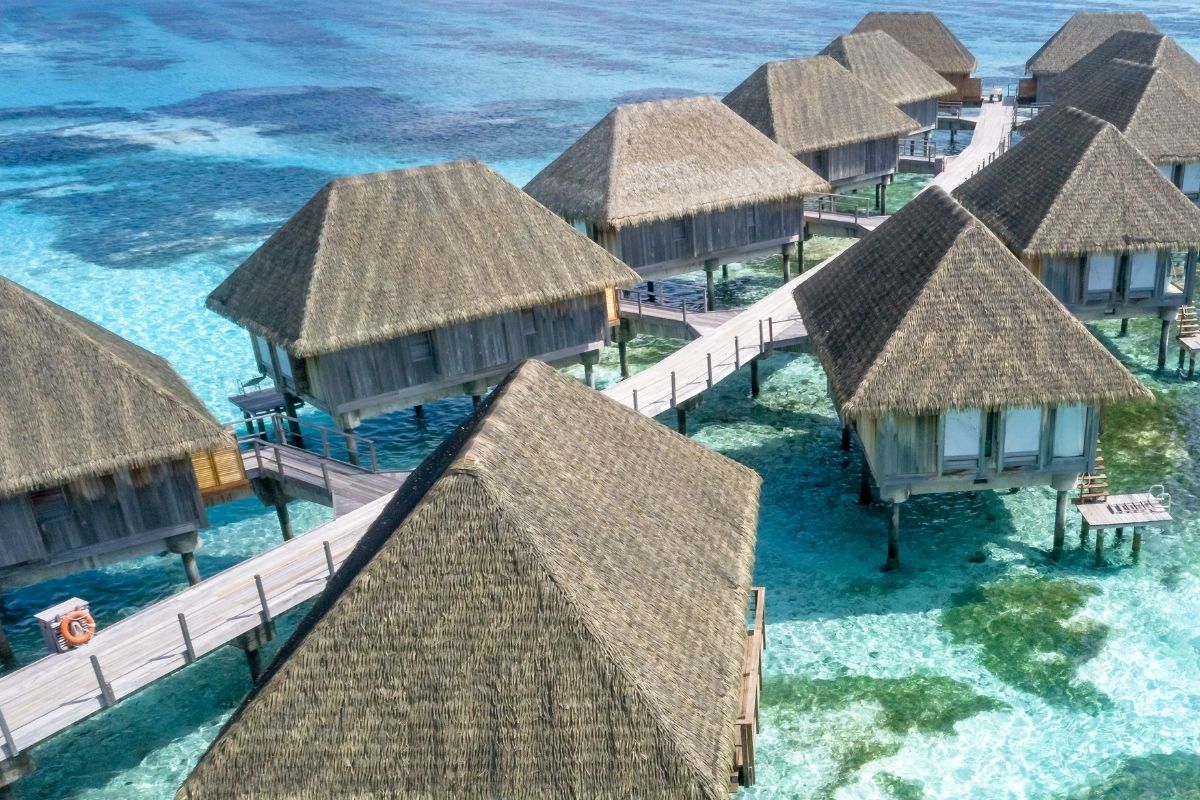
Hotels have begun to view the home-sharing industry as an alternative and a competitor. They’re also making sure guests know many of the desirable hotel amenities. Security, housekeeping, and round-the-clock service are not available at many home-sharing services.

Hotels offer a wide range of services. They also employ a large number of people. Home-sharing services began as a fee-based online matchmaking service for tourists seeking lodging. A local host with a spare bedroom or apartment wanted to rent it out for a few dollars.

Airbnb can scale extremely quickly because it doesn’t need a lot of host-owned and managed real estate. Home-sharing doesn’t need a massive network of housekeeping, maintenance, sales, and marketing services. Airbnb has grown to be larger than many hotel companies. This is due to the number of units available and the number of guests they can accommodate.

When you consider the hotel industry from the perspective of ownership, corporations like LaSalle and Sunstone aim to buy hotel assets, have them properly operated, and profit from them. In contrast, an apartment owner might list a unit on Airbnb or a similar service to rent for a night. Yet, that individual is unlikely to buy a property to turn it into an Airbnb investment.

A hotel ownership company wants to create an attractive real estate return. An Airbnb host usually wants to reduce part of their monthly ownership expenditures. There was no incentive to earn a real estate return like there is in the hotel investment market. This trait alone aided the expansion of the house-sharing companies.
The Future of Gaming: The Industry’s Future Must be Diverse

The gaming industry does not look like the people playing their games. Everybody plays games, yet not everybody gets to contribute to making games, explains Jessica Hammer. It’s an incredible loss for the game industry. In Hammer’s experience, her game design classes look more representative of the world than they do the game industry. For example, her classes tend to have at least 50% female students. They also reflect a more accurate depiction of the population in terms of racial diversity, gender expression, and sexual orientation.

And after 15 years of teaching game design Hammer has learned just how much her students are always able to surprise her. Even when imposing strict constraints such as: “You’re going to make a non-digital game one of whose main materials is water, good luck,” they are able to produce exceptional games. Hammer suspects that part of this incredible creativity comes from having a diversity of life experiences and social perspectives that they’re bringing to the table.

When people ask her what they should learn to be a game designer, her answer is simple. Be curious about life. If you consume primarily games, or geek media, or stories, or experiences of people just like you, you are going to make boring games. The secret to brilliant game design is to be what she refers to as ‘a little bit of an intellectual magpie’. You should be looking around the world for fascinating and shiny things that don’t already appear in games so you can bring them home to your nest.

When we talk about diversity in the game industry, we’re talking about people who have a leg up on what we already see in games. They don’t have to go out and collect shiny things. Jessica Hammer is a woman in the gaming industry. There is already an incredible set of experiences to build on. That’s one of the reasons that she believes indie games are one of the richest sources of innovation in the gaming world. Because the barrier to entry is lower, and you see an enormous amount more diversity than you do in, for example, triple AAA games. And that innovation is filtering up into mainstream games. And for Hammer, her vision for the gaming world’s future is to see women, people of color, and queer creators who are the source of this creativity innovation be rewarded and paid for it.

The Future of Gaming: The Future of Gamers is Diverse

”I think the future of gaming is having different voices, colors, shapes, and bodies as much as possible,” Says Anya Combs. “I think we as a nation, especially in the US, are changing pretty drastically, so it would make sense that games, art, and entertainment would follow suit with that.”

“When we’re talking about inclusion when it comes to games themselves and the representation that we see within characters, there are two things we started to see. We started to see that the representation that we’ve seen in video games have become multilayered, and they’re not as stereotypical,” Erin Simon explains.

For example, if you look at the first Street Fighter, those characters, especially ones who are people of color, they’re very stereotypical and borderline racist. The companies behind these games are starting to understand that can’t be the representation that you see. They started to make some of these characters that people found problematic more complex. They gave them have layers of different personalities especially within the storyline. We’re starting to see that.

Customization of characters has been another big one. Allowing people to pick the skins and giving people options to pick if they want to play as a male or a female. Within the options of playing as a male or a female, they’re able to pick the skin color that they would like, the hair, and have that option to mold and build a character that they feel could look like them. Of course, there are some bumps along the road with that.

“As we know, African Americans are very underrepresented in the game industry- especially from an ownership perspective. The last statistics that came out and only 3% of developers are African American. The issue with that is without that representation, we’re not able to move the industry forward,” Says Ahmed Abdullah.

“We’ve seen this in other industries, as well. You go back in history, and every time we’re able to open up who actually gets into that industry, we get different games. We get different types of content.”

That’s happened in sports, where African Americans excelled very well. It’s also now happening in the entertainment industry. You’re now seeing the movie industry starting to take in people of color for more of a directing role. Now you’re seeing different, unique content. It only helps everybody.

It’s very important for African Americans to really take in this industry because there’s so much more to grow here. It’s going to happen, and it starts with you. It starts with all the people that are young to go ahead and make sure this next generation can really dive into this industry.

The Future of Gaming: Coming Technologies

In the future, technology will be embedded in everything. So, we’re not going to have devices, like a camera and laptop. Instead, when we go see a movie, like Iron Man, it is just going to be embedded in our environment. d we can expect the games to go in a similar direction. Having and playing a console or PC will be obsolete. As we are walking down the street, elements of games will be part of our life.
Gamification
When games are simply embedded in our lives, it becomes gamification. A similar event occurred in a Nordic country, where they put pianos on steps at a train station. People were encouraged to walk more while also playing tunes. People took the stairs more often because it was entertaining.
The same thing could happen in gaming. We will not actually be playing a game, but it will be embedded and embodied into whatever we do in our lifestyle. We are just living inside a game.
The Evolution of Technology
Technology is like an interactive language that has already existed, that may not adapt to new forms. “So, if you look at early television,” Jessica Hammer says, “it’s radio plays where you can see the actors. And I think the same thing happens with games.” As gaming technologies advance and develop, people will need to understand new kinds of experiences.
We are still grappling with AR and VR as new kinds of gaming technologies. Video game designers are still trying to figure out what makes virtual reality games unique experiences beyond just taking existing games and porting them to a virtual reality setting. To Jessica, that is one of the fascinating things about doing game research in the context of computer science. It is less about changing the technology inside the game but rather the way games are played, discussed, consumed, and engaged with.

The Future is Now: New and Developing Gaming Technologies: The future of gaming: VR/VR/ER

People have been talking about virtual reality forever. Dan Shefelman remembers a time when it was going to be huge in the ‘90s, but it never reached the heights people predicted it would at the time.
Maria Hwano details what virtual reality is and why, despite not taking over as people thought it would, it continues to capture the imagination:
“If I had one or two words that I have to explain it, it’s just the experiential aspect of virtual reality. You’re actually living it. You feel it. You’re experiencing something that actually isn’t real life in your world.”
The way Hwano sees it, people still love talking about it. There have been multiple booms that at times have even felt like fads. Virtual reality has even been talked about in education
“As a computer scientist, VR is brought up a lot,” explains Hwano. “People ask me about it. People love talking about it. People like to ask opinions about what’s going to happen with virtual reality. It’s a very interesting question.”
As exciting as VR technology is, Maria Hwano believes people need to understand where the technology is currently, and what its evolutionary process might look like.
“A long time ago, when the computer keyboard was not a thing, it used to be a one-to-one input. It was on a piano and a sticker was put on it. And a signal was given to do input. It wasn’t until 10 years later that somebody created the keyboard that we take for granted right now. That’s how long it takes to make a keyboard. So you can only imagine how much we don’t know about the potential VR might have.”
Still, the future of virtual reality is full of possibilities, especially when it comes to augmented reality.
“Augmented reality is basically taking what’s around you and – through a phone or some device – and placing something there virtually so you can see it on the phone,” Dan Shefelman says. “It’s an illusion, obviously, but it’s using the environment around you and putting assets in it. . .You’re using the space that you’re in.”

Business Events: Managing Conventions

When we think of MICE, the C in the term stands for conventions or conferences. This is a gathering of professionals who come together to discuss a specific topic. The United Nations General Assembly is a good example.

Conventions come in a variety of types and sizes. A corporate convention is the first type. Companies such as Apple and Microsoft, and any other corporation you can think of organize these. They want to gather their employees, shareholders, or investors to discuss a new product they’re introducing, for example.

However, there is a second aspect of conventions: associations, which are slightly different. Associations are groups of people who come together for a specific interest. Perhaps you have a family member who works in the medical industry, such as a dentist. A dentist will be a member of a dental association, and these organizations provide continuing education for individuals in the field.

Consider this: if a dentist has been out of school for a few years, you want them to be up to date on the newest research and treatments for dental issues.

These types of associations also hold annual conferences, and they can be enormous. The International Contact Lens Association, for example, has a yearly meeting that attracts over 10,000 participants.

Different destinations across the world will compete for the right to host that convention over all others. That’s 10,000 people who will need a hotel room, food to eat every night, shopping, and transportation. It’s a lot of spending for destinations to attract that kind of convention.

Business Events: Managing Corporate Conventions

Conventions play a major role in the hospitality industry. As professionals plan their travels, there’s a lot of specifics event planners need to keep in mind.

Corporate conventions usually take place in the same location every year. For example, if you’re a tech company that is located in Silicon Valley, a lot of your corporate conventions will probably take place in Silicon Valley. It’s very different from association conferences.

Think of my dentist. We have dentists that are located all over the United States. The association that hosts the annual meeting for these dentists will probably want to rotate where the location of the convention will be.

For example, one year it will be in the Northeast and, the next year, it might be in California. It is very important to choose a location that is appealing to people. Because if you, as a dentist, decide where you might get your annual education or training, you might prefer to go to a place like Hawaii over a cold place in the winter, like Detroit.

So, a lot of associations think very carefully about which locations they select and, the destinations work closely with the organizers to attract them. There is also seasonality in terms of days of the week. If we think of conventions, the most popular days for conventions to be hosted are usually Tuesday, Wednesday, and Thursday. Those are peak times. A lot of the venues, such as hotels and convention centers, will be very busy during those times.

The reason is that if you are attending a convention as part of your profession, you want it to take place during working hours, during the working day. You might have to travel to that convention.

If I’m based here in New York and I need to go to a convention in Florida, I might want to leave the day before. So by starting your convention on a Tuesday, it means you give people travel time on Monday. By ending on a Thursday, it means, again, they can travel home on Friday, and they still have their weekend.

Many conventions will also take place anytime between March to May and then again between September to November. Staying away from the main holiday periods. You want to make sure you host a convention at a time when a lot of people are around, not when they’re all traveling or when they’re on vacation.

Business Events: Managing Trade Shows

Trade shows are a way for people to come and see the latest offerings from their favorite companies. Managing trade shows and business events effectively results in revenues for both the hospitality venue and the exhibitors.
Know your attendees
When designing a trade show or business event, you must think about your attendees. There are the consumers who come to visit the venue, and there are the exhibitors that come to present and/or sell their products to a captive audience eager to buy.
Determine how long the trade show will run
You also need to determine how many days that the show will run, and which visitors will be eligible to attend for those days. Some trade shows are open to the public for all days. Other trade shows, like the New York Times Travel Shows, only allow travel trade partners (e.g., travel agents, tour operators, etc.) to attend on the first day, and then opens it up to everyone for the remaining days.
Booth rentals and revenues
The hospitality venue generates revenues via ticket sales from the visitors and booth rentals from the exhibitors. The venue space is parceled out into different areas and rented to the exhibitors, which then bring their magic to fill and transform the space to create an experience for the visitors.
The booth space is especially important. A visitor will generally spend more money at booths located in the center of the exhibition hall rather than a booth tucked away into a corner somewhere.
Each exhibitor and their staff need to think about how they can entice visitors to choose their booth over the others. One idea is to provide giveaways. There are also companies that cater to special lighting or special carpeting for trade shows specifically with the purpose of enticing visitors.

Destination Marketing and Placemaking: The Six A’s of Destination Marketing

New York City competes against Paris and London. These are all known cities.
But if you want to start a tourism destination, there are six things that need to happen. I have developed this framework called the Six As.

The first is awareness. You need to build it. How do you do that? You may want to have some world-class events taking place in your destination. For instance, Finland organizes crazy competitions like marsh football. Teams play football in a marsh and then in a swamp. They also organize a wife-carrying competition. You carry your wife, and you have to be legally wedded.

In addition, they organize throwing cell phones and rubber boards, which gets the country publicity — global publicity. So, that would be one of many ways to create buzz and awareness.

Then, you need attractions. New York City has an amazing set of attractions, from Central Park to museums.

Then, you need activities. In New York, you have a fashion week, a lot of trade shows, and the New York City Marathon. So these are world-class activities, that also bring awareness to the destination. More often than not, they’re the reason to visit New York City.

Out of those attractions and activities, you can form associations or consumer forums associations, which is basically their perception of the destination. When you hear the word New York City, what comes to mind? It could be the New York City Marathon; it could be some of the movies (e.g., When Harry Met Sally).

So, New York City is a place for movie making, which helps put the destination on the map. And there are actual tours; people go around New York City to hunt down the places where the movies were made. That’s a great way to create associations.

Then, you need access. Access is, especially for international tourists, the flights. How many direct flights from your home country come to JFK or Newark? And then how do you get to the hotel? How is ground transportation organized? In this case, airports — like LaGuardia — are behind the many international airports. But they are investing in this. So, we need to have very good access from the airport to the city and back.

Finally, it’s affordability. That’s the A number six. How much does it cost?

I benchmarked places like Arctic destinations in Finland, Sweden, Norway, Iceland, Greenland, and Alaska. I measured all these items, including affordability. Of course, you take a perspective. In my case, I studied a tourist from New York City who wants to go on an arctic holiday.

The most competitive was Iceland. Alaska was the most known. But when it came to activities and attractions, Finland offered the best. So, this is the way to do it.
You can calculate the actual cost using search engines like Kayak, which gives you the airfares and four-star hotel rates.

I did one about jazz festivals around the world. You have to factor in how much it costs for five days to attend a jazz festival in Havana, Montreal.

These are the necessary things. In summary, the six A’s you need are awareness, attractions, activities, associations, access, and affordability.

Destination Marketing and Placemaking: Success Criteria for Hotels

How do you know what makes a great hotel? Well, consumers can use TripAdvisor. They can look at consumer reports. And they can find out what the most preferred brands are. If you look at the JD Power list, you’ll see all the best hotel companies. These comparison companies use specific criteria to rank hotels. Often it is based on the service, location, loyalty program, and facilities provided. But there could also be other criteria considered.

Think about restaurant ranking lists. For instance, the Zagat survey is a respected publication that ranks and rates restaurants. They look at the food service and decor. And they use a zero-to-five-point scale. Bernardin and other New York restaurants usually top global restaurant rankings. So, these are just some of the ways to set a benchmark and make your restaurant or hotel successful. Similarly, you can use a list like the 6A to help make your destination successful globally.

To understand what makes a hotel successful, you need to follow and understand your customer’s journey. Firstly, they dream about staying in a destination and hotel. Then they do their research. Following this, they choose the hotel, make the reservation, travel to the hotel, check-in, stay and check out. Finally, the hotel keeps in touch with them by asking them to review their stay and persuade them to sign up for their loyalty program.

During their stay, the room experience is essential. Rooms don’t have to be big to be good. A small room can have efficient service. If you are in a luxury hotel, the room has more amenities. So, again, the room is important. As is the food and beverage service. What services does the hotel provide? Remember, overall service quality is also critical.

Administrative processes are also vital to making your hotel successful. The check-in process, the check-out process, and overall customer satisfaction. Not to mention the cost and the fees. How much do you pay for a hotel? Because above all else, it’s always about value for money.
Yes, people in New York City pay over $1,000 for a room at the Mandarin Oriental, Four Seasons, Ritz Carlton, St. Regis, or Peninsula. And that’s because they offer value for the price, and they feel it’s a reasonable, fair rate.

However, in comparison, at independent hotels like Moxy and Lifestyle hotels, people may pay $200-300 for a night’s stay. So you’re likely not expecting as much. However, it is still good value for money as although what you get in those hotels is less than the more expensive hotels above, it’s relatively competitive for the rate you pay.

When you consider all the criteria above, you will understand precisely what it takes to have a successful hotel that people want to stay at.