Managing the Art Manages the Experience

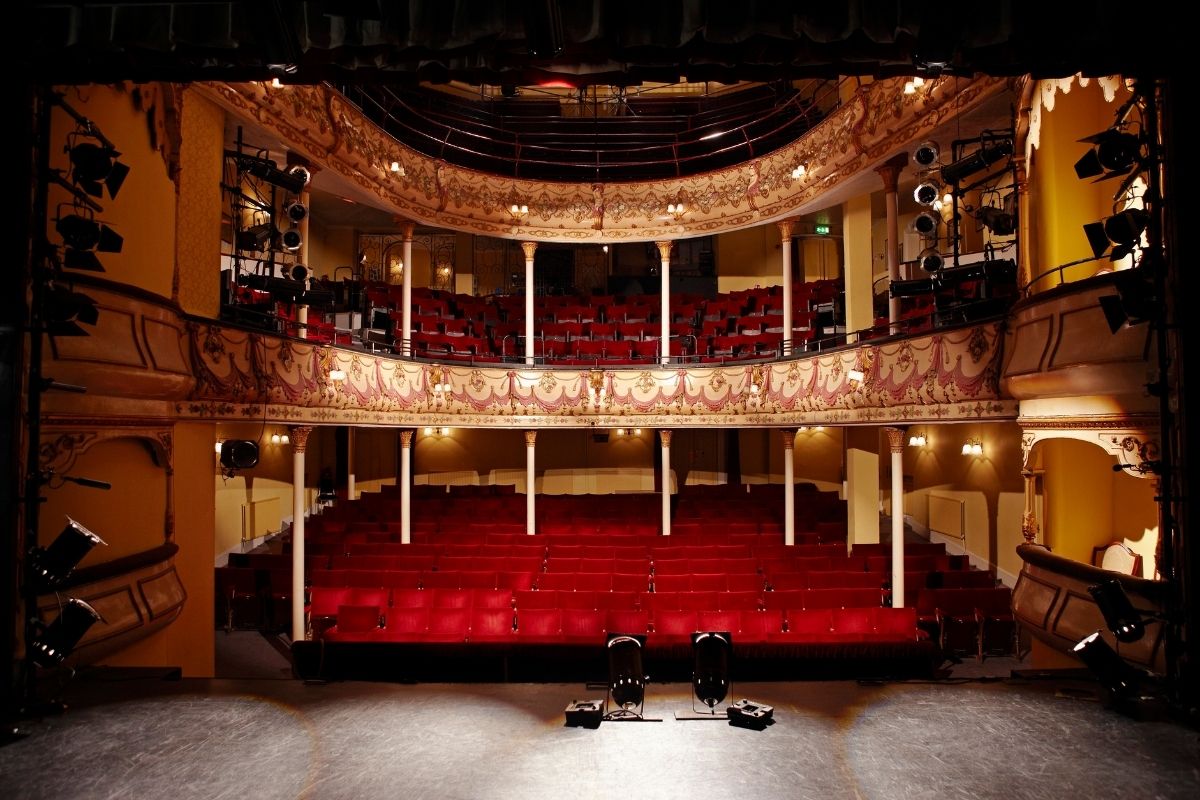
For performing arts, “You always want Arts managers as part of your company because they’re the ones who want to figure out how to make it possible for the art to reach audiences and how they can enable the creativity from people that they’re working with to achieve their highest possible level and to be as relevant as possible to audiences,” explains Elizabeth Bradley. “You have general managers and executive directors sometimes producing artistic directors.”

Based on her performing arts education, Bradley clarifies, “If you take an example of a company such as the Manhattan Theatre Club, the Signature Theatre, the Roundabout in New York, or the Atlantic Theater, you’d see these are not-for-profit companies, meaning they’re not run to create profit from a particular commercial offering to a group of investors. They have a mission for public good and education, and they are contributing to the culture through the realization of their mission.”

“The people who lead those companies, from a logistical perspective, make sure there’s enough money to put the season up, that there’s an artistic director or artistic producer who’s appropriately supported, that there’s a marketing team, a publicity team, a fundraising team, and a group sales team.” Bradley continues, “Of course, the very important people who work in a theater venue, if a company has their venue, as the Manhattan Theatre Club and Roundabout does.”

Elizabeth then concludes, “Who’s working in those box offices, what ushers are showing the patrons to their seats, who’s hiring the front-of-house manager, who’s working with volunteers in the company, and who’s running the education department? All of those functions tend to reside, depending on the budget size of the company, with a general manager or an executive director, or sometimes an artistic producer.” These are lessons well taught in online performing arts education.

Marketing Is Square One in Online Performing Arts Education

“Once a production you feel is ready to go, and even before you’ve announced it, you want to put together your team, which is public relations, marketing, advertising, people who will be doing your social and digital, and also your management” says Jeffrey Richards, describing the role of a producer in pre-production meetings that take place prior to performing arts shows and productions.

The Importance of Learning Marketing in Performing Arts Education

“So much has changed even since I began nearly 20 years ago, with the emphasis on how you’re marketing a show,” says Richards, who also says “that emphasis has changed from when people just automatically used to take full-page ads in ‘The New York Times’ to now doing commercials on television and using the internet to a much greater extent.”

Richard explains that other members of the team are also frequently involved in the marketing decision-making. “An author or the playwright or the composer and the librettist team have a say in what the artwork is going to be.” He continues to explain “sometimes you include them on the commercial because you want their approval and to feel comfortable in the way that you’re selling the production. To that extent, I have in recent years asked playwrights to have discussions with the ad agency so that they can understand what the playwright is doing in terms of the playwright’s vision, I can say.”

“So they have an understanding of where they should go, and how they should treat the material. And once you have the playwright working with you, I should say it’s the producer’s responsibility to marshal all of those people and to make sure that you have a coherent framework as you are moving forward [with your production].”

Interactive Theater: Engaging and Incorporating the Audience

When it comes to the performing arts, I start with this question: where is the audience? No matter how different the shows are — and some of them are on the streets, some of them are in museums, some of them are in theatres — what they actually have in common is that they all deeply focus on the relationship with the audience. That’s where we get to interactive theater.

Interactive theater is a type of theater where the shows interact directly with the audience. I emphasize ‘directly’ because, actually, theater always interacts with the audience. You can’t have theater without the audience, so even when you’re in a super-traditional space and you have the fourth wall, like you may learn about in performing arts education, you may think that there is no interaction. In actuality, there is; the actors, live on stage, respond to the energy from the audience members. That’s not something you can always see with an online performing arts education, but there are examples.

If all the spectators suddenly go to the bathroom, besides creating huge lines, the show would stop. If everybody laughs, that creates a type of energy in the theater. Essentially, even if we think that we’re doing a run of the same show, the show itself is never the same: the audience is changing it. The audience kind of becomes a co-creator of the show because part of the show is how they perceive it, how they imagine it, how they do the other half or quarter of the show. It really depends on how much you allow them to contribute.

Because of that, a lot of my shows put a huge emphasis on giving audience members an opportunity to be aware of their power, to be aware of their important, essential place.

Influences on the Performing Arts in 19th-Century America

If you look at the beginning of the whole idea of the United States, what does it mean to move from a colonial place to a place where there are a lot of different kinds of people doing a lot of different kinds of things? This is a question worth pondering as you pursue your online performing arts education.

There are people who are very clearly connected to a European sense of theater. That might have to do with Shakespeare. It might have to do with a certain formal kind of theater that has ties to Europe.

Meanwhile, in the United States, there are a number of other kinds of folks who are looking for something else, something that feels American, something that speaks to a kind of roughness, a kind of humor that is rougher and bawdier.

And then there are also all these Black people, these Black people who are here with other kinds of theatrical traditions, other kinds of musical traditions, and other ways of telling stories that involve sound and a certain approach to energy, an approach to the voice, an approach to movement.

One of the ways in which the United States developed this whole way of thinking about theater hearkens back to the early 1800s, when there was a white traveling theatrical performer named Tom Rice. He supposedly saw a Black groomsman in the street, somebody who took care of horses. The story is that this enslaved man was singing a song and doing a dance, and when Tom Rice saw it, he said, “Oh, I’m going to copy him.” And so he copied him, including blackening his face. And he created this notion of blackface comedy.

Now, blackface existed before then, but in the United States in the early years of the 1800s, it really started to take off, and it became this massively important entertainment form. From around 1830, through the 19th century and into the very early years of the 20th century, it continued.

When you think about Broadway, you think about the American musical, you really want to think about all the roots that are in it. In performing arts education, you’ll learn about all the things that had to come together to make what we know in today’s theater.

In the period from 1900 to 1920, there was a lot happening. There were different kinds of epidemics that were happening. I think we all know about the Spanish flu in 1918. Sexually transmitted infections were also extremely dangerous. And STIs took a lot of folks out. Syphilis, for example, was responsible for a large number of deaths.

Some leading African American theatrical figures died for various reasons early in the 20th century. Ernest Hogan, the first Black entertainer to produce and star in a Broadway show, died in 1909. Bob Cole and George Walker, prominent figures in early 20th-century African American musical theater who began their careers in blackface, passed away in 1911.

Now, these folks were at the center of organizations. They weren’t just solo people. So, when they died, a certain kind of large-scale Black musical theater started to become more scarce, certainly no longer being seen on Broadway.

Immersive Theater

Openly experimental plays are the pieces of performing arts that will try to say, “we’re breaking down forms” when they invite the audience into a space. We’re really putting things together differently. Be prepared for the adventure of an environmental movement of immersive theater.

These are examples of things that changed the relationship between the actor and the audience. You are much more directly involved and implicated. You’re not simply sort of sitting in a red tufted seat and behaving yourself and clapping when appropriate.

One of the preeminent examples at this moment is a remarkable piece called Sleep No More by an incredible company from England called Punchdrunk. This is a really remarkable exploration of a Shakespearean play and the source material within it. The audience actually walks into this incredible, abandoned hotel, which is a warehouse. You travel through it. You are really experiencing this in a truly immersive way.

There are many other remarkable companies, like Third Rail Projects, that are exploring this in really exciting ways. Again, location becomes really interesting. Now that is not all the kinds of theater there are in terms of genres, but it is a way to understand contemporary theater when studying performing arts education or online performing arts education.

Fred Carl Discusses Tech Solutions in Performing Arts

A former student of mine just did this show. They worked with a guy named Dave LAST NAME? Malloy? who is a book writer and lyricist. It was an a cappella show called “Octet.” It had eight singers who would start singing in harmony on a dime. They all had earpieces because he figured out a way to give them their notes remotely and even do a countdown so that they knew when to come in on time.

From the audience seating, you’re watching this show and wondering how they do it. Since I knew him, I wrote him and said, “How did you put this together?” He told me that it really took a while to figure out, but that it’s magic by the end.

Tech Solution Considerations

There are these technical things you need to take into consideration during your studies and career. As my former student explained, you might need to stretch something out, or show that the actors entered from the house. You might need to show that the way the audience came in is how the actors came in. You realize you’re going to need light in one spot and all of this drumming. You realize that you need to bring all of these elements together.

You need to figure out how much time it’s going to take them to all come through the house, up the stairs and come onto the stage. You need to determine what happens next and the cutoff. At that cutoff, you need to decide when the lights are going to hit and when the stage manager is going to call for the next lighting cue, which might be a blackout or a quick or slow transition.

All of these technical elements take time to prepare. A lot of them are decided and prepared during rehearsals, but they only really happen during the technical phase of preparation for a production. During that phase, everybody gets into the theater for the first time together. It’s that period when things start to change to make certain that everything happens in time: Members of the crew hang and focus the lights. It’s the first time that you’re on the stage with the lights. It’s the first time you’re on the stage with the costumes under the lights, which is an experience that the actors have to get used to before opening night.

Performing Arts Education

Your online performing arts education can give you a solid tech solutions foundation. It won’t only provide you with a history and evolution of technical solutions in theater and performing arts. It will also prepare you, depending on your career track, with knowledge and skills that you need to provide these and additional tech solutions to others working on a particular production.

Financial Survival of Performing Arts

I guess the question that I get asked most often is, how do I get money? How do I get funded? It’s a great question. Many times, I wish I had better answers. Basically, I guess there are different approaches. It is vital to discuss funding for any performing arts education including online performing arts education.

Tips To Finding Funds

Apply for Grants

Depending on where you are, for example, if you live in Europe, there are a lot of grant opportunities. If you live in the States, there are fewer, but there are still some grant opportunities. Basically, the first thing that you do would be to apply for all the grants and keep it up. Keep applying and reapplying, eventually, you’ll get one.

Do Crowdfunding

Now, for the cases, for all the times that you don’t get the grant, which are quite a majority in our history, we did some Kickstarter campaigns. We were able to crowdfund. This works for many small companies. Sometimes, you can get a partnership. It is very valuable to be in partnership with cultural foundations, cultural institutes, and different institutions.

Get Sponsors

There are many institutions that chip in, maybe a rehearsal space, some money for the set, or payment for the artists. This is how you kind of puzzle together a bigger budget. Of course, another possibility is finding actual sponsors. If you’re a good manager and if you’re a good promoter of what you’re doing, you can get big brands excited about being associated with your experience. That’s when they would sponsor, and your life would become a lot easier.

Start With a Zero Budget

The other approach is going basically on, which I discovered here in New York City. Never crossed my mind before, but I feel like it’s a very important approach to, at least, know. The idea of creating something on a zero budget. You can start with a no-money budget and see what you can do without anything.

It’s crazy, but it turns out that you can do without anything. Almost anything that you can do with a small budget, with a medium budget, and at the end of the day, with a big budget. It’s really a matter of perspective.

How the New Generation of Black Playwrights Is Transforming the Performing Arts

Generational change impacts not only society but also the performing arts that reflect and comment on it. This is an important point to keep in mind as you continue your online performing arts education. Harvey Young, Dean of the College of Fine Arts at Boston University, and Elizabeth Bradley, Broadway theater critic and professor at New York University, share their thoughts on emerging African American playwrights and how they’re transforming the dynamic of the theater.

Harvey Young sees a passing of the torch from August Wilson, whose plays chronicled the 20th-century African American experience decade by decade, to notable Black playwrights giving voice to the African American experience today. “You see Suzan-Lori Parks, you see Lynn Nottage, receiving additional support and mentorship. You begin to see folks like Katori Hall emerging as well,” Young says.

“You can see every 20 years, there is this generational passing in which the lessons, the struggles as well, the histories, the life lessons go from generation, to generation, to generation,” he observes.

“If the job of art is to tell society what it can’t know without art, I think that the white American theater has stepped back far too long from that responsibility,” says Elizabeth Bradley.

She comments on the contributions of the new generation of Black voices: “The playwrights who have emerged in the last four to five years, whether they have been working quietly away and we just haven’t discovered them, or they are new voices such as Lynn Nottage, who has had a very long career. A more recent career is that of Jeremy O. Harris. Dominique Morisseau is another example of a very important African-American female writer.

“Of course, Suzan-Lori Parks has been heralded for decades now and is a Pulitzer prize winner. Katori Hall is another example. With plays like ‘Fairview,’ and plays from the African diaspora like ‘African Mean Girls’ or the ‘School Girls’ play, there has been a push forward. Tarell Alvin McCraney with ‘Choir Boy’ or Branden Jacobs Jenkins with ‘Everybody.'”

Bradley continues, “It has been manifest that there is a depth of talent on the musical side. For example, there’s Michael Jackson — not the one with the white glove, but the one who wrote the musical, ‘Strange Loop,’ which is the most recent Pulitzer Prize winner. “These voices are coming to the forefront, and they are going to change the conversation between artist and audience,” she concludes.

Look for this and other generational shifts as you continue your performing arts education and pursue a career in the field.

How to Get Your Work Produced in the Performing Arts

First, you write a play. If you’ve been invited or commissioned, then you have a place to submit it. If that isn’t the case, you have to figure out how to get your story put out in the world and entice industry professionals to read it. You have to know the market. It’s important to be aware of the kind of play that different theaters and directors are looking for. You can acquire this valuable insight from a performing arts education.

Then, after writing your play, you can submit it to theaters or directly to literary managers, if you know them, where they read scripts to artistic directors. If you have a director you prefer working with, you can submit the play to that person who might then pitch it to a theater.

These are some of the more effective ways of sending your work out for consideration. The National New Play Exchange allows playwrights to post scripts and describe them. This program attempts to reverse the traditional submission method. So, a theater might find your play on the National New Play Exchange and approach you instead of you trying to contact them.

I am often asked how to get a play produced. It’s not like sitting in a factory assembly line where you’re doing the same thing each time. Each script submission is always different, as an online performing arts education will teach you.

If you’re curious about how to get your play produced in Hollywood, off Broadway, or on Broadway, one thing is critical: it has to be good, and it must be enjoyable. Performing arts professionals have to like it and want to produce it. I discovered this when I asked Jay O. Sanders, who’s a well-known actor, to direct my play. Not only is he a friend, and I love his work, but I also knew his name recognition was going to bring Chris Noth into the mix, and then Barry, and then my investor to bring my story to life.

You’ve got to have a good product. You need to have a good story. You must have a good screenplay. But you then have to put together a team that’s compelling and committed. A little trickery, if you will, doesn’t hurt. When I called Chris Noth, I said, “Jay’s pretty close to being in; he’d love to do it.” And when I called Jay, I said, “Chris is pretty close to being in; he’d love to do it.” And as soon as I said Jay was in, Chris said, “Oh, well, if Jay does it, I will.” Then, Jay said, “Oh, I’ll do it. So Chris is in; that’s great.” The simple thing they had to do was to be a presenter. Teamwork in the performing arts can help a playwright to achieve that otherwise-elusive success.

How Unions Work in the Performing Arts Industry

Gianni Downs tells us that if you’re working in New York, almost every house is a union house. That means there are specific people who are trained and paid to do certain jobs. So, for instance, as a designer working on a Broadway show, you aren’t supposed to touch certain things on stage because there’s someone else who is employed to do so and knows how to do it safely.

Because of this, you want to be very conscious of what you’re doing in any house with which you’re unfamiliar. You want to make sure that you talk to your production manager, and also talk to the union heads who might be there with you. You need to find out what you’re allowed to do and which things require that you ask permission before you proceed.

These things are also true across the country. Yes, New York has many union houses, but most of the other major cities do as well. And those unions also might control different aspects. So, for example, you might work in a scene shop that isn’t union, and you might load a set right to the doors of a theater. Then, the union crew will take it and load it the rest of the way from there. That’s because the actual theater itself is a union house. Your scene shop, however, is not union. This type of thing is a pretty common experience for people who are doing shows and traveling from space to space.

Perhaps you’re in some sort of tour or you have a small professional theater, and you’re renting other houses to do your productions. “You can also be unionized in your shops themselves,” says Downs, “and these are people who have been trained and have joined the union, whether it’s IATSE, or in my case, I’m a USA 829 member.” This will not only dictate what you’re able to do professionally, but it will also help when you’re negotiating your contracts. As a union member, you’ll have certain guarantees within your contracts that will help you negotiate with potential producers and employers.

You can learn more about these concepts with performing arts education, or even learn from home with online performing arts education.