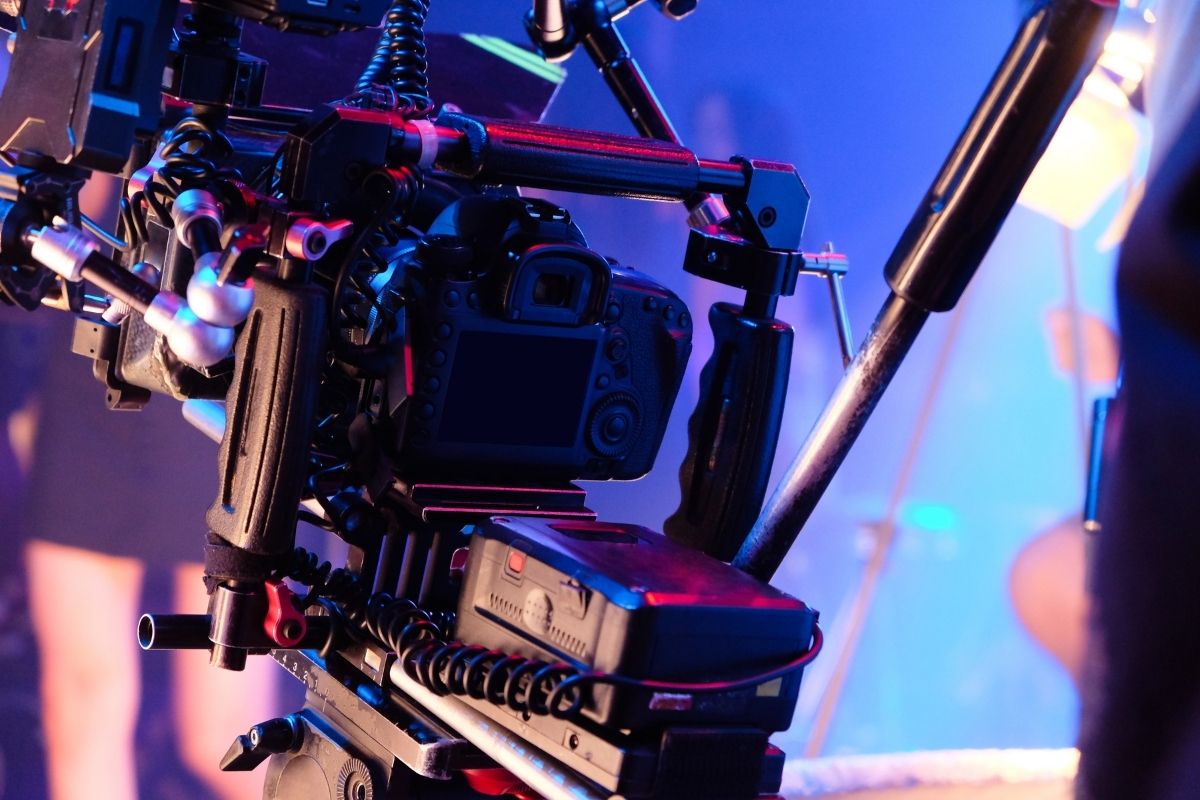
Film Finance, Scheduling, and Budgeting: Filmmaking Outside The Studio System: Raising money for indie films

The world of independent filmmaking primarily has to do with figuring out how to raise money to make your films.

“That’s certainly something I spend a lot of my time doing,” says Ekwa Msangi. “You know, after the housing crash, we started in earnest the introduction of crowdfunding. Which used to happen in a less official way before, in terms of aunties, uncles, friends, you know?”

Ekwa goes on to say: “It’s actually important to be able to pay something to people.”

At the very least, you need to pay for equipment and some insurance. Actually, it’s quite important to have insurance. You don’t want anything happening to people who are working for you and giving you their time. You also need to feed people and give them a copy of your project.

That is the bare minimum of what you have to give people if they are helping you on your project.

Crowdfunding is not only about raising cash money that you need to rent your van and the like, but it’s also about raising friends, like supporters, audience, people who are invested in your work.

People who are then going to be looking to watch your film when you’re done. “What you’re trying to relay is the excitement, is the reason why it’s good for them to invest in you and in your work and in this story and having people rally around,” says Ekwa.

When making a film, you are creating something out of nothing. You were sitting around in the shower and you came up with this idea for creating a world that did not exist. Creating a character, a person, or whatever out of nowhere.

You are literally talking about making magic! Who gets to do that? Most people in their day-to-day job don’t get to create magic.

Filmmakers do.

Artists do.

That is valuable.

Ekwa goes on to explain: “And if it’s not that, it’s, what are you going to talk about this summer at your next barbecue? You’re just going to talk about all the stocks and shares that you sold? Or are you going to talk about, like, I made a movie.”

“How many people get to say that? So I’m offering you, crowdfunding person, person who I’m inviting: I’m inviting you to come on this journey, to come on this adventure with me of creating this world and building this opportunity that we’re able to say these things that you care about.”

Ekwa acknowledges that it’s hard to raise money. If it’s your first time, “I wouldn’t start by raising $30,000. That is a lot!”

Unless you’re a professional, that’s a lot of work. If it’s your first time and this is your first film, do something small. Do something small and figure out where it is that you can cut corners.

Or if you know there’s an apartment or a house that you can use to shoot your thing, then you need to write a script for that.

There’s a lot of actors in New York and probably in LA as well who want to act and who would love to come on as an actor-producer or a DP-producer or whatever to help you get this film done.

Finally, Ekwa affirms that crowdfunding is not just about the money. It’s also about the people who are involved in helping you do this.

The friend who’s going to make a whole bunch of peanut butter sandwiches or the pot of pasta to give to your crew for lunch breaks and things like that.

All of that is really important stuff and is part of the crowdfunding process of getting your work done.

“And maybe you start with a small film and that’s the first stepping stone to the bigger project that you want to make.”

Film Finance, Scheduling, and Budgeting: The Budget (above/below the line)

We sat with an industry expert in film to take a closer look at how the above the line and below the line budget works in the film industry and tv industry.

“When the film is getting made, the producer will work with and help to assemble a team that will help to execute it,” explains Janet Grillo. “So, when we look at a budget, there’s a top sheet budget, which is a thick document, 26-30 pages of real detailed, thoughtful estimation of the costs, from development all the way through to distribution.”

There’s a top sheet, which is usually one or two pages, that’s summarizing what those costs are. On the top sheet, imagine a sheet and imagine a line. There’s an above the line, and then there’s below the line.

The costs above the line on the top sheet of the budget, are everything to do with the ideation, creation, and envisionment of the project before cameras roll. Think of above the line as before cameras roll, explains Janet.

“Below the line is when you’re ready to make the damn thing,” says Janet. “It’s getting the cameras rolling. So what’s going to be above the line? Your writer, your director, the cost of the intellectual property, meaning the screenplays, is it based on a book, a magazine, a comic strip, is it a remake, that’s the intellectual property and all the costs of developing that into a screenplay.”

The people involved with doing that are the director, the writer, yourself, the producer, and some other producing partners that you might have, they are above the line.

And sometimes stars. If to get the film funded, you’ve got some big market value actors, they’re going to be above the line as well, says Janet.

Below the line is going to be everybody else. That includes the cinematographer, camera crew, and everybody involved with handling the equipment to the lighting, the gaffers, all the teams that put the equipment in place, the production design. All the people who work on building the sets, costumes, the people involved with wardrobe, creating the look and making the costumes and dressing the actors, all of the people involved with hair and makeup. All of the people who work on the making of the film.

Finding an Advocate: Publicists: Publicists

If you’re a filmmaker, you often work with writers and editors at publications. And as you progress in your career, you might want people working with you to help navigate some of their questions. You might hire what’s called a publicist.
A publicist is someone who’s an advocate on your behalf. They have a lot of relationships with writers and editors, and they do some of that legwork for you. Before you even get your film into a festival, they might be emailing journalists to say, “so-and-so has a film at the festival, we invite you to check it out.”
They often know what the writers and journalists like, too. They’ll say, “this writer at Indiewire tends to like these kinds of films or these topics,” for example. Publicists might know that a journalist has written about one of your films in the past. They’re tracking all of that.
These are the different kinds of folks that are involved in helping you, your producer, and your team to make that first impression.
One of the first things that publicists do when they look at a film is to pick it apart. They figure out how to look at this film and they ask questions. What is the news from this film? What is newsworthy about it? Why is it exciting? Why does the film have a unique place in this world?
They will figure out how to amplify it in the best and widest way possible through press, online journalists, working with online journalists, and social media. They are continually working out how to continue building buzz around the film and the filmmaker. They want to amplify your point of view.
[Please embed: https://pixabay.com/photos/press-camera-the-crowd-journalist-2333329/]

Finding an Advocate: Publicists: The Press Kit

[Please embed: https://pixabay.com/photos/camera-aperture-digital-camera-dslr-1239384/]

“Before you get someone to watch your movie, you’ll need to get their attention,” says Eugene Hernandez. “But everybody’s got so much coming at them on a given day, and you’re trying to get their attention for even 20 seconds.” 

That’s why, Eugene explains, you should put a lot of thought into your press kit. “Because that’s how people are going to remember your film, both before and after they see it,” adds Eugene. “It’s really important to — for lack of a better word — kind of agonize over it. Ask, ‘Does this image represent the film? Is this the image we want other people to remember when they think of our film?”

Eugene also advises filmmakers to take pictures while still on set. Many professionals agree. Eugene has been on and moderated many film festival panels over the past 25 years. “The most common piece of advice is to take good pictures on your set,” he points out. “It sounds logical when you’re not making the movie, but when you are, it’s the easiest thing to forget.”

Think ahead to when your film goes to festivals or distribution. When a company wants to buy your film, they’ll ask for photos. If you don’t have those photos, you can’t recreate your set and costumes from four years ago. As you film, make sure you capture the images that will represent your film in the future.

Some marketing and distribution panels recommend spending money on this process. “Hire a photographer,” says Eugene, “or if you have a friend who’s really good at that, invite them to your set. Have them take pictures while you’re shooting or rehearsing.” Eugene recommends taking some posed photos of the cast, too.

You may not use these photos for years, but they matter. “Those are the images that will fuel the materials you create,” advises Eugene. “Those are the images that you’re going to hand someone on your postcard three years later at a film festival. It’s essential.”

Finding your Audience: Marketing: Closeup on: The Lovebirds

 “Lovebirds came together because I had read this really funny script. It was originally a little bit darker and a little bit edgier, but it was just a really fun script about a couple that could be anybody who was breaking up. They got involved in what they thought was a murder while they were breaking up, and had to deal with their relationship while they had to stay together,” says Tom Lassally. “It was a very funny script and maybe more on the independent side when we first started it. When you’re going for a pairing like this, you’re trying to think, what is a fresh way to pair two great people?”

“I worked with Kumail before on Silicon Valley, and he’s such a gifted comedian and actor,” Lassally continues. “At that point, you would not see him do something like this. Then looking at Issa Rae, who at that point had not done a role like this, and to pair them as a really interesting couple. It was a really special dynamic that made the whole thing come together in a very different way. It was an example of one and one making three. The approach to do a romantic comedy with a African-American woman and a Pakistani lead and not necessarily have to make it about that seemed like a really fresh way to do a movie.”

“We financed it with a terrific company called MRC, and then Paramount stepped in to become our partner to release it. We did a lot of development with them, we worked on it with them, and we went and shot the film in New Orleans. Netflix came in because they liked the movie, but, on a practical level, they had a movie that already had Paramount and MRC spending money on marketing to create awareness for something, and that would be a good thing for Netflix.”

“All of these movies are sitting there. One of the first to be bought by a streamer, maybe even the first, was Lovebirds because they really liked the movie. They loved the cast, but they also knew they had some awareness going into them doing their job, which helped. The movie seemed to have performed well for them. At least people got to see it even though we were disappointed that we didn’t get to see it in theaters.”

Finding your Audience: Marketing: Marketing Unique Voices in Film

How the streaming wars brought new narratives to the marketplace
“I think one of the things audiences we work with look for is a story that hasn’t been told before,” says David Ninh. “I think with everything going on in the film industry, we know that we see a lot of white perspectives. We know we see works from a lot of white male directors. What’s exciting right now is a definite groundswell of support and resources for people of color, for minorities.”
“What’s interesting for producers now is there is a real interest in specificity,” says Tom Lassally. “There’s a real interest in different stories in film and TV. One upside to having so many shows is that to stand out, you’ve got to be really different.
I think that’s been great for business. The industry is now actively looking for unique points of view, quirky characters, different takes on the world, new voices. The TV and film industry is looking for people who have a point of view.
There’s only so many ideas to write about so execution is key. There’s so much interest in all areas.
It’s an exciting time to be a creator
“There’ll be an adjustment at some point in terms of the streaming wars and the film and TV industry. There’s so much,” Lassally notes. “Now that these services are becoming a la carte, requiring subscriptions to multiple streamers, most of America and the rest of the world can’t afford to buy everything they want.”
“So, I do think there will be consolidation. What’s still exciting though is that some uniquely singular stories have been found by massive audiences. I think it’s a very encouraging time for young creators to say, ‘I have a point of view and it might be really different. It might even feel really niche. But if I can execute it well, I can create something.’ There’re many examples of that. So, I look at that as the big positive.”
###

Developing the Screenplay: The Screenplay

When it comes to developing a screenplay, film director and screenwriter David Irving points to one simple industry expression: “You cannot make a good film without a good script. You can certainly make a bad film from a good script. But to repeat, you cannot make a good film from a bad script.”

Everybody’s looking for a good script. And good scripts are few and far between.

There are different elements to a successful screenplay, as Irving notes. A good script has to be a certain length, proper format, and it has to have a beginning, middle, and an end. It’s a blueprint for the actual film.

It takes a very special person to be able to read through a script and see the movie. A director who reads through the script is putting a lot of brain effort into it — How can I make this happen? How can I realize this particular film?

At the same time, you’re reading through a script to find an emotional arc and connection. Will this be a film that I want to work on for a very long time? Will this film entertain and engage an audience? Will it be of some value to put all that effort into the screenplay? The screenplay is first and foremost the document you need in order to be able to proceed with a film.

While a screenplay may attract a lot of people to a motion picture, it goes through a lot of transitions along the way. You have a first draft, second draft, third draft, polished draft, shooting draft — there are lots of changes that scripts go through to get to the first day of principal photography.

Even during principal photography, that script will change. In post production, that script will continue to change. That’s why you must have a very solid screenplay upfront, and it takes a real professional to be able to read it and see what that movie might be.

Developing the Screenplay: Use Your Own Life

”It’s really important to pay attention to the things that are around you, to the people you know, that are happening in your community, that you’re watching on the news, or anything that’s coming into your life, and realizing that those are the kernels, the nuggets of gold for you,” says Caran Hartsfield.

You probably have that uncle, grandfather, auntie, sister, or whoever who was an incredible character. That often gets overlooked. The real people in our lives that are great characters, or those real moments that happen between two friends on a Tuesday. Write those things down. Use those little golden nuggets to create great scenes.

“It’s so much easier to use real people than to make this Frankensteinian, made-up person that you’re really basing on other films that you’ve seen. You have the luck of knowing the people that probably only you know.” Hartsfield explains. “I don’t know them; most screenwriters don’t know them. You know them. I don’t have the life experiences you have. Most screenwriters don’t have the life experience you have. That’s what’s so exciting. We all have the stories that only we can bring.”

“The world is not monolithic. The world is not homogeneous. Art has always reflected life to a certain extent. The notion that it should not be diverse is insane,” says Seith Mann. “I think that there are so many different and wonderful stories out there, and the more diverse the talent base telling those stories is, the more different, interesting stories that you will have.”

We all benefit from hearing stories from multiple voices. From gaining insight from characters and worlds that have a lived experience that is not necessarily our own. Then, at the same time, it’s important for people to see themselves and stories. If you have a marketplace that doesn’t reflect anything but a particular demographic, that makes it harder for different people to identify with those characters. It’s difficult for them to be truly invested in those stories, which is, ultimately, what is behind all the human need that we have for this illumination that comes from storytelling.

In Hollywood, there’s a profit motive. Hollywood’s going to make more money if it draws in a greater audience, and part of the way you do that is to have diverse storytellers telling different stories. It isn’t rocket science.

Documentary and Animated Film: A History of American Feature Animation

”You have these very early experiments with drawings that move. You have these ideas of taking characters that were either in a comic, or in the newspaper and turning those into animated shorts,” Says Kimson Albert. “For example, Gertie the Dinosaur with Winsor McCay was an early version of animation.”

He had a Gorgo act where he actually interacted with an animated version of Gertie the Dinosaur. Behind him, he would throw grid an apple and all these interactive things. It was very new. It was kind of a novelty thing at that time.

You have the early Disney shorts, and you have early Fritz the Cat shorts. Everything is a mouse or some sort of animal that’s cute or mischievous or any of these things.

Steamboat Willie is a short that’s the first sound short animated short. Before then, you wouldn’t have sound synced to the action, which is a Disney film. This turns everything around. Now that the cartoon has sound to it, we’re in a whole of the universe essentially. Film goes from like a Dark Age and then after one film into this incredibly new territory of sound. Then there’s time to adjust that.

With Disney, he was able to experiment with these shorts, prove the kind of ideas, and prove the experiments that they were working on with movement and character in the shorts. They would do all these incredible things with camera. They would test out things with the facts and everything like that.

Then when it came time to do his first feature, which was Snow White, he takes all of this knowledge and his best animators and effects people and throws them on this incredible project that transforms the entire film industry period. It is the biggest thing at the time. Snow White is the definitive mother of invention when it comes to animated film. If you do your research, you will know that the DNA of all animated film features comes from Snow White and character animation.

The evolution of the animated feature is basically the evolution of the Disney studio. They were the ones who were rolling out the Cadillacs of animation. They were the highest level of quality in terms of character animation, in terms of backgrounds, and in terms of camera.

Documentary and Animated Film: Making Documentary

David K. Irving believes that documentary is an exciting form of filmmaking. One of the most exciting things about documentary is that it’s about the truth, and he thinks that’s important. The truth can be very scary. Getting personal and close to the truth is a very rewarding experience for any filmmaker, in David’s view.
The major difference between documentary film and narrative film is that documentary films are usually built during post-production. You do a series of interviews. You come up with a script. You find all the images that you want. But ultimately, it’s based on what images, stories, and interviews you do have in the editing room. David thinks that the documentary often takes shape in the post-production phase.
He says this is very different from a narrative film. Much preproduction can be done in terms of identifying what the shape of the film will be the better. In post-production, it’s a question of realizing that vision. Documentaries are very exciting because they all happen in the moment.
David personally feels there are many different kinds of documentaries. “Cinéma verité, for instance, is a wonderful form of documentary,” says David. He thinks Ken Burns did a terrific job covering the Civil War and baseball to introduce this kind of documentary into the mainstream in American cinema. He thinks it’s become a very popular format for people to enjoy films.
And for David, the major point of documentary film is the same as narrative film. Both types of film have to tell a story.
He’s seen many documentaries that were just a series of interviews and images where there was no edification. There was no climax. The better documentaries are the ones where when you finished watching it, it feels like it’s the end of the story.
[Please embed: https://unsplash.com/photos/KieCLNzKoBo]