Creating the Dream And Experience: The Experience Relies on Real Estate

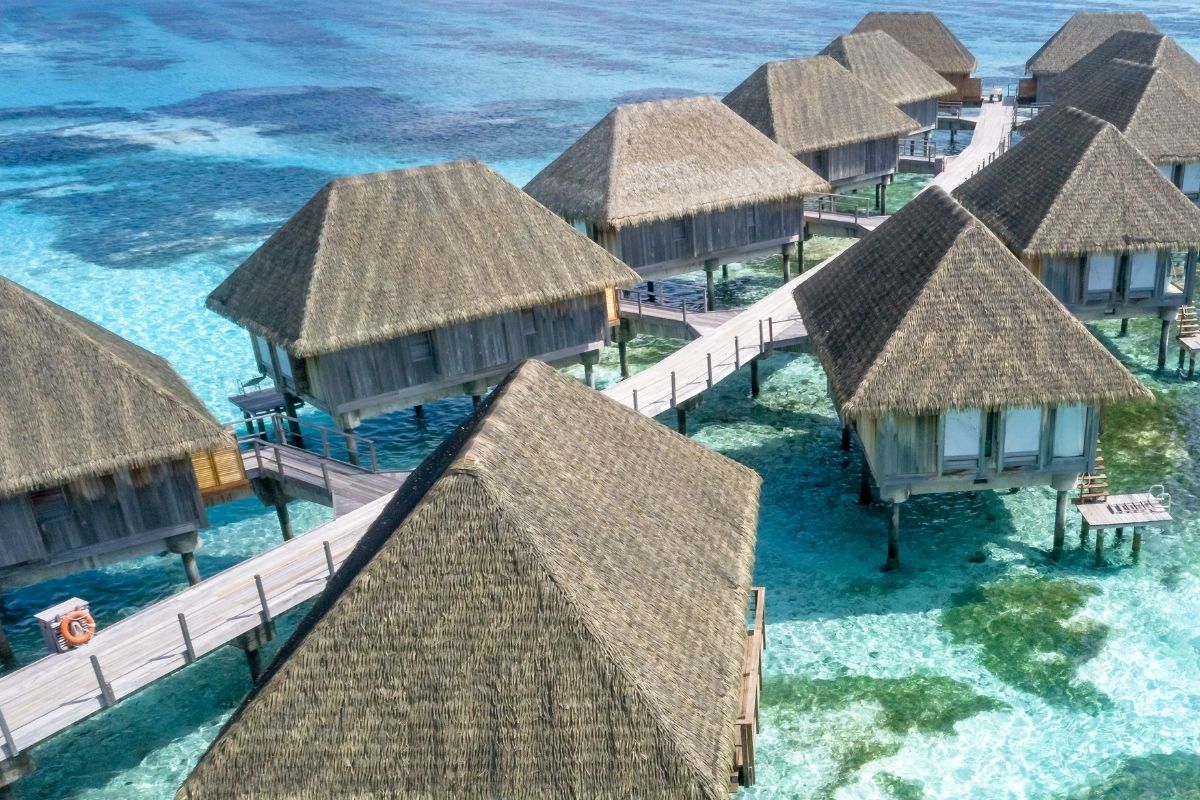
The experience phase of the wheel of travel happens in the real world with physical products and services. They all rely on some type of real estate. Whether it is a theme park or driving from an airport to a city center, it is all about real estate. Furthermore, anything that happens at the experience phase relies on some sort of real estate. Staying in a hotel is a piece of real estate. Individuals going to eat at a dine-in restaurant is a piece of real estate.
The Companies That Invest in Hospitality
There are various companies that specialize in the hospitality and travel real estate of the general real estate market.
Some of these companies are the owners or professional investors who know how to invest in and maintain assets, such as hotels. We refer to companies like Host Hotels & Resorts, which emerged after Marriott spun off its real estate. Now, it has become a professional investor and asset manager of hotels.
Another company is Park Hotels, which is a real estate investment trust. They only own and professionally manage hotels. They manage any investments, renovations, and maintenance of the assets.
Consultants in the Hospitality Industry
Many consultant companies actively advise individual owners or investors. They provide various services, including valuation, food and beverage, tax, and debt advisory services. One of these companies is Hotel Valuation Services (HVS). Founded by Steve Rushmore, VHS is a legend in the industry that began in New York. It has spread globally with offices in London, Brazil, Hong Kong, and many more places.
Joes Lae, LaSalle (JLL) does consulting services like VHS but is also very active in brokerage. Brokerage is about making a buyer and seller meet to make the transaction. They advertise hotels and other properties to potential buyers and connect them with the sellers.
Destination Marketing and Placemaking: Activity: Generating Demand and Marketing: New York

Why do people travel? There are so many reasons for travel. It could be for special events, occasions, to see new sites, or just visit an interesting city. Let’s take New York City, for example. One of the greatest global cities in the world.

The idea for global tourism is that people leave their home country to experience something interesting that they can’t experience back home. And if you look at the list of the most popular international destinations — France is number one at 85 million international visitors, followed by Spain, and then the United States, at about 75 million. New York City itself gets about 13 million visitors a year.

So why then, do people come to New York City? It’s an amazing place, for one. Diversity. Different cultures. Chinatown. Little Italy. Koreatown. But, there are also very interesting sites too. Central Park is probably the most popular site because it’s open, free, and provides such a contrast in a park experience. Take for example, a traveler from Finland, who might view Central Park as akin to a Finnish forest in the middle of skyscrapers.

And there’s also the 9/11 memorial and museum. The One World Trade tower. And a lot of museums. The famous Metropolitan (Met). The Museum of Natural History. There are many sites here to choose from. A common travel custom now is for the tourist to act like a local and experience things that the locals do. Consumers find these experiences to be authentic. And that’s something that New York City can offer a lot of.
And now thanks to social media, you don’t even have to do a lot of advertising anymore.

In creating your destination marketing plans, look at various sources that rate and rank the most popular attractions and activities in New York City. You don’t have to choose the most popular ones, but use some criteria to choose the ones that you would actually have as part of your vacation plans. For instance, you’ll be traveling to New York City for one week. Find out what you would do during those six nights and seven days. Then describe this in a one-page memo in terms of the criteria you used.

Destination Marketing and Placemaking: Activity: NYC Luxury Travel (Part 1)

NYC & Company is a destination management organization in New York City that puts together programs that attract tourists to the city.

New York City, industries like hotels, restaurants, retailing, and Broadway shows all come together and finance NYC & Company, which then creates programs for marketing the city abroad.

They have done very creative partnerships with London. They exchange some advertising space on buses in New York City. So New York City buses are promoting London, and the same thing happens in London.

Reasons to come to New York City are plenty: there are attractions such as Central Park, 9/11 memorial museums, and events like the New York City Marathon in the first weekend of November, Fashion Week, and many others.
During these times, it’s very hard to get a hotel room, and even if you do, they’re pretty expensive.

Industries have to come together to make it attractive for consumers to come to New York City, because we compete against the likes of Paris, London, and Tokyo.

Luxury Hotels in New York City
NYC has 14 historic landmark hotels. There are the big ones like the Marriott Marquis, Sheraton, and Hilton, all of which have about 2,000 rooms.

There are also very boutique hotels with up to 20 rooms like the Casablanca library hotel at Times Square.

So how do consumers choose? They usually look at TripAdvisor and see the ratings! Interestingly enough, the #1 rated hotel on Trip Advisor is a small 10 room hotel on 44th Street.

There is a group of small hotels which get very high ratings on TripAdvisor.
Restaurants in New York City
There are about 26,000 restaurants in New York City, many of them in Manhattan. Every year, about 26% of this inventory of 26,000 restaurants closes and something new comes.

It’s a very competitive and creative market! If you want to be an entrepreneur in restaurant business in New York City, you have to create and innovate.

Companies like STL Steakhouse and Jonathan Siegel are at the forefront of innovation. Jonathan Siegel has created an amazing new concept: a steakhouse for ladies, breaking away from the traditional Smith & Wollensky style of older gentleman serving in long white coats and people with huge steaks. Instead, steaks are smaller and there’s seafood.

People come for food, but they also come to see other people. There are also very interesting restaurants that are vegetarian, and you have pockets of restaurants, like in Chinatown, which are very authentic, Little Italy and Koreatown.

While in New York City, you’ll never go hungry! You can get the total culinary experience for the six nights, seven days. This includes breakfast, lunch, and dinner. It’s your choice where you’re going to eat. Variety is key: you can’t be at McDonald’s every day for every meal, even if it’s a Happy Meal.

First, decide on the criteria, and it can differ. For breakfast, it could be maybe grab and go, fast. For lunch, it could be something healthy. For dinner, something where it’s more about the atmospherics, the feeling, the mood of the place, and the food.

In a one-page memo, you can give us the list and links to those restaurants. If you have a favorite dish or have some preferred aesthetics of a restaurant, illustrate that.

Destination Marketing and Placemaking: Hotels And How They Market

The hotel company Marriott is a global leader with 29 brands, 6,800 locations in 150 countries, and various lifestyle brands. They also have an element, which is an extended stay. They have Aloft, a sort of an innovator in this space for Gen X and millennials. Then they have Moxy, which is probably targeting Generation Z, which will be a customer group in the future. So those are the brands. And then they also have AC Hotel, which is a company they bought. It’s a European Spanish company. And that profile, sort of a Spanish lifestyle with tapas and other Spanish cuisines in New York City.
How Does the Consumer Differentiate These Brands?
And having 29 brands, it’s a challenge because of consumer demand- the same consumer might be a business traveler during the week and leave a traveler during the weekend. The brands need to position themselves very clearly in the marketplace. The challenge is that the same customer can use the brand for different purposes.
Luxury
Within Mariott’s luxury category, there are two subsets. St. Regis and Ritz Carlton fall in the classic luxury subset. They also have distinctive luxury, which is the joint venture between Bill Marriott and Ian Schrager.
Ian Schrager is an innovator in the 1980s after Bill Clinton. Bill Clinton created the first boutique hotel in San Francisco with the theme. And then Ian Schrager and his partner, Steve Rubell, who founded Studio 54, got stuck with the hotel. That’s how that segment started to evolve. Ian talks about host boutique hotels, which are also called lifestyle hotels. So what makes them different? The consumer who considers a lifestyle brand has a solid affinity for it because it is part of their lifestyle.
Lifestyle Brands
Lifestyle brands emulate the customer’s life versus traditional brands that offer a standard fare. A customer seeking a New York City experience may choose two hotels, where they’ll stay for, say, seven days. The hotels they pick will be ones that really cater to their needs and desires.

The Future is Now: New and Developing Gaming Technologies: The future of gaming: VR/VR/ER

People have been talking about virtual reality forever. Dan Shefelman remembers a time when it was going to be huge in the ‘90s, but it never reached the heights people predicted it would at the time.
Maria Hwano details what virtual reality is and why, despite not taking over as people thought it would, it continues to capture the imagination:
“If I had one or two words that I have to explain it, it’s just the experiential aspect of virtual reality. You’re actually living it. You feel it. You’re experiencing something that actually isn’t real life in your world.”
The way Hwano sees it, people still love talking about it. There have been multiple booms that at times have even felt like fads. Virtual reality has even been talked about in education
“As a computer scientist, VR is brought up a lot,” explains Hwano. “People ask me about it. People love talking about it. People like to ask opinions about what’s going to happen with virtual reality. It’s a very interesting question.”
As exciting as VR technology is, Maria Hwano believes people need to understand where the technology is currently, and what its evolutionary process might look like.
“A long time ago, when the computer keyboard was not a thing, it used to be a one-to-one input. It was on a piano and a sticker was put on it. And a signal was given to do input. It wasn’t until 10 years later that somebody created the keyboard that we take for granted right now. That’s how long it takes to make a keyboard. So you can only imagine how much we don’t know about the potential VR might have.”
Still, the future of virtual reality is full of possibilities, especially when it comes to augmented reality.
“Augmented reality is basically taking what’s around you and – through a phone or some device – and placing something there virtually so you can see it on the phone,” Dan Shefelman says. “It’s an illusion, obviously, but it’s using the environment around you and putting assets in it. . .You’re using the space that you’re in.”

Gaming Communities Overview: Social Affinities and Gaming Groups

Games do very well when it comes to the notion of affinity space, according to educational scholar James Paul Gee. If you like a game like World of Warcraft and you have a strong interest in it, you can visit a site on the internet dedicated to the game. Many such sites exist. And in many cases, the websites link to each other. On these sites, you can join a group of people who share your interests or passion. There are all sorts of activities you can partake in, explains Gee. You can review, strategize, theory craft, and mod. You can even set up gameplay. You can redesign, make apps – there is a wealth of possibilities!

And soon, this affinity space will be recognised as a physical space. If you’re at a conference or playing in a land party, you may be in a physical space, but you could also be in a virtual one. As Gee explains, an affinity space comprises of a group of people joined together by interest and passion, because you can take that interest as far as you want. It’s a place where everybody can teach and learn. You teach what you know well while also learning from others at every level of expertise.

Through affinity spaces, games are not only offering a portal into a world where you can show off your problem solving and use the tools listed above, but they’re also giving you a common identity. Not an identity as an American, or White, or Black, but as a World of Warcraft player – a new type of identity in the world.

There are now affinity spaces for everything you can imagine. And they are not only a very powerful way of organizing learning, but also organizing membership, belonging, and identity. As we’re learning today, human beings only feel safe to others, and happy with themselves if they feel they belong, matter, and can participate. Unfortunately, lots of people in America don’t believe that what they do really matters anymore, or that they really are participating in their society. This mentality can make people physically ill.

In extreme cases, it can also become dangerous, warns Gee. Sadly, human beings will take participation and meaning wherever they can find it. So if they can’t find it in a good cause, they’ll find it in a bad one. White supremacist groups are affinity spaces. So was ISIS. So are all of the tremendous networks of physical and virtual spaces through which rich people hide their money offshore. They’re well organized and the people involved learn a lot from each other. They’re very powerful and they give a strong sense of belonging. But they can be dangerous to us. So, Gee recommends that anyone designing affinity spaces for good intentions such as video games should learn how they worked in-game, because the game designers understand their game’s community and intentions.

Going & Being Pro: Gaming Gear

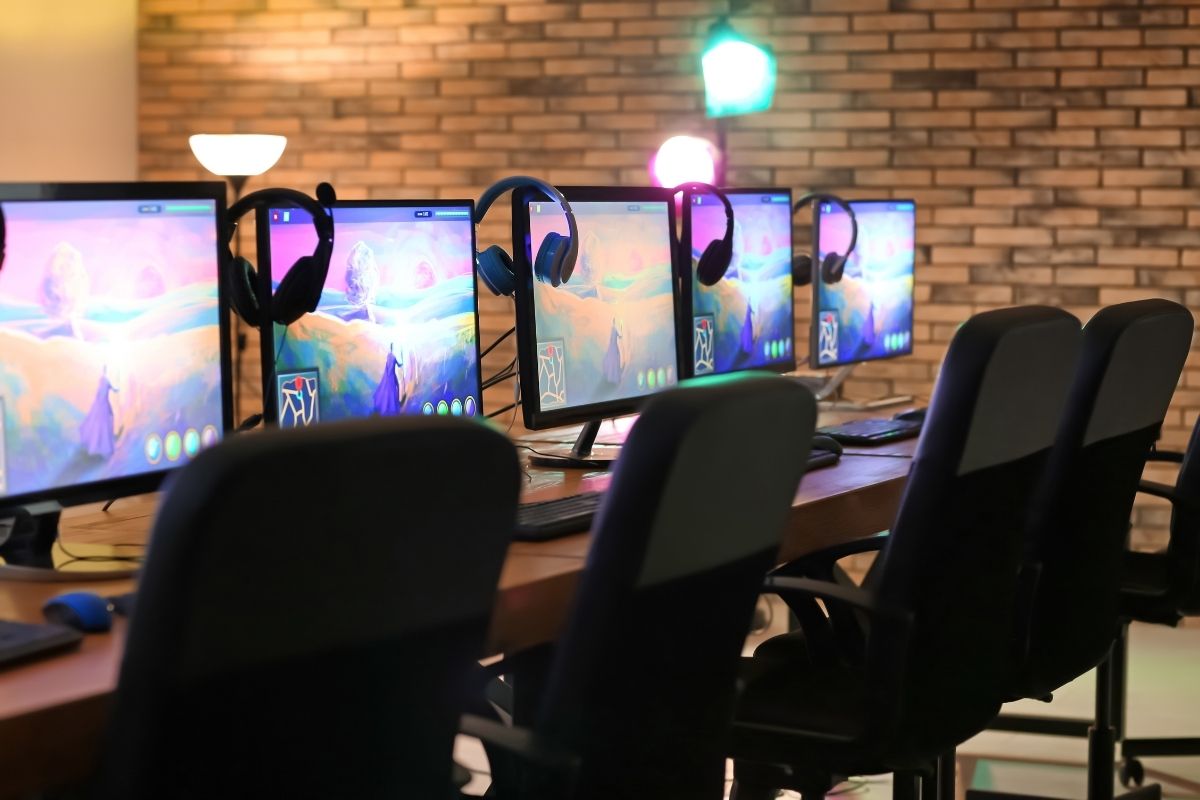
If you’re trying to get into esports and competitive gaming, you want to make sure you have the right equipment. This ensures you can perform the best when the time comes for you to compete.
A lot of folks grow up with this idea that playing video games on their television is the best experience or the most optimal. But according to Malik Forté, a 14-year veteran in the gaming industry, the input rate on most televisions isn’t as good as when you’re playing on a monitor, even if you’re playing on a console.
Malik insists that if you switch over from a tv to a monitor you’ll notice that the latency from the time you press a button on your controller to the time you see it play out on the screen is going to be a lot shorter. You will gain a lot more comfort as a player knowing that as you press buttons on your controller the resulting actions are happening with minimum latency.
Outside of the monitor, the most important thing is to make sure the game settings are comfortable for you. The biggest misconception in competitive gaming is that you must follow the top pros’ settings. None of that is true. You need to do what’s best for you and your gameplay style.
Everybody has something different that works for them. Malik Forté plays shooters without vibration because if he is pressing a button and the controller shakes, it hurts his accuracy. Some people need that vibration as a cue for when things are happening to them within the game world. Preferred settings are really case by case. You need to find what is best for you before you decide when it comes to those small mechanical decisions.

Introduction to Esports and Competitive Gaming: Case Study: History of MPBA/NBA2K

In 2014, Ivan Curtiss began his professional esports career when he and his friends started an amateur pro-am league called My Player Basketball Association (MPBA).

Curtiss first met LT Fairly and Lawrence West, also known as ‘BiggWest’ in the 2K community, while playing in various gaming leagues. Through playing together in various leagues, LT had the idea to start his own league. He brought in Curtiss first, then BiggWest came in later down the line. BiggWest marketed the league, assisting LT in anything he knew about day-to-day operations.

Slowly but surely, the league started picking up a lot of traction. Many of the top players, who played the Jordan Rec Center mode at a time when everybody played with their My Players, formed teams to participate in structured and organized leagues.

Later, in 2016, NBA 2K came out with a pro-am mode. This allowed players to come together and form teams in their own arenas and gymnasiums so they could play against other teams like their own. But it wasn’t until a year later that the MPBA was looked at as the premier pro-am league to play in. At that time, they had received a lot of acclaim and success through the league.

In 2017, the NBA 2K League was announced to the 2K community. It was going to be a professional esport league. In the first draft held, over 80% of the drafted players, especially in the first round, participated in the MPBA. And that is where their notoriety began. Curtiss describes it as their wake-up call that this professional esports event was something that they themselves had created. They got to see the success of players who participated in their league develop from amateurs to professionals.

During that season, they were also awarded the opportunity to work with BucksGG, which is the Milwaukee Bucks affiliate team of the NBA 2K league. Curtiss and LT worked as draft analysts. They helped put together their team and roster in the first season. Afterward, LT assisted them in small roles daily, and Curtiss stayed on as a community manager.

Module Overview: “What is a Game?”: What is a game?

“What is a game?” This is the first question Jessica Hammer asks in her game design class.

Pure definitional questions are not actually that interesting for either game research or game design. “The way I try to help my students think about what games are is that there are different lenses or different frames for defining what is or isn’t a game, and you can pick one or a subset of lenses to talk about games with when you are either designing or studying games,” says Hammer.

Typically, Hammer will start by teaching her students about three different frames of how you can look at what a game is. One of these frames is formal. What are some of the characteristics of an artifact that make it a game, whether or not it’s being played, totally in the abstract?

The second is thinking about it aesthetically. Do people feel playful when they’re playing? What is the experience of play? People will play things that are not games, and people will play games in ways that are not playful.

If you think about professional baseball players, are they feeling super playful when they’re playing the seventh game of the World Series? Probably not.

But we still recognize baseball as a game. So these are two different lenses that can get us to different answers about whether something is a game even when we’re looking at the same experience and trying to analyze it.

The third is thinking about what we culturally understand as a game. There are some agreements as a culture about what a game is.

“When I talk about games, I always say, OK, tell me some games you play. People almost never talk about sports because the word ‘game’,“ says Hammer.

If you asked someone “Is sports a game?”, the answer would be “Yes, of course sports are games.”

However, if you asked someone if they played games, they don’t always think of sports or gambling or other kinds of activities that by both formal and aesthetic experiences would certainly fall into the category of games.

Looking at these cultural understandings explicitly is a third way to ask the question of “what is a game” and come up with an answer that is interesting.

As a game designer, someone can’t tell you what the right frame is for your work. But as current-and-future game designers, you are going to have to come up with a frame for your work that you find productive for making incredible experiences for players.

Think about what something being a game means to you, and worry less about some kind of categorical definition that you might spit back on an exam. Because in the real world of games, nobody cares.

Professional Leagues, Events, Venues, and Player Facilities: Collegiate programs

There has been a lot of interest coming from schools. The innovative schools in the early days recognized that if they offered esports programs, they’d be wilfully attracting some of the brightest STEM students on the planet.

STEM is a big part of gaming. Engineering is a big part of gaming. And computer science is definitely a big part of gaming. Some of the brightest kids on the planet are coming into STEM programs because of gaming, and the wise schools recognized early on that they could use esports for recruiting.

In that regard, Wim Stocks helps schools that may not have seen that very early tide coming in. They’ve aided them in building their curriculum. They’ve helped schools create the notion of a career by offering a curriculum, training, and learning opportunities for careers in esports and venue design.

Wim Stocks also had a hand in helping a college cultivate local sponsorships to help support the building and funding for an esports program on that particular campus. But they are not just the intercollegiate competitor, enabler, and league. They are also helping schools build far bigger footprints in esports than they might have been able to do independently. So much of esports is focused on competition.

Let’s use an analogy. First, think about the business of traditional sports. Then, think about all the jobs surrounding traditional sports: production, broadcasting, stadium design, agents, analysis, marketing, advertising, and sponsorship. Those same dynamics exist in esports.

One of the schools that Wim Stocks have a close association with has identified that there are 87 different skill sets that they can base their curriculum around to help students who want to be involved in esports build their knowledge, education, and experience. By no means is this a small opportunity. They also work very closely with production companies. There are very specific things to esports that don’t come into play from any other sports or any other experiences. And so that’s a powerful dynamic for esports, the marketing of esports.