A Raisin in the Sun – Learning How to Approach a Script

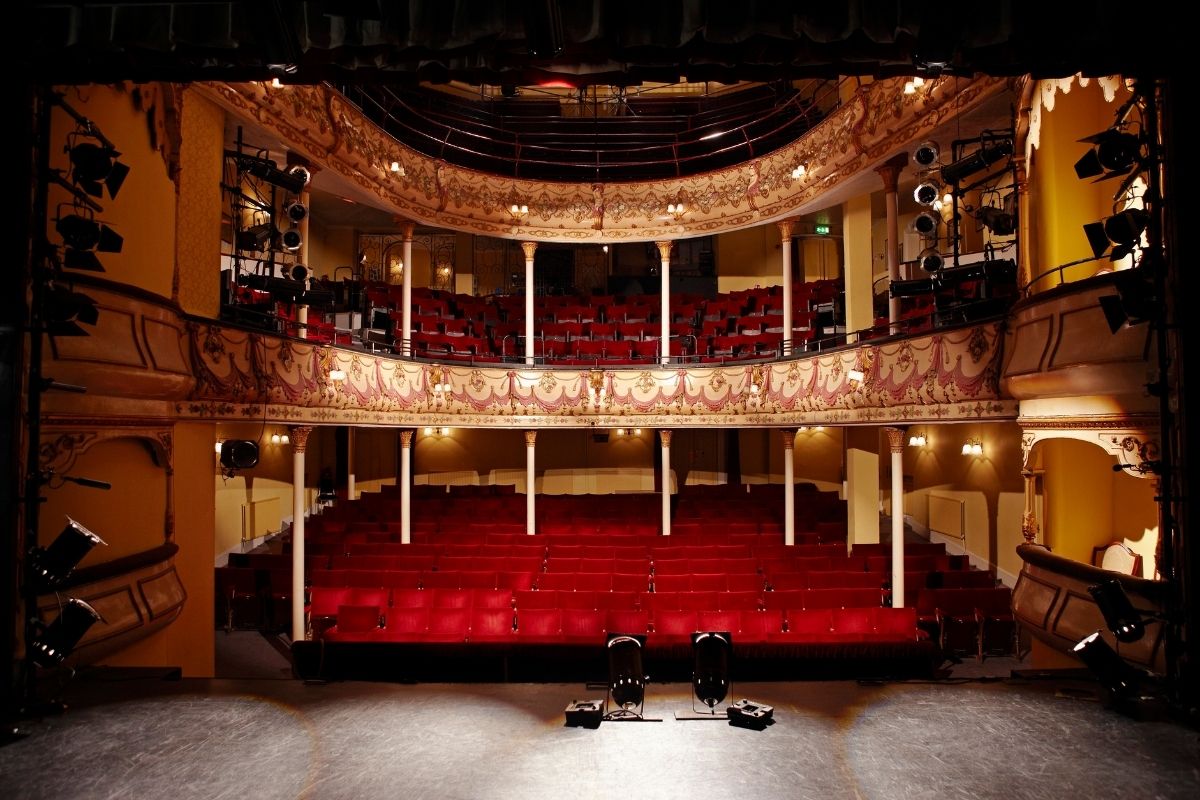
When determining how to approach a script in Performing Arts, one should take a play like “A Raisin in the Sun”—Lorraine Hansberry’s very, very famous play from the early ’60s. The play starts. You’re reading the pages. What you’ll see on the page first is a little epigram. You’ll see what is almost a little poem, and it’s written by Langston Hughes. It’s basically what happens to a dream deferred. Does it fester-does it “dah, dah, dah,” or does it dry up like a raisin in the sun?

That point is meant to set the mood of the play. It’s meant to make you think. It’s meant to hint at what will happen in the play. It is also there to make readers question who is Langston Hughes?

That’s the first place to start. Readers in online performing arts education should adopt the mindset: “Let me find out about who this Langston Hughes is and why would Lorraine Hansberry put that poem on page one before the play even starts?” Then you start with the play, and you look at the stage directions and see what that tells you.

The stage directions tell those in performing arts education that you’re in a sort of a cramped, crowded, tenement apartment in Chicago in the late ’50s or early ’60s. Readers know that it’s cramped because you see a little boy asleep on the couch, and that’s where he sleeps every night. You see another room on the stage. You see a woman who wakes the little boy up.

The reader now understands what’s going on in the story. By the description of the apartment and the stage directions, one understands the family doesn’t have money. Knowing these facts is important things to understanding the characters in the story and the basis for the play. Readers see a black family that doesn’t have money, living in a very crowded situation. You see the wife waking up the son and then waking up her husband.

As the play moves along, readers understand the grandmother — the father’s mother, the little boy’s grandmother — also lives in this cramped apartment, and the family defers to her in a certain way. Very early on, the reader understands that the day portrayed in the play is a very big day. This is a day the family has been waiting on; the grandmother is supposed to finally get the insurance check she’s been waiting on since her husband passed away. The check is supposed to be substantial, and getting this money is going to change the lives of the entire family.

Understanding the family’s misery is due to poverty, what day it is, and why getting this long-awaited check is so important to the family helps readers to analyze the show. Readers will understand that Walter — the father — is a character who is unhappy with his life. However, Walter doesn’t seem to understand how to get the thing that is going to make life better (namely money). He feels constrained by the role society has put on him in his work as a chauffeur. Walter is not the type of person who can simply walk into a bank and secure a loan. The family is growing but unable to get another, larger apartment.

The family doesn’t have money. The expected check could be the ticket to any number of things. For the grandmother, it may be the ticket for a better life for her herself and for her family. For her son Walter, the check is likely to be the ticket for him to make a better life for the family.

A Unified Performing Arts Experience by Elizabeth Bradley

A tremendous collaborative bond between design team members is essential for a successful production. The team can consist of a designer to do the mise en scene, scenic surround and setting; a sound designer, since soundscapes are becoming ever more important; a costume designer; a lighting designer and a projection designer. These are all people who can conceptualize where the writer and the director want to go and the kind of imagery and atmosphere that are necessary.

In some kinds of creative processes, the director may meet for many weeks with the design team before they ever meet a company of actors, and all that work may be done beforehand and just presented to the actors on the first day. With other kinds of processes, the designers are in the room from the very beginning and assisting while the piece is being invented and coming together. The later scenario is often called “devised theater,” which is a form of collective creation in experimental theater.

Traits of a Unified Design Team

We must think about the quality of the design team: Is the design team complementary to the actors who go out there on stage with the weight of the storytelling mostly on their shoulders? Are they happy to be working together? Are they all committed to the work in the same way and for the same reasons? Is there both a selflessness and an assertiveness about what they’re bringing to the process?

These questions help us to determine if we will see, as every day this magical alchemy knits together in the rehearsal room, the sum of the parts becoming something actually transcendent for an audience.

Unfortunately, you can have what I call “dream teams” that go nowhere. You can have the best producers and the most in-demand director. You can have justifiably venerated senior members of the acting profession. You can have the hottest new talent making their debut. You can put it all together, and you just come up with complete goop, because there are no guarantees. Yet, if you have a unified quality design team framework in mind, the likelihood that something will knit together is probably greater than not.

Performing Arts Education

Your online performing arts education provides you with knowledge and tools that can someday help you to form and manage or be a part of a unified design team. It can also help you to recognize early warning signs of trouble when members of a team aren’t meshing well with each other, actors or anyone else involved in a production.

Understanding the Importance of Staging and Costumes in the Music Industry

Staging and costumes are all about the way things look. As part of your online music education, let’s go back to Art History 101 to learn about composition. What is most pleasing to our eyes? What colors work best when you want to create an intimate atmosphere? Do you want warm colors like red, or cool colors like blue? This is all a trial-and-error process, but it’s best for us to see how the characters from earlier in the story fit in with these color-blocking ideas and the composition of the canvas as our stage.

Staging Philosophies
In the same way that we think of instrumentation with a song, color-blocking is a good way to impose splashes of color onto a stage that look good next to one another. Sometimes the juxtaposition of these colors can create a really interesting tone in itself. Using lights, we can really make them take on a whole different shape. So, for example, if you have a red light onstage and a blue backdrop, it’s going to change color as it’s turned on and off. The ability to see color and the way that it plays a role within the stage setup is important to know as you continue your music education.

Creating a conceptual identity for your product is something a lot of people are doing nowadays. Some people decide that they want to be a monster in another world. When you walk into this venue, you want to feel like you are a monster in another world, and you’ve never met someone else that is a monster from another world.

So how do we make that happen? What does the set design look like? How do we implement these ideas in the performance of our work? Do we speak to the audience? Do we start on the floor? Do we perform from the audience, with the audience themselves on stage? Original interpretations of what everything means and flipping the script on yourself is a really incredible way to understand yourself better as an artist.

My art teacher in high school used to say, “Do you belong to the school of squint?” And this helps me all the time when I’m thinking of visual elements for my live performance. What she meant by that was, if you squint and you see just the outside of everything and the composition of the larger pieces in color-blocking, you’re going to be able to see what it looks like from far away. This is what’s important for us as performers because it should look just as good in the front row as it does in the back row.

About Costumes
We want to create costumes that have really great profiles. We want apparel that makes us look the way we want to look, and that creates a color that pops out from the set itself and gives the audience something to be excited by. We can create so many different stories with costumes. They can be abstract shapes. We can reimagine our bodies as other-selves in this moment. But when it comes down to it for us, the entire conceptual performance is really focused on how to bring the costume, the set, the songs, and the choreography all together in wondrous harmony.

A costume doesn’t have to be some crazy Halloween thing at all. It’s just about what you put on that day that is your work outfit. And for some people, that’s going to be jeans, a T-shirt, and some Converse. And for other people, it’s going to be an evening gown, some makeup, and an up-do. But the truth is that you should always be wearing something that’s really comfortable to you that screams, “This is my authentic self.”

What we put on our bodies and how we present ourselves can shape the way we feel about our performance to a great extent. We want to be comfortable. We want to feel safe. This is all the puff-up, shrink-down thing again. If we act like something we are not, we are not going to be comfortable. We are not going to relate to our audience the best way that we can.

Another use of the costume is that it’s a personal prop. Being able to use something that you wear on your body as a through-line of a story that you tell on the stage is really important. We see this with James Brown with his cape. There are so many ways in which that cape means something more than just a piece of clothing. And his performance with this cape is something that I return to over and over again with my students in order to explain how to use props and how to use your body onstage in order to tell a deeper story.

How The Knife Uses Staging and Costumes
One of my favorite bands is called The Knife. They’re a Swedish electronic band. And every performance they do is wildly different from the one before. Creating this new world for them to live in is something that the audience loves. This is why people keep coming back; because they know that what they’re walking into is going to be a whole new world than the last time they saw the band.

Their last performance included choreographed dances with around 12 bandmates on stage. The lead singer wasn’t always even the one singing during performances. They had costumes and instruments they built themselves, plus new technologies around percussion instruments and wind instruments. Everything about the night was an experiment in pop music performance and what an audience is.

The opening band was an aerobics instructor. They got the crowd up and moving. It was a great way to create an amazing story throughout the night. It was new and different, and the audience is shocked to experience it. These are the kinds of performances we remember. They also make an impact on us in the world of music.

The Impact of Your Product-Market Fit in the Music Industry

There’s a concept called product-market fit, and it’s one of the most important elements in finding your audience, finding customers, in anything you ever want to do. It may sound self-explanatory, but it’s actually pretty complicated when you learn about it in online music education. A really helpful way to think about product-market fit is to think about it as a moment in time.

If you think about the moment when someone is saying the words coming out of their mouth, or when they play you a song, at first it all sort of has infinite potential. One could play a song right now and, in theory, 7 billion people on the planet could love it. But that doesn’t actually happen in the music industry, does it? But as soon as that product interacts with any sort of market, the potential for it starts to fall. This happens even with the greatest things of all time.

But at a certain point, hopefully what happens is it stops somewhere. So that song has infinite potential at first, then it starts falling down, and suddenly there’s some consistency to the group of people that like it. This actually happens with most things that come out. What a lot of entrepreneurs and artists miss, though, is actually doing the analysis to figure out what the commonalities are about where it stopped.

So the story goes that an artist has been playing concerts, and it seems like these five specific people keep going to every show, even though they’re not friends. Is there anything they have in common? You’ll find that it’s usually not random. They actually all like the same five artists. They all listen to music on Spotify but not TIDAL. They all use Android but not iPhone. It can seem very random at first.

But as soon as you notice these patterns, you’re starting to find your product-market fit. You’re starting to be able to define exactly who your target audience is. It’s always recommended, to make a John or Jane Doe profile of who your person is, so you can put a name to your fan. So saying, “My fan is someone who shops at H&M, lives in Canada, is in this age range, and likes these kinds of artists,” is great information to have.

This is really important to do because artists are people who make their own things out of nothing. They are usually not the best at actually predicting who their audience is. It’s been seen time and time again. Usually, what we want to do is make our target audience a mirror of ourselves. So it could be tempting for me right now to say, “My target audience is 32-year-old men who live in New York and who have beards, right?”

But if I actually look at my SoundCloud data, it would reveal that a lot of my fans are 45-year-old women who live in Europe. Which is great, but it’s not exactly me. And it’s actually taking the time to look at where and who my music is resonating with, and finding out what’s common among them. That’s your target audience.

So finding product-market fit is something that will take you a very long time to master as you study music education, but you need to constantly be thinking that it’s kind of a waste of time for you to do a lot of marketing, advertising, and trying to get the word out until you find your product-market fit.

Not finding your product-market fit is how labels and artists waste upwards of millions of dollars by these very expensive experiments of doing Facebook ads to anybody, rather than knowing who they’re selling to. We know that the product-market fit is comprised of people that love these three artists. We’re only going to go there. So it’ll save you a lot of time, money, and emotional heartache by waiting to actually market and do these creative ideas you hopefully have to get the word out until you have found your product-market fit.

Understanding Yourself Is Crucial in the Music Industry

One of the essential things about authenticity while making music is knowing yourself. That self-awareness can come from all kinds of self-help books but also exercises where we can look at ourselves in the mirror and project exactly what we want to see. Looking in the mirror is one of the most critical elements about learning how to perform well and perform authentically.

Each day, you must go to the mirror, and the first thing you must do is confront yourself. It means you’re looking in the mirror, and the moment that you’re about to say, “Oh, my eye, oh, my hair, oh, my face, oh, I need to…,” you must confront all those things. Even when you’re standing there, and you’re thinking, “This is silly. I don’t know why I’m doing this;” you must observe. It would be best to observe all those things. Understanding your inner self should be taught as part of music education also in online music education.

The idea is to see who you are, and you begin to observe them and pay attention. Then, you’re comfortable within yourself. At that point, when you step on the stage, you’re able to make that connection. Do you know what happens? You connect with the audience, and the audience feels your authenticity. It’s essential that they feel your authenticity.

As an artist, you are working through who you are and what you want the audience to feel when you are on stage. That connection that you’re trying to make with the audience, you must do some work where you understand who you are, why you are, how you are, and the purpose of you being that artist. The only way that that can happen is if you have and learn to have that intimate connection with yourself.

One of my favorite authors, Brené Brown, talks about authenticity a lot. I find it to be helpful to look at one of her examples. She often uses the phrase, “Don’t puff up. Don’t shrink down.” Sometimes when we’re in a tense situation, we try to make ourselves more confident than average. Or we try to make ourselves smaller because we feel like we’re acting. We’re taking up too much space.

The truth is that if someone dislikes you for doing either of those things, you’re going to feel worse about yourself. If they dislike you for being who you are, you’re still going to feel good about exactly who you are. The critical idea is to walk out of that situation and know that you didn’t try too hard to mold yourself into what you think someone would want you to be. We want to sit with ourselves in precisely the space that we are.

I speak about not the space of when you think you’re putting on. That’s the mask you wear so that people know you as this when you step out. We’re talking about when you’re alone and you’re standing in front of that mirror. You’re looking at yourself, and you’re taking in all the voices that are inside your head.

The Importance of Breathing During Musical Performance

To me, a good musical performance is about three things. One is being comfortable with your body. One is being comfortable with your breath. And one is being comfortable with yourself.

One tip I give my students is to listen to their music while they walk around the city, or ride their bike to work, or even take a bath. By allowing your music to, in a way, infiltrate your entire being, you can feel like it’s really inhabiting every cell of your body. Walking out on the street, dancing throughout the day—all of these things are enmeshing the music and your identity together, which is a really important part of your growth as a performer.

Another thing I suggest is to listen to music while you’re working out. If you go to the gym, there’s a musical exercise you can do while on the treadmill. As you’re going at a nice slow pace, for about three to five minutes, just start singing to yourself, “la, la, la, la, la, la, la, la, la. La, la, la, la, la, la, la, la, la.” Sing these notes in time with your breathing, and it will allow you to feel your breath.

Alternatively, you can do the same exercise, but instead of doing it on the treadmill, you can do it while you’re doing sit-ups. Either way, it will allow you to feel connected to your breath. It’s about the breath, and it’s all about understanding how your body works.

During a performance, you’re speaking very quickly. The volume sometimes has to be very loud, and it’s also rhythmically challenging. As a result, the tendency for singers and also for hip-hop artists/rappers is that they sometimes forget to breathe. Then, what happens is that the breath becomes short. No air is getting down. All of a sudden, you’re gripping from the outside, and eventually, the voice reaches a point where it can’t take it any longer, and the performance falters.

We’ve got to breathe deeply and move on that breath. And move on that breath, and move on that breath, continuously. We find the rhythm within the breath. The breath truly sets up the rhythm—really, it’s the breath that creates the rhythm.

I usually tell my students that they should be able to sing their entire set while they’re running, doing sit-ups, on the elliptical—during all of these different types of physical movements that we’re so used to doing. We should be able to do them while singing and listening to our own music.

And eventually, at a certain point, the rehearsing of these movements together will make it seem like second nature. We don’t ever want to walk on stage feeling like we aren’t prepared, so preparing through all of these everyday activities will help us feel like it’s no big deal. It’s just breathing.

With online music education, you can learn much more about improving your musical performances, as well as a wide variety of lessons about building a career in the music industry. Your high-quality music education is right there, waiting for you to seize it.

Using Music Education and Passion to Build a Successful Tour

Many bands don’t even bring a crew on tour; it’s just them. They do everything themselves. As you start to get bigger, though, you might need someone to sell merch for you. You might need someone to run the sound at the front of the house, or someone to run the monitor mix. As you continue growing bigger, you might need a wardrobe person. You might need a production assistant, a production manager, a tour manager. All of these people are very expensive to hire.

So, these are really some things to think about as you start to gain momentum in the music industry. For the most part, your manager is going to help you with this. As for needing a manager, you don’t need one until you need one. If you find that you can’t handle everything by yourself, that’s when you need a manager. At the beginning though, I recommend that you try to do it on your own.

Obviously, selling tickets for your show can benefit you financially. In some cases, though, you’ll really only be making money from alcohol sales at the bar, or from a guarantee that the venue has already given you. This is typically a certain amount of money that you’re guaranteed to receive after the show, no matter what. For instance, a venue may give you a $500 guarantee to play a show, and if they do, it won’t matter how many people are in attendance—you’ll receive the $500 regardless.

Another way that some venues might do it is to give you a guaranteed amount, plus a percentage of ticket sales after a certain amount of money is made. So, for example, after you’ve already made $1,000, you would receive $500, plus ten percent of ticket sales. You might get offered a deal like this as a way to incentivize you to promote the show and bring along as many people as possible.

Ultimately, creating a successful performance or tour is about the following things: finding your true, authentic self, creating your intention, telling your story, finding your audience, and creating a visual element that will evoke a certain energy from the crowd. So, in that vein, there are a few things you really need to focus on deciding, and they are who you are, who you need to bring with you on your music journey, and what kind of story you want to tell. In many cases, exploring online music education can help you get started on the right path.

The Importance of Connecting With Your Early Audience

In the music industry, it’s crucial to find who your target audience is, and it’s important that it’s based on real data. So, what you should do right now is create a profile. Create that John or Jane Doe who you think would love your music. Even if you only have 10 fans on Facebook or any platform, try to look at what the commonalities are amongst the people who love what you’re creating. Whether it be the shoes they wear, or their age, or where they’ve gone to school, all of this stuff starts to paint a picture of where you’ll be able to find your audience in the future.

The next thing to really make sure that you’re doing once you start getting some sort of response, even if it’s only five people following you on Instagram or coming out to your show, is to really start embracing your first followers. You want to do this because those first followers have the potential to become the biggest evangelizers on your behalf.

As much as we can talk about potential marketing strategies that we can do, it’s also really nice to have your marketing happening while you’re sleeping. This is another reason that you want to really embrace your early fans and make them feel like there’s a reason they should be championing you on your behalf.

So, whether you’ve just started performing or whether you’re starting to get plays on SoundCloud, you should really make sure that you’re starting to know who your fans are. For example, if you have less than 100 fans on Facebook, you should try to know all of their names. The people who come out to your show—those are people you should try to talk to afterward.

One of my favorite related stories is about Beyoncé. If any of us went to go see her in a stadium today, she certainly would not stay afterward to talk to all of us. She doesn’t need to. However, if you look at footage from some of the first Destiny’s Child concerts from the 1990s when there were 20 or so people at a gymnasium, she’s staying after the performance and talking to every one of them. She’s taking the time to learn who they are, and she’s leaving them with a great impression. There’s no reason that you and I can’t do the same.

For anyone interested, there is far more to learn regarding a wide variety of music-related concepts by exploring online music education, which is by far the most convenient form of music education available.

The Importance of Getting Through to Your Audience

You probably got here by clicking on something regarding building your image or music marketing. The truth behind your intention for doing so was probably that you want to build your audience, which is important to keep in mind during your music education. Having a clear image of what your marketing strategy will be is very important, and it should fit into a really clear goal that you hopefully have: finding your fans, identifying them, going out to where they are, and giving what you’ve made to them.

This goes along with any other aspirations you might have about getting a record deal or getting management. All those people in the music industry are just chasing audiences. They’re not chasing you. They’re not chasing the talent. They’re chasing audiences.

That means, your focus should be finding out who your audience is. The really good news is, unless you’re making a really bad product, assuming you have pretty good songs, there is an audience for you out there. There’s an audience for everybody.

One of the first important changes that we all need to go through when we start communicating about the things that we’ve made (and that’s what music marketing is, right?) is to grab your audience’s attention. We’re just trying to communicate and say, “I want to win your trust to take the 15 seconds to listen to my song.” To do that, I need to say something, or you need to read something.

The first big change we need to look at is to refraining from simply just focusing on describing what we’re doing, which a lot of us start out doing in the beginning. We say, “Hey, I’m Mark, and I play guitar.” But that’s sort of a commodity and it doesn’t really resonate on an emotional level with anyone.

A really important hack you might learn in online music education is to actually just change the sequencing of saying what you do and focusing on saying why you do what you do first. Then you just illustrate that what you’re working on, be it your band, your album, whatever project it happens to be, is proof of what you believe in, what your “why” is.

So on one hand, I could say, “I play guitar. I’ve been playing for a long time. I have an album coming out. Please listen.” That doesn’t resonate very hard, does it?

Or I could go a different route and say, “When I was growing up, I didn’t see my brothers or sisters very often. But one day, my brother came around and gave me his guitar, and then everything changed. I ended up writing songs. I have an album coming out with those very songs. Would you like to listen?”

Now, it doesn’t really matter if my style of music isn’t your cup of tea, as long as — on a belief level — if my “why” has resonated with you. If it has, then chances are you’re going to take a moment and check it out, which is all we’re ever trying to do. So this pivot to starting with “why” is really important.

It’s not just rooted in psychology. There’s also a biological component to it. I promise we won’t go too scientific in this course, but the reason we all focus on “what” is because the outer layer of our brains, the first thing that the information I’m saying is reaching, just focuses on language.

So if I know that the first thing you’re going to process when my words hit your brain is “what” I’m saying, I’m going to emphasize “what.” But where we make decisions, where our beliefs and our values live, is actually deeper in the center part of the brain. That’s why “why” is more important than “what.”

What we’re essentially doing, if you can visualize it, is that by starting with “why,” we’re jumping right to the decision-making point and we’re not making all these words go through the processing part of the brain. That’s all happening as well, but we’re sort of taking a shortcut. So it’s literally in our biology that when we lead with “why” in our beliefs, things resonate faster.

The Importance of Live Instrumentation in the Music Industry

Looking at other people’s performances on stage and critiquing them is a really good way for us to grow as a class and also be able to critique people without the fear of them getting upset. So one thing we can look at is Ed Sheeran’s performance with his looping pedals versus his performance of the same song with a band.

We will talk about the ways in which one seems more intimate, but one seems more professional. In one, you can see the errors that are made. In the other one, it’s more easygoing.

It’s really usually split half and half between the classes of which one they appreciate more. But what we’re looking at here is really the ability to do the same song in two different styles: one by yourself, and one with an entire band. And it’s really awesome to see that that’s possible these days. As far as music education goes, knowing the difference between a solo performance and a group performance is important to remember.

We’re in an age of technology where we can make practically anything happen. And depending on who the audience is, we can focus that performance for those people specifically.

A really great exercise I do with my students is that I force them to take out all the elements of the song except for two. So there are only two instruments and a voice. This changes the students’ understanding of their song completely. In a lot of cases, it also changes the way they see the song, and sometimes even all of the music they’re creating.

Just this one little experimentation in minimalism can help see which elements of the song are important and which of them are superfluous. Removing elements that don’t synergize well can greatly improve the quality of a song in creation, remember this as you continue your online music education.

Experimentation with live instrumentation is greatly important to the artist’s development. If somebody comes in with an electronic-based track, we try to make it live because being comfortable onstage in all different ways means that you’re ready for anything.

If somebody comes to you and says, “We really loved your performance, but could you do it acoustic?” We want you to feel like you’re more than strong enough to do that, to take that chance, and feel comfortable with different instrumentation onstage.

This means it could be a symphony orchestra or just playing to a track or singing an a cappella. We want all of those things to feel just as comfortable for you. So we make sure that we collaborate with different people, feel different rhythms, and explore the way it sounds to have live drums next to you versus having drums on track.

All of these things can be complicated to feel safe with on a stage. But making sure that you practice and get used to it is really important.

You know, some people’s sound is so specific, and they don’t want to move outside of this. But for me, I feel like attempting to go for it, and really challenging yourself is an incredibly important part of the process.

Last year, one of my students was a hip hop performer. I kind of forced him to try to play with a live band. He was not initially interested, but he did so. Afterwards, it completely changed his sound. And from then on, that was his go-to method of performing.

So for me, it’s really important to just try this process because it doesn’t hurt. You don’t know what’s going to happen with that song, the rest of your music, and you could even be starting an entire new genre of music.

As an artist, you have to make the choice of whether or not you’re going to be the leader of your band, or whether or not you’re going to have a musical director, or whether or not you’re going to have someone who is basically producing your show and putting you in place.

There are three different types of directions there. If you are leading your band, then your music knowledge has to be on point. You have to understand the arrangements. You have to understand how to start a song and how to end a song. You even have to understand how to talk to your band musicians.

If you have a musical director, then you have to be willing to listen to what the musical director is telling you in terms of when your entrance is, when you should pause, where a solo is appropriate, when you should take a break, and so on.

All of those things are worked out (with your input, of course) with the musical director. If there’s someone who’s producing the show from top to bottom, then it’s pretty much like you’re going to be told when to sing, where to go, when to stand, when to breathe, when to move, and when to bow. All of those things are worked out because you have someone who’s producing the show and they usually know what they’re doing, so you can all put on an amazing show.